“There's a lot more digital components, connectors, wires than there were two decades ago,” said Ian Walsh, CEO of FDH Aero, at the Farnborough airshow — a remark that captures both what the market is buying and what the supply chain is struggling to deliver.
Farnborough: handshake deals outshining headline aircraft orders
Attendees and analysts at the Farnborough International Airshow noticed fewer high-profile aircraft purchase announcements than in past years and a proliferation of partnership agreements. Grant Holve, a commercial aerospace analyst for Forecast International, said the show felt “more of a lack of the large order announcements that we typically see,” and estimated the event was “a 50-50 split between commercial and defense this year…usually it's like 80-20 or 70-30 tilted toward commercial.”
Jon Hemler, director of Forecast International's military aerospace and weapons division, flagged a visible trend: commercial designs, particularly in eVTOL and air-taxi companies, crossing into the defense market. Hemler described contested logistics and autonomous cargo aircraft as identifiable areas where civil firms are partnering with defense companies — examples at Farnborough included Archer Aviation’s partnership with Anduril and Sikorsky teaming with Beta Technologies’ MV250.
FDH Aero and the strain of electrified, digitized aircraft
FDH Aero, a distributor that bulk-buys, stores and sells parts, framed the supply-chain challenge as largely driven by electrification and digital complexity. Walsh said demand for connectors, wires and digital components has surged, and that both defense and commercial growth are “putting a lot of strain on the supply chain to keep up with that.”
He illustrated the pressure with an OEM scenario: a manufacturer that normally builds helicopters for commercial customers suddenly faced with a military order for 250 machines would “basically have to double their production,” creating acute long-lead-time sourcing and planning needs. FDH positions itself to mitigate that by sourcing long-lead items and matching stock to customer build rates.
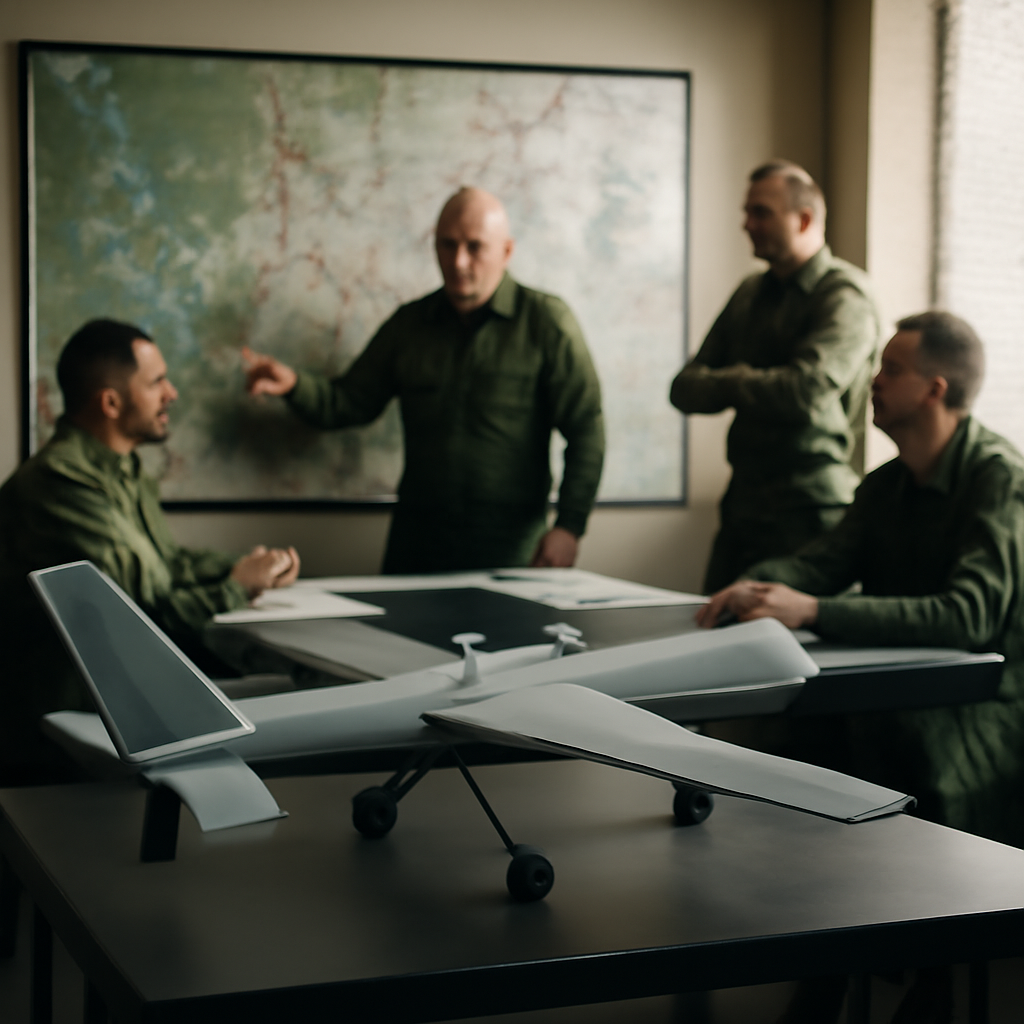
Walsh also noted unmanned systems have become ubiquitous at Farnborough: “every single booth [here] has some connection or product that's now tied to unmanned drones, eVTOLs. So that's a whole new frontier,” he said, while reminding readers that an airframe still needs “connectors, rivets, bolts, connectors, fasteners” — hundreds of thousands of small parts regardless of propulsion or autonomy.

This site is the portfolio.
OSINTSights runs on Cloudflare Workers, D1, R2, and Vectorize, with an AI pipeline on Hetzner ARM. Nubivance designed, built, and operates it. We do the same for clients.
See what we buildCritical minerals executive order: a fast, disruptive timeline
Last week’s executive order on critical minerals directs defense contractors to achieve clearer visibility into their supply chains by next year — a schedule that industry software vendors and analysts called both necessary and ambitious. Chris Morton, who leads aerospace and defense business for IFS, said the order forces primes to “rationalize their entire supply chain all the way to the bottom,” calling that a “Herculean undertaking.”
Morton warned the push will reveal uncomfortable surprises: “I think there’s gonna be a whole lot of surprises…This effort is really that first step.” The Government Accountability Office’s July 22 report was cited as recommending four policy changes to reduce imported critical mineral reliance: creating domestic manufacturing capacity; building more infrastructure for battery and semiconductor recycling; making it secure; and investing in research and testing.
The article also noted policy moves intended to protect the sector: the Trump administration plans to ban robots and inverters made in China and certain other nations to bolster U.S. efforts in the sector.
Recent contracts and corporate moves on the sidelines
Alongside the supply-chain and policy threads, several deals and awards landed during the period covered. Tagup won a Marine Corps contract to help streamline maintenance and repairs for 1st Maintenance Battalion in California using its Manifest AI platform; no dollar amount was listed. Leonardo DRS agreed to acquire tech company Raft for $450 million. Leidos won a $717 million Air Force contract for ISR support for Air Combat Command, extending work the company has done since 2019. The think tank Center for Strategic and Budgetary Assessments added Phil Davidson as board chair and Anita Antenucci as vice chair. Separately, Reuters reported a Seasats drone boat captured footage of a Chinese warship near the Philippines.
How prime contractors, distributors, and policymakers are responding
- Prime contractors: face a rapid compliance and visibility task under the critical-minerals executive order; industry sources call that a deep, time-consuming audit of suppliers and components that could surface “surprises.”
- Distributors and aftermarket firms (FDH Aero, IFS customers): are positioned to profit from the surge in electronic and digital components and by helping primes source long-lead items and plan build rates.
- Policymakers and oversight figures: remain attentive to governance and procurement integrity. Senator Elizabeth Warren warned of “significant conflict of interest” and “corruption concerns” in a letter to Deputy Defense Secretary Stephen Feinberg about a new hiring program that would bring private-sector personnel into defense acquisition roles; she also re-upped concerns about Feinberg’s financial ties to Cerberus Capital Management and oversight of the Golden Dome for America project.
Farnborough’s mix of handshake partnerships, crossover commercial designs, and rising pressure on suppliers shows an aerospace sector in motion: digitization and electrification are expanding parts demand even as policymakers push for rapid, deeper supply-chain visibility. The practical test now is whether prime contractors can meet the executive order’s timeline without letting stress points in production and sourcing widen — and how quickly distributors and software vendors can translate visibility into resilience.