[SPONSOREDNUBIVANCE]
Rapid7 deployed right the first time.
Full-platform Rapid7 rollouts - InsightVM, InsightIDR, event sources, agents, tuning - by a Registered Partner who has done it at state-agency scale, including OT/SCADA.
Talk deploymentCybersecurity intelligence, threat analysis, and national security reporting.

Small businesses are playing with fire, exposing themselves to devastating cyberattacks that can cost over $250,000 - a staggering amount that's roughly equivalent to the salary of a chief information security officer (CISO). By not investing in cybersecurity leadership, they're essentially rolling the dice against increasingly automated threats.

Latvian Prime Minister Evika Siliņa has requested the resignation of Defense Minister Andris Sprūds, citing a loss of trust in his handling of recent drone airspace violations. The move comes after an extraordinary coalition meeting where Siliņa publicly expressed her and the public's lack of confidence in Sprūds.

Google Threat Intelligence Group has spotted a threat actor using a zero-day exploit likely developed with AI, marking a chilling new trend in cybercrime. This game-changing tactic turbocharges exploit development, malware autonomy, and access to premium AI services.

In a major breakthrough, international authorities have shut down a notorious German-language cybercrime forum that had attracted over 22,000 users and 100 vendors peddling stolen data, drugs, and forged documents. A 35-year-old German national was arrested in Mallorca and faces charges for allegedly masterminding the illicit platform.

The US Air Force's C-5 Galaxy fleet is facing a readiness crisis, with its mission-capable rate plummeting to just 37 percent, as revealed by Air Force Chief of Staff Gen. Kenneth S. Wilsbach during a House Appropriations Committee hearing. This sharp decline has raised concerns about the fleet's reliability and ability to perform its critical missions.

Raytheon is equipping Australia's future fleet with a game-changing defense system, the SeaRAM, to shield against airborne threats. This cutting-edge tech will be integrated into the Royal Australian Navy's new frigates, providing a robust and reliable missile defense layer.

Google researchers have made a groundbreaking discovery - a zero-day exploit that was developed with the help of artificial intelligence, which could have led to a large-scale attack if not caught in time. Thankfully, the vulnerability has been patched after Google alerted the affected vendor.
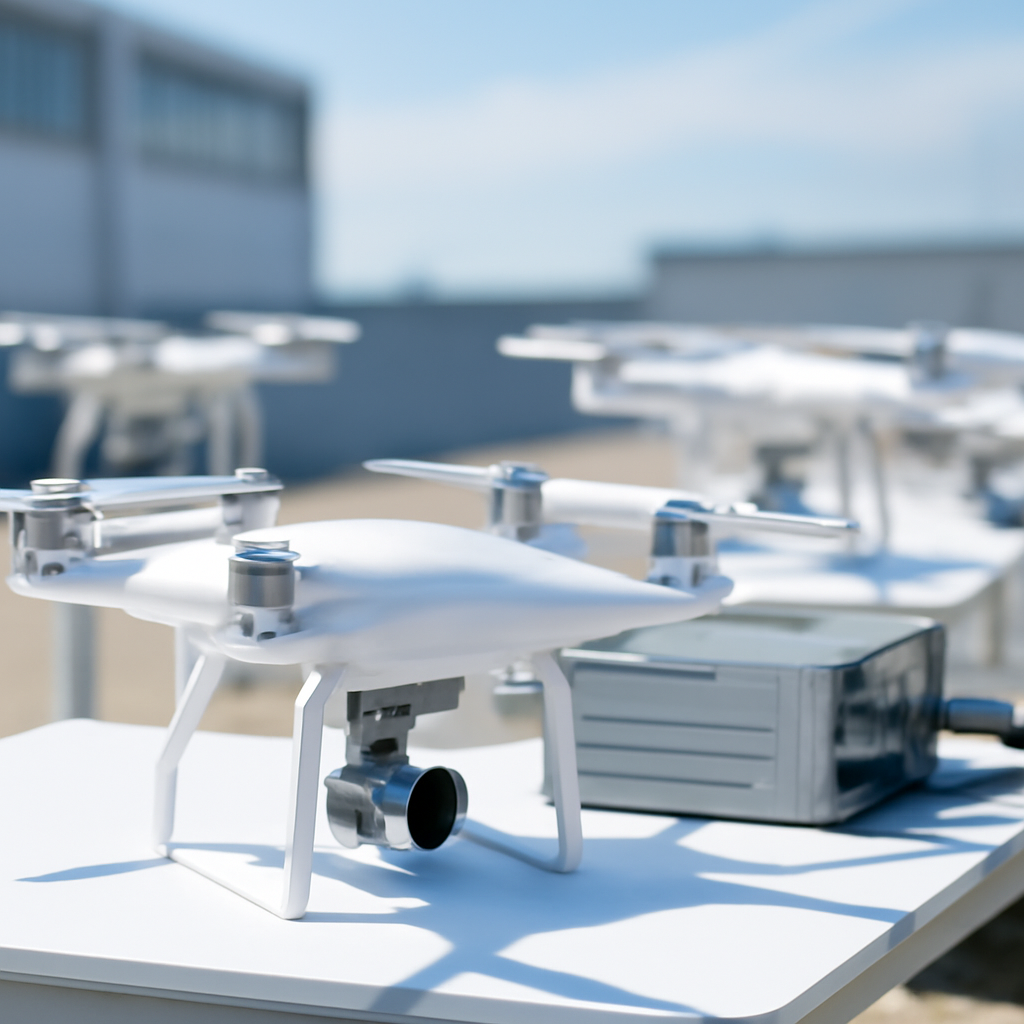
US export laws are putting the brakes on game-changing defense tech collaborations between Ukraine and the US, sparking concerns that regulatory hurdles could stifle innovation. Amidst this, Ukrainian startups like Swarmer are defying odds, with one AI firm's shares skyrocketing 700% on its market debut.
Full-platform Rapid7 rollouts - InsightVM, InsightIDR, event sources, agents, tuning - by a Registered Partner who has done it at state-agency scale, including OT/SCADA.
Talk deployment
Anthropic's highly-hyped Mythos AI failed to impress in a recent bug-hunting test against cURL's codebase, with results that were largely dismissed as overhyped marketing. The limited test, run by cURL developer Daniel Stenberg, revealed that Mythos fell short of expectations.

Google's Threat Intelligence Group just uncovered a zero-day exploit that was likely crafted by AI, highlighting the rapidly evolving threat landscape. This AI-driven attack uses a Python script with telltale signs of large language model-generated code.

A critical vulnerability known as Dirty Frag has been discovered in the Linux kernel, allowing attackers with local access to gain root privileges across major distributions. Linux distributions are now racing against the clock to patch this chained local privilege escalation flaw.

Checkmarx issued a warning on May 9, 2026, that a tampered version of its Jenkins AST plugin had been released on the Jenkins Marketplace, posing a risk to continuous-integration pipelines. The company quickly responded by urging customers to update to a trusted version, 2.0.13-829.vc72453fa_1c16, to safeguard their systems.

BWH Hotels guests are being warned to stay vigilant after a data breach exposed reservation information to cybercriminals, and customers are urged to watch out for potential phishing scams.

In a shocking breach, hackers exploited a flaw in Canvas to infiltrate Instructure portals, making off with a staggering 3.6 terabytes of data and putting 8,809 educational organizations at risk. The attackers, known as ShinyHunters, claimed to have stolen 275 million records in a brazen heist.

A new variant of the TrickMo Trojan, tracked as TrickMo C, has emerged, cleverly using The Open Network (TON) blockchain to disguise its command-and-control traffic, making it even harder to detect. This sneaky malware targets banking and wallet users in France, Italy, and Austria through convincing TikTok-themed lures on Facebook ads.

Developers beware: a sneaky PowerShell Stealer is targeting you through fake Claude Code pages, putting your organization's most sensitive assets at risk. Clicking on innocent-looking sponsored search results could be the first step in a devastating cyberattack.
Evidence in spreadsheets, controls drifting between audits, frameworks multiplying on flat headcount. Nubivance runs continuous compliance on Rapid7 Cyber GRC - SOC 2, HIPAA, ISO 27001, PCI, CMMC.
End the scramble
Meet Quasar Linux RAT, a sneaky malware that combines remote access, evasion, and data theft capabilities, making it a potent threat to Linux systems. This powerful tool lets hackers secretly control infected hosts, harvest sensitive info, and even create a network of compromised devices that communicate with each other.

Resetting passwords isn't enough to keep hackers at bay, especially in Active Directory environments where cached credentials and sync delays can leave gaping security holes. Even after a password reset, attackers can still find ways to exploit outdated credentials and gain unauthorized access.
The AI vulnerability race is no longer on the horizon - it's already underway, with hackers leveraging AI to identify and exploit zero-day vulnerabilities, as seen in a recent coordinated operation. Google Threat Intelligence Group has uncovered the first observed case of cybercriminals using AI to produce weaponized code and bypass security protections.

Google's Threat Intelligence Group has made a groundbreaking discovery - a zero-day exploit, potentially crafted with AI, was used by hackers to bypass two-factor authentication in a widely-used open-source tool. This alarming finding highlights the emerging threat of AI-generated cyber attacks.

The alarmingly rapid pace of cyber threats has left defenders scrambling to keep up, with the time from vulnerability disclosure to working exploit dwindling from 56 days in 2024 to a staggering 10 hours in 2026. Meanwhile, defenders are still stuck on human time, struggling to match the lightning-fast speed of attackers who now operate in seconds.

Checkmarx sprang into action to stop a TeamPCP intrusion after a Jenkins plugin was sabotaged, ruining engineers' weekend plans with a Saturday attack. The swift response thwarted another attempted breach by the same cyber actor.

The FCC is giving banned routers a lifeline with an extended security update deadline, ensuring they stay safe and functional with continued software and firmware updates. This move comes after the commission banned the import and sale of certain foreign-made routers in March 2026 due to national security concerns.

ShinyHunters has launched a targeted ransom attack on the education sector, exploiting a vulnerability in Canvas Learning Management System to steal a staggering 275 million records from nearly 9,000 schools and universities. The timing couldn't be more critical, with exams already underway and academic years wrapping up.