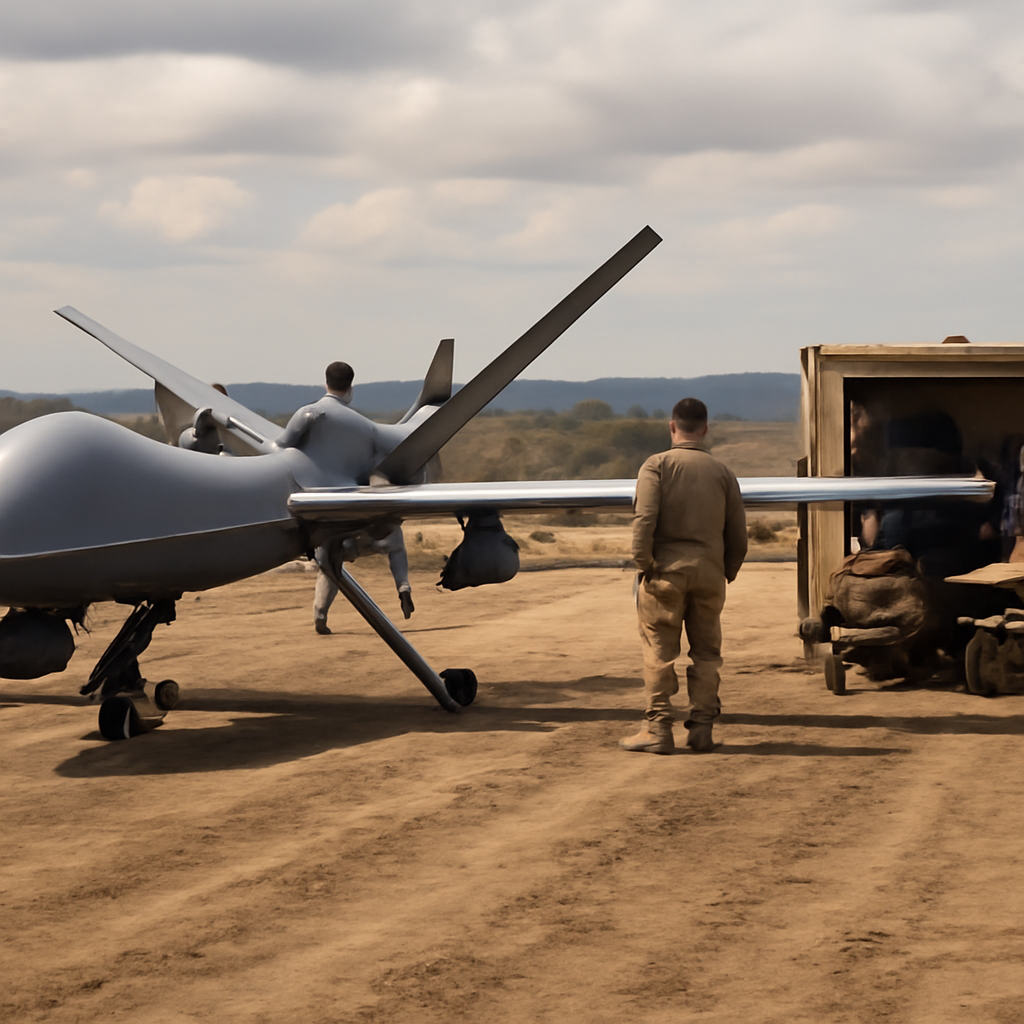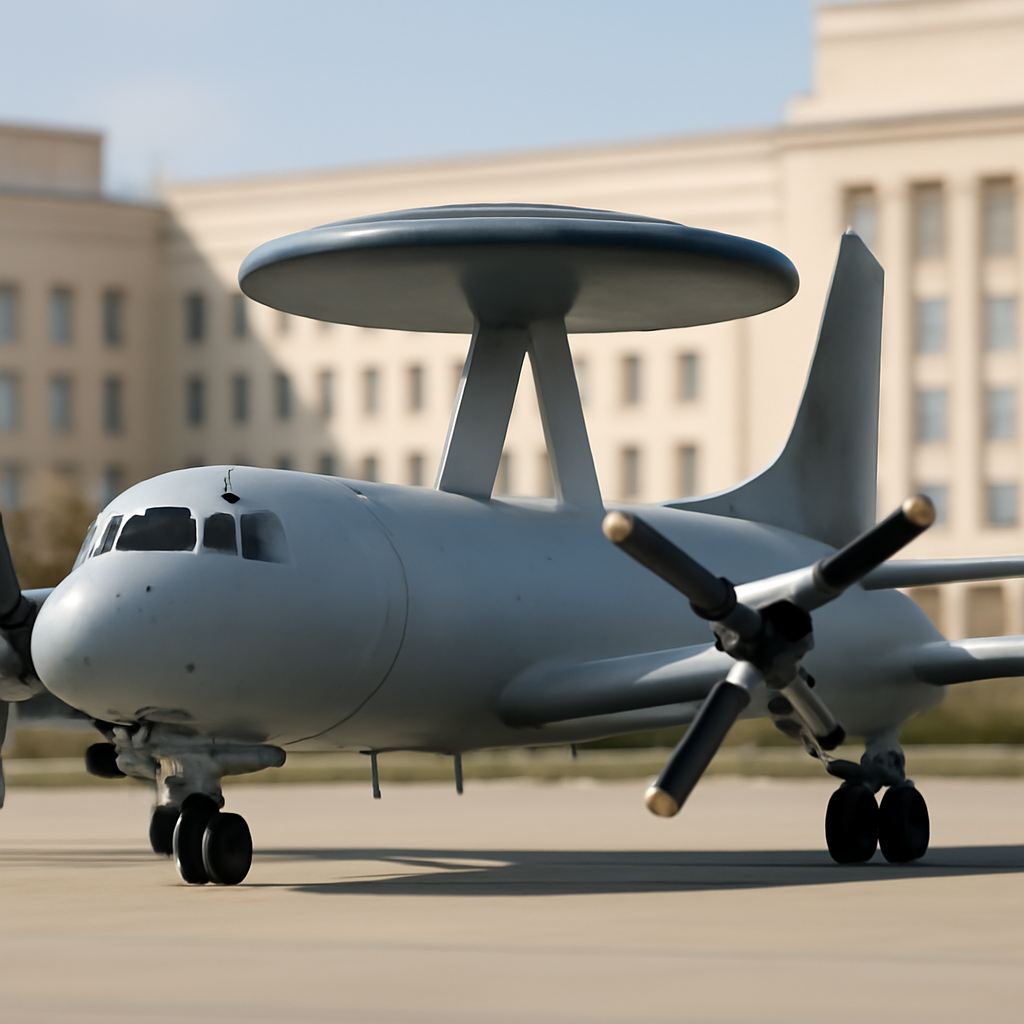
"Priority requirement to deliver two E-7 Wedgetail prototype aircraft and continue Engineering Manufacturing and Development activities for a program of record," wrote Russell Vought in an OMB memo moving more than $1.5 billion into Air Force RDT&E.
How the White House moved $1,549,098,000
In a budget amendment described in a memo from Russell Vought, Director of the Office of Management and Budget, the White House proposed shifting $1,549,098,000 into the Air Force's Research, Development, Test and Evaluation account for the E-7 Wedgetail program. The reallocation came from two procurement lines: $898,549,000 from "Other Procurement, Air Force" (listed as the Special Update Program) and $650,549,000 from "Aircraft Procurement, Navy" (the E-2D program). The memo framed the money as required to deliver two prototype E-7s and continue engineering and manufacturing development.
Congress pushes back on cutting Navy E-2D buys
The House Appropriations Committee acknowledged the Administration's amendment but pushed back on the Navy funding drawdown. The committee's report said it "wholly supports the E–7 program and funding realignment," yet it also restored the E–2D program to six aircraft for fiscal year 2027. The report emphasized the "operational necessity of the E–2D platform" and the "complementary nature of the E–2D and E–7," arguing that "more aircraft, not fewer, are necessary to support our warfighters now and in the future."

Audit-ready is a season. It shouldn't be.
Evidence in spreadsheets, controls drifting between audits, frameworks multiplying on flat headcount. Nubivance runs continuous compliance on Rapid7 Cyber GRC - SOC 2, HIPAA, ISO 27001, PCI, CMMC.
End the scrambleWhat the Pentagon and Air Force said — and what remains on the books
The Pentagon and the Air Force had earlier sought to cancel E-7 acquisition and to rely on E-2D Hawkeyes as an interim measure after the E-7 program experienced delays and cost growth. Congress had intervened in Fiscal Year 2026, appropriating billions to keep Wedgetail alive. The E-7 was missing from the Air Force's original Fiscal Year 2027 budget, prompting top leaders to submit an amendment to restore funding. The Air Force currently has seven E-7s on order, including the two jets mentioned for prototyping; the service has not set a firm date for operational flights, and before cancellation considerations the target for initial operational capability had already slipped from 2027 to 2032.
Navy procurement rhythm for the E-2D and operational strain
The Navy's approach to the E-2D has shifted markedly in recent budget cycles. In its Fiscal Year 2025 request the Navy planned no Hawkeye buys over the five-year plan; in FY2026 it requested four E-2Ds and Congress appropriated three. This year the Navy proposed buying 12 E-2Ds — six in FY2027, two in FY2028, and four in FY2029 — explicitly "to replenish accelerated service life burn down of existing force structure due to Overland Airborne Early Warning (AEW) tasking." The House report does not make clear whether its draft defense spending plan preserves the full $1,549,098,000 realignment while restoring the E-2D buys, but it did restore the six-aircraft FY2027 buy.
Operational drivers: E-3 retirements and recent Middle East operations
The House report linked recent operations to urgency around airborne battle management capacity, noting that "the conflict in Iran has reinforced the need for the Air Force to maintain a credible airborne battle management capability, currently being met with the Air Force’s E–3 Airborne Warning and Control System and the Navy’s E–2D Hawkeye programs." The report said the E-7 will serve as a modern replacement as the E-3 retires. TWZ reporting cited heavy deployments of E-3s — including large-scale deployments to Saudi Arabia — and noted the E-3 fleet has been strained for years; TWZ also referenced the loss of a Sentry on the ground in an Iranian attack in March. The article included imagery and operational reporting of E-2Ds conducting sorties in support of Operation Epic Fury against Iran in March 2026.
What this means for the Air Force, the Navy, and Congress
- Air Force procurement leaders: Must reconcile program timelines and funding for the E-7 — the service already has seven aircraft on order and is seeking RDT&E funds to field prototypes and continue EMD — while lacking a confirmed operational date.
- Navy acquisition planners: Will press to restore E-2D buys after the OMB shift tapped Navy procurement; the House Appropriations Committee restored FY2027 E-2D buys to six and the Navy's new plan seeks 12 across FY2027–FY2029 to address accelerated wear from overland tasking.
- Congress and budget authors: Face a reconciliation task as the House draft must be harmonized with Senate action, and any final bill must be signed by the President; the White House also sent a separate supplemental request for nearly $90 billion tied largely to the war against Iran, complicating the fiscal picture.
The tug-of-war over roughly $1.55 billion is, in shorthand, a fight over timing and risk: whether to preserve Navy Hawkeyes now while Congress and the Air Force buttress a future Wedgetail fleet that remains years from full operational service. The House Appropriations Committee has made clear it will not accept a simple raid on Navy buy lines; how the Senate responds, whether Congress increases the defense topline, and whether the President signs the reconciled bill are the next decisive steps.