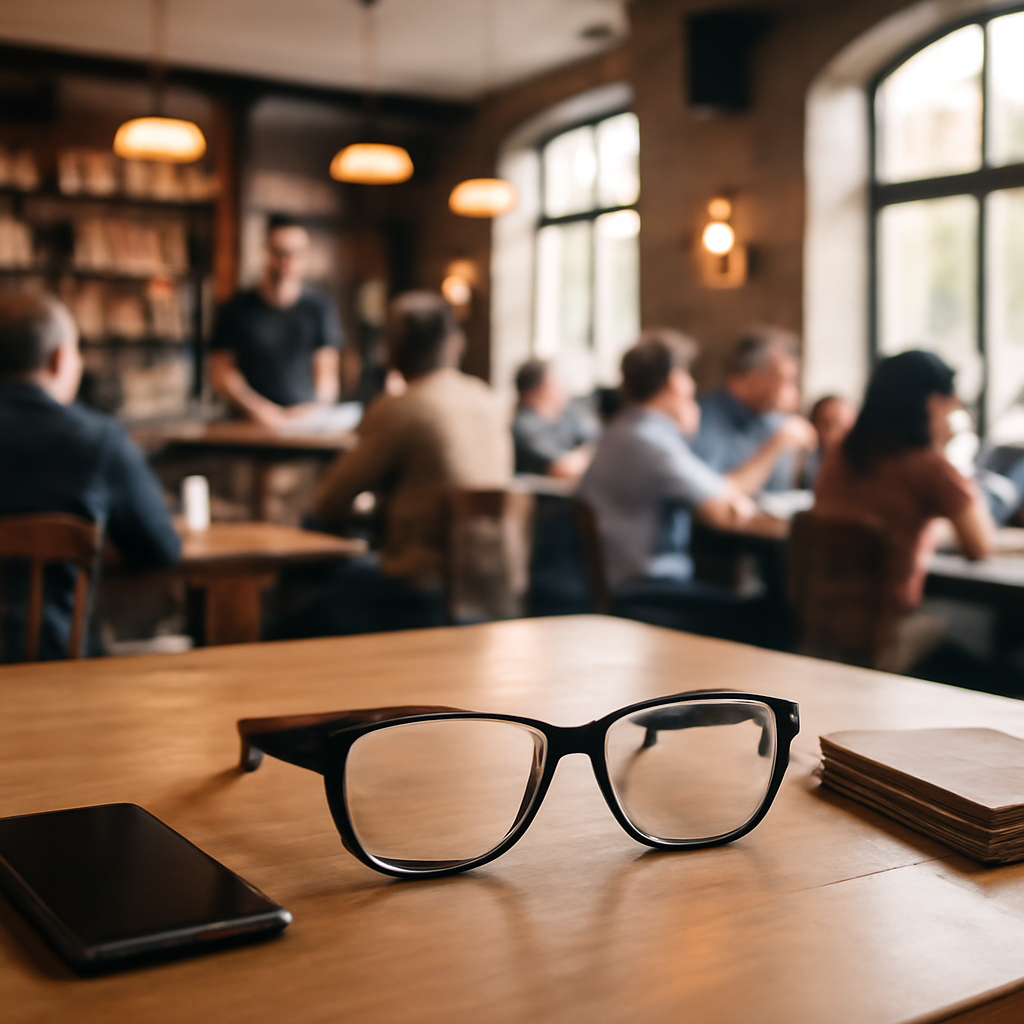
"Meta glasses seem to breach this code, and common sense, by enabling surreptitious surveillance, so our instinct is to say turn off the cameras," a Wetherspoon spokesperson told The Register.
Wetherspoons' instruction: switch off the cameras, don't film
Wetherspoons has stopped short of an outright ban on Meta-style smart glasses but has told customers they "should switch off their cameras and refrain from filming," according to the company's statement to The Register. The pub chain said it operates CCTV "for security reasons" and that CCTV usage is "strictly controlled by data legislation," but added that pubs generally enforce a code that prohibits filming customers or employees without permission.
The company declined to say whether a customer who refused to stop recording would be ejected. Its statement nevertheless implied that the act of recording—rather than merely wearing the glasses—would attract the attention of security staff, a less rigid approach than the outright bans other venues and events have imposed.
How Meta-style glasses function and why they worry people
Meta's smart glasses have become shorthand for camera-equipped eyewear. The Register recounts the product line's evolution: Google unveiled Glass in 2012; Meta and EssilorLuxottica launched the first Ray‑Ban Stories in 2021, followed by the second‑generation Ray‑Ban Meta range in 2023 and an expansion into Oakley‑branded models. Meta's devices have gained prominence because they let social media users record high‑resolution, hands‑free, first‑person footage with ease.
The company's frames are intended to look like ordinary glasses: the camera is "small and embedded neatly inside the glasses' frame." Meta highlights a recording light that "activates when the user begins shooting video," and the company says covering that light stops recording immediately. Critics say those measures are insufficient, because the wearables can be largely indistinguishable from analog eyewear and therefore enable surreptitious recording.

This site is the portfolio.
OSINTSights runs on Cloudflare Workers, D1, R2, and Vectorize, with an AI pipeline on Hetzner ARM. Nubivance designed, built, and operates it. We do the same for clients.
See what we buildVenues and events that have imposed bans
- DEF CON—which "concluded last week"—was the latest to issue an outright ban on Meta‑style recording glasses, even for prescription eyewear; organisers advised delegates to pack "non‑violating eyewear" if they needed lenses.
- Monopoly Events, organiser of UK Comic Cons, imposed a ban after talent agencies and guests raised privacy concerns and warned about covert recording's effect on personal interactions.
- Scottish ferry operator CalMac temporarily suspended unplanned bridge visits after a passenger made crew members feel uncomfortable during a June crossing.
- Restaurateur Jeremy King—owner of London's Arlington, The Park, and Simpson's in the Strand—has said the glasses should not be worn in his establishments.
- Private members' club Soho House bans recording inside its venues, a policy that covers Meta‑style glasses.
- Brighton's Yellow Book Bar called the glasses "creepy and intrusive" when announcing its ban.
- Theatre companies ATG Entertainment and Trafalgar Entertainment do not permit the devices in their venues.
UK legal context and enforcement difficulties
The Register notes UK law "does not generally prevent individuals from filming in public," but emphasises that pubs are private premises and may set their own rules. The practical challenge is enforcement: recording with smart glasses is far less conspicuous than holding up a smartphone, making breaches of venue rules harder to detect in real time.
Researchers have also demonstrated technical vectors that heighten concern. According to The Register, projects exist to pair Meta's glasses with apps that can "dox passersby in seconds," and other work can inform Android users of nearby glasses‑wearers using Bluetooth signals. Those demonstrations feed into questions about how venues can reliably spot or deter covert recording.
Regulatory and privacy flashpoints
Meta is facing a UK data protection probe relating to "the cross‑border data flows of its glasses' footage" after Kenyan reviewer teams reported seeing footage from wearers' "more intimate moments." That investigation and the broader privacy complaints from venues and guests form the regulatory backdrop to firms' decisions either to ask customers to switch cameras off or to impose outright bans.
How venue operators, technologists, and patrons are responding
Venue operators are split between asking customers to disable recording—Wetherspoons’ chosen path—and imposing explicit bans, as DEF CON, Monopoly Events, Soho House, Yellow Book Bar, ATG Entertainment, and Trafalgar Entertainment have done. CalMac's temporary operational change after an uncomfortable encounter shows operators will also adjust procedures in response to incidents.
Technologists and researchers continue to probe both detection and abuse vectors: experiments that pair glasses with doxxing apps or Bluetooth‑based detection tools demonstrate the devices' dual nature as both convenience for users and a potential privacy risk for bystanders. Patrons and talent agencies, the Register reports, have pushed organisers and venues to act when covert recording threatens personal interactions.
Wetherspoons' middle‑path policy—a request to "turn off the cameras" rather than an outright ban—illustrates the tradeoffs venues face between customer convenience, enforceability, and privacy protection. With public unease, demonstrable technical capabilities to harvest nearby data, and a live data protection probe on the table, the debate over camera‑equipped eyewear in private venues looks set to continue.