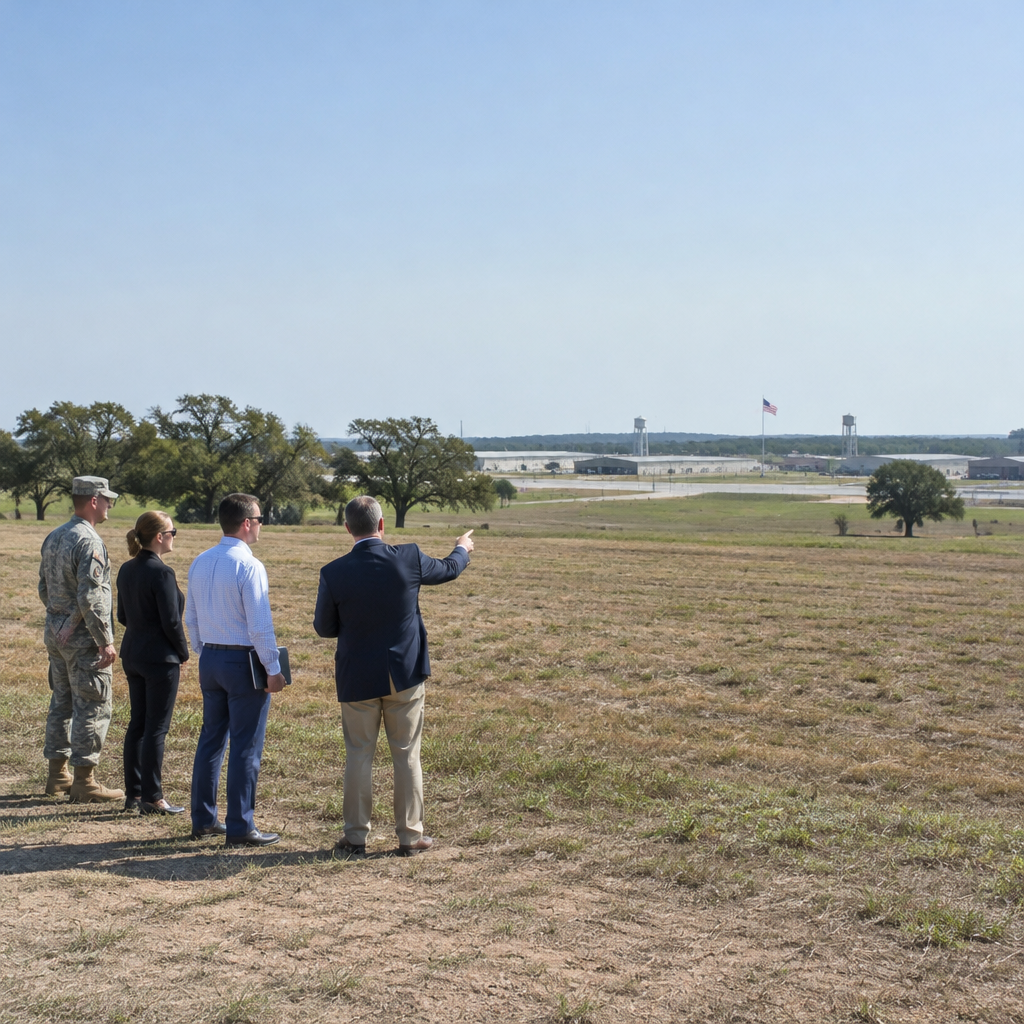
What is at stake is straightforward: when training environments are remote, degraded, or lack infrastructure altogether, units must still simulate the communications conditions of real operations without sacrificing command-and-control integrity or the high-bandwidth demands of live video.
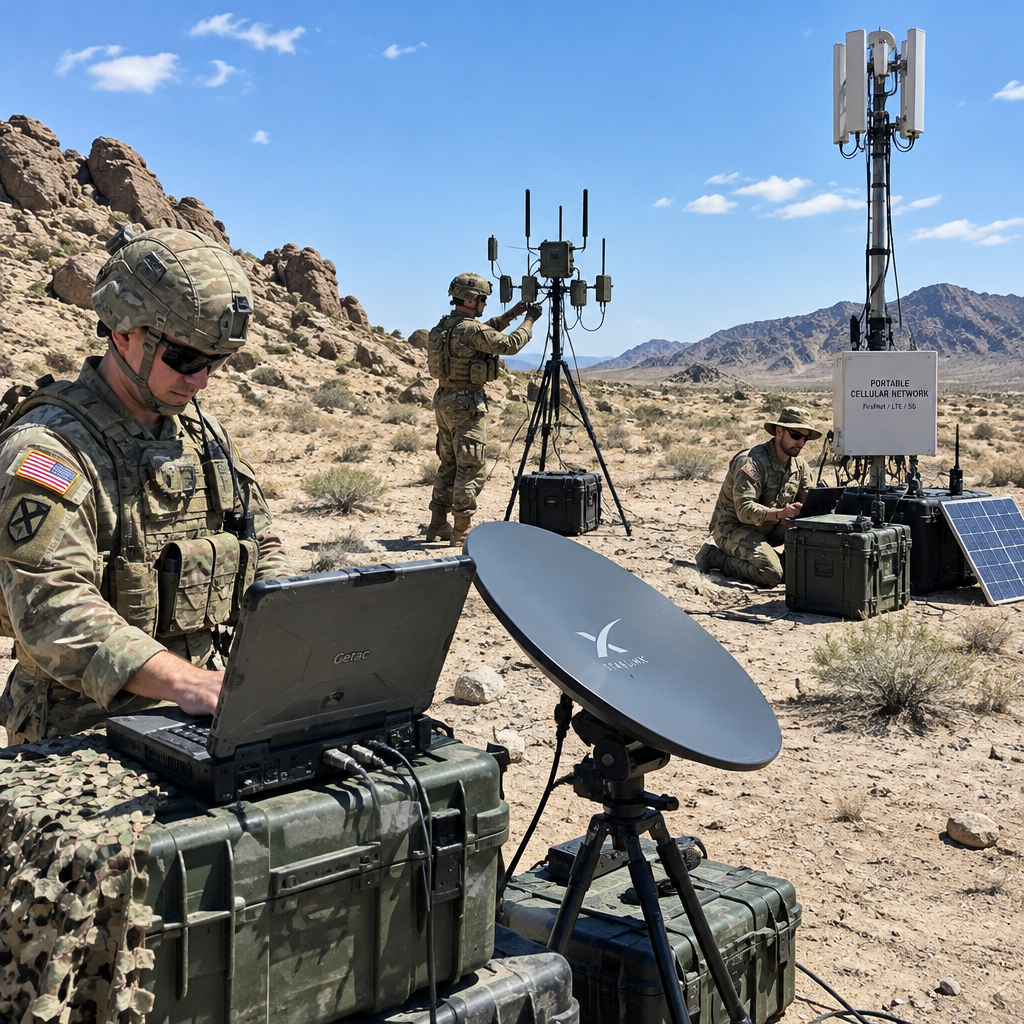
Three-layer connectivity stack: satellite backhaul, mesh-enabled network-in-a-box, portable private cellular
The episode frames modern remote training connectivity as a multi-layered problem solved by combining three principal elements: satellite backhaul, mesh-enabled network-in-a-box solutions, and portable private cellular networks. Those layers are presented not as optional extras but as complementary components that together recreate a functional communications ecosystem in locations where fixed infrastructure is absent or intentionally degraded for training realism.
Each layer has a distinct role. Satellite backhaul provides wide-area transport when terrestrial links are unavailable. Mesh-enabled “network-in-a-box” systems form local, resilient networks among devices and nodes. Portable private cellular brings familiar cellular modalities—voice, data, prioritization—into the deployed footprint. The episode stresses that successful fielded solutions depend on integrating these layers rather than relying on any single technology.
Mobilizing base-level network capability instead of building infrastructure from scratch
Speakers on the podcast emphasize a shift in approach: units increasingly mobilize base-level network capabilities to remote training sites instead of erecting permanent infrastructure. This approach reduces setup time and logistical overhead while allowing training to more closely mirror operational conditions, where communications infrastructure may be limited, degraded, or nonexistent.
Mobilization means bringing modular, ruggedized components that can be configured on the fly. The discussion positioned that modularity as a strategic advantage—training units can tailor their footprint to the scenario and redeploy assets between sites rather than investing in site-specific builds.

Audit-ready is a season. It shouldn't be.
Evidence in spreadsheets, controls drifting between audits, frameworks multiplying on flat headcount. Nubivance runs continuous compliance on Rapid7 Cyber GRC - SOC 2, HIPAA, ISO 27001, PCI, CMMC.
End the scramblePrioritizing command-and-control data and live video when bandwidth is constrained
One clear operational trade-off the episode highlights is between bandwidth-heavy applications like live video and the need to protect command-and-control (C2) data and other high-priority flows. Layered strategies aim to preserve C2 and essential telemetry even when overall capacity is limited, ensuring critical decision-making data is not crowded out by lower-priority traffic.
That prioritization is operationalized through configuration and policy choices within the layered stack—how private cellular prioritization frameworks are applied, how mesh routing treats latency-sensitive traffic, and where satellite capacity is allocated during peak demand. The podcast portrays these as deliberate, tactical decisions taken to maintain mission-essential communications under stress.
Commercial providers as system integrators: Verizon and Radiav in the conversation
The episode places commercial providers at the center of integration work. Tina Trexler, Principal Wireless Sales Engineer at Verizon, and Ty Robertson, Head of Sales at Radiav, joined host Matt Langan to describe how commercial firms function as system integrators. In that role, they combine 5G and public-safety prioritization frameworks with ruggedized, defense-ready hardware supplied by partners like Radiav to produce deployable solutions.
That model treats carrier and vendor capabilities as components of a broader systems solution rather than as point products. The conversation suggests the value lies in aligning network-layer controls—such as prioritization and public-safety mechanisms—with physical, field-hardened equipment that can survive transport and rough handling in training environments.
What this means for training units, commercial providers, and technologists
- Training units: They will continue to favor portability and modularity—mobilizing base-level network capability to match realistic operational scenarios instead of investing in fixed site builds.
- Commercial providers (Verizon, Radiav): They are positioned as integrators, responsible for combining cellular prioritization frameworks and ruggedized hardware into deployable packages for training customers.
- Technologists and security teams: They must balance bandwidth allocation and policy to keep command-and-control flows protected while enabling high-bandwidth uses such as live video during exercises.
Listen to the full episode now.