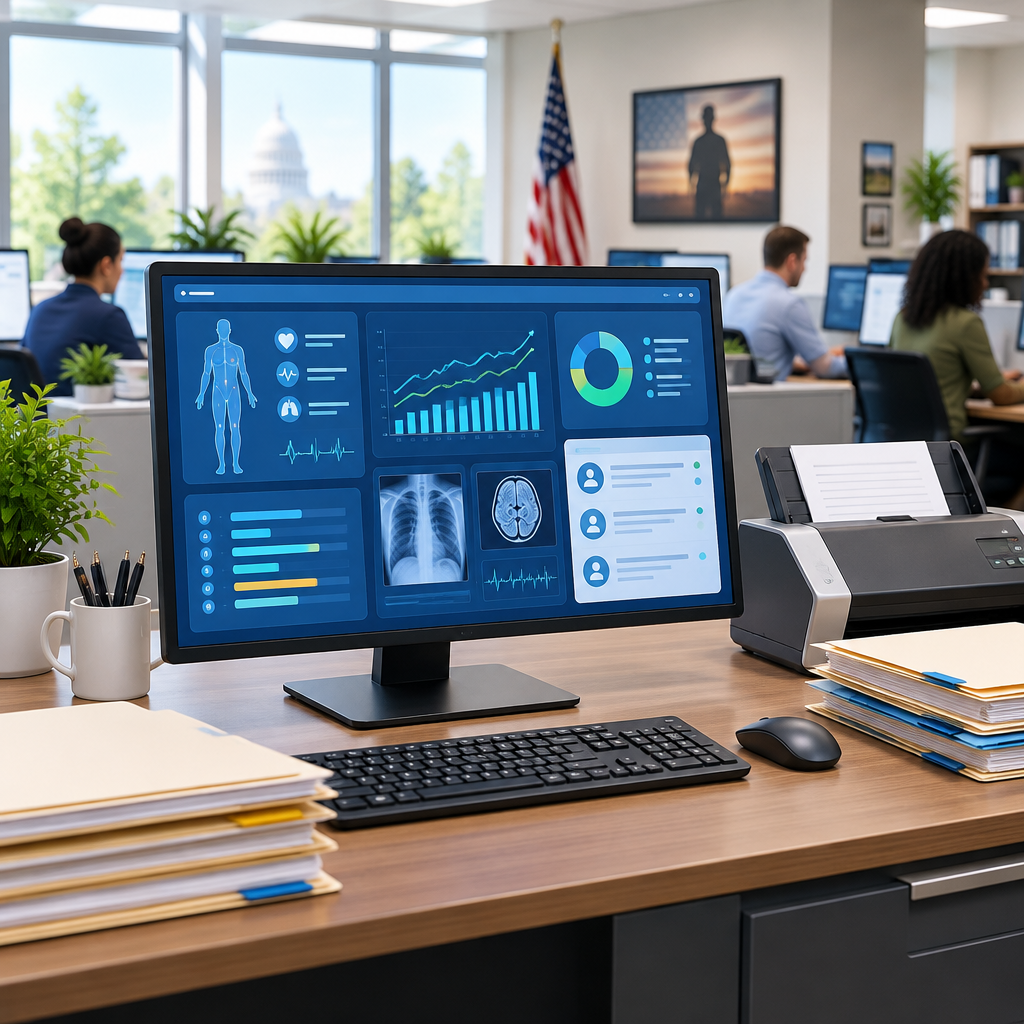
"In its first year, the AI‑Powered Medical Records Processing System processed billions of pages across millions of documents."
Derrick Pledger on embedding AI into government operations
Derrick Pledger, Chief Digital and Information Officer at Maximus, framed the past year as a turning point: “AI is no longer a standalone experiment; it is embedded within secure cloud environments, strengthened by reliable data, and paired with defined human decision-making roles – part of the operational infrastructure of government.” His view, presented in a recent feature, stresses that AI is being treated as a component of routine mission systems rather than an isolated add‑on.
Policy drivers: Executive Order 14179 and OMB Memorandum M‑25‑21
The article ties the federal shift from pilots to production to specific policy actions. It cites Executive Order 14179, Removing Barriers to American Leadership in Artificial Intelligence, and the Office of Management and Budget’s Memorandum M‑25‑21 as forces accelerating federal AI adoption with a focus on innovation, governance, and public trust. The result, the piece says, is an expectation that AI deployments meet the same standards as other mission systems: secure by design, auditable, and supported by clear human decision roles.

Audit-ready is a season. It shouldn't be.
Evidence in spreadsheets, controls drifting between audits, frameworks multiplying on flat headcount. Nubivance runs continuous compliance on Rapid7 Cyber GRC - SOC 2, HIPAA, ISO 27001, PCI, CMMC.
End the scrambleModernizing Veterans’ disability claims with the AI‑Powered Medical Records Processing System
A concrete example described is modernization at the Department of Veterans Affairs for Veterans’ disability claims. The article outlines the workload problem: examiners and clinicians historically sift through “hundreds or thousands of pages” of medical evidence per claim, and spikes in demand have produced backlogs. Through collaboration with Veterans Evaluation Services (VES) and government partners, AI‑enabled systems now read, structure, and summarize unstructured medical records so human experts can focus on clinical judgment. Crucially, the reporting stresses that “human experts still make all the decisions,” while AI surfaces the most relevant information. In its first year, the system processed the vast corpus referenced above — billions of pages across millions of documents — and, the piece reports, delivers faster decisions, more consistent outcomes, and greater confidence that cases receive timely review.
Improving citizen‑facing services: contact centers and digital front doors
Beyond records processing, the article describes AI’s role at government customer interfaces. Contact centers and digital “front doors” are said to leverage AI to automatically display case histories, summarize complex information, and provide decision support. According to Pledger, agents resolve issues faster, shorten call times, and deliver clearer guidance; the technology is framed as improving customer satisfaction by integrating into existing service‑delivery systems rather than functioning as standalone tools.
National security and cybersecurity applications: faster red‑team simulations and anomaly detection
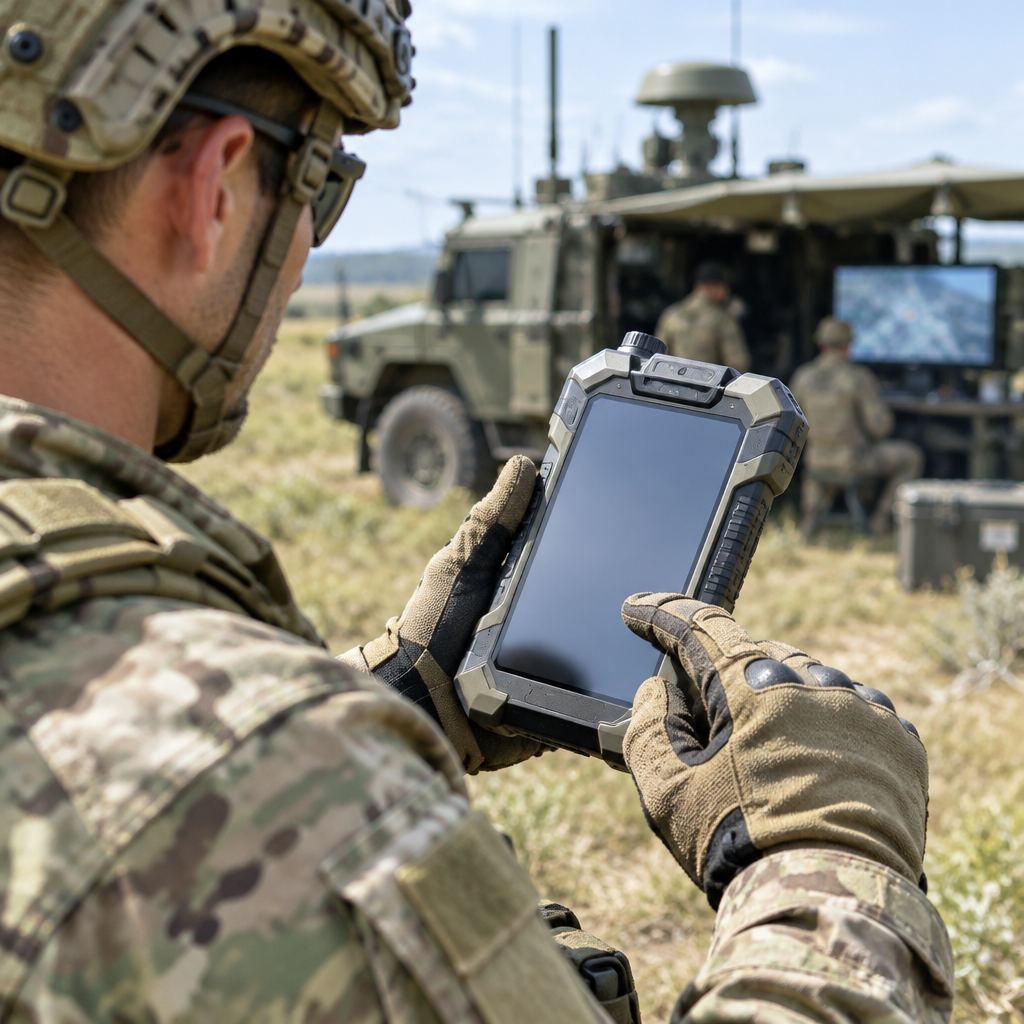
The piece also highlights applications where speed and accuracy are paramount: national security and cybersecurity. It reports that AI‑enabled red‑team simulations that once took weeks can now be processed in hours, and that advanced telemetry analysis helps analysts spot anomalies before they escalate. By compressing timelines between problem identification and deployment of secure, actionable solutions, the article argues AI reduces risk to critical infrastructure and improves resilience.
What this means for medical examiners, contact‑center agents, and cybersecurity teams
- Medical examiners: AI reduces time spent searching records so clinicians can apply clinical judgment more directly; human experts continue to make final decisions.
- Contact‑center agents: AI tools surface case histories and summarize complex materials, enabling faster resolution, shorter calls, and clearer guidance for Veterans and caregivers.
- Cybersecurity teams: Faster red‑team simulations and advanced telemetry analysis compress detection‑to‑response windows, allowing teams to spot and address anomalies more quickly.
The reporting frames this evolution as less about discovering new use cases than about standardizing what already works: shared platforms, stronger governance, and investment in the people who operate these systems. As Pledger put it, “When we execute on that approach, AI becomes part of how government responds.” That formulation captures the article’s central claim: AI’s value to Veterans and caregivers will be realized when it is woven into secure, auditable systems and paired with defined human roles — not as an experiment, but as routine infrastructure.