“Today, powerful frontier models are often open-sourced within months,” Garrett Berntsen, chief AI officer at Accenture Federal Services, warned — and with that observation he framed the central problem facing defense planners: the same advanced software that can speed analysis for friendly forces can also be adopted quickly by adversaries.
Agentic SI versus large language models: a capability shift
The source draws a clear line between today’s large language models — constrained by their training datasets — and a new class of agentic Super Intelligence (SI) that can act with autonomy. Agentic models do more than synthesize text: they can take chained actions, operate continuously, and change behavior in real time. That capability increases both operational utility and the speed at which threats and opportunities appear on the battlefield.
Garrett Berntsen on the ticking clock and open-source diffusion
Berntsen stressed the tempo of change. “That means adversarial actors or a teenager in a basement will soon have tools capable of synthesizing vulnerabilities into potent cyberweapons. Our adversaries aren’t just processing data faster, they are acting faster. Defensively, we are on a ticking clock to harden our systems using these same capabilities,” he said. The source notes that SI tools are “becoming available outside of classified settings,” changing the calculus for both offense and defense because countermeasures “cannot take months or years to build.”

The cyber insurance questionnaire just landed. Now what?
SOC 2, HIPAA, insurance renewals - someone has to own security strategy. Nubivance provides fractional CISO leadership without the full-time salary.
Get a security leadHuman in the lead: rules of engagement, guardrails, and autonomy levels
The piece emphasizes a preserved role for humans across any agentic deployment. Military units operate under variable rules of engagement (ROE); the ROE for “Operation Epic Fury” differs from those for forces in Afghanistan, and there is no one-size-fits-all standard for SI. Pre-determined guardrails are required so that systems can be given different autonomy levels depending on task. For example, agents sorting surveillance data may be granted near-full autonomy to identify patterns, while drones following convoys or tracking individuals operate under stricter parameters and “do not engage without human authority.”
Berntsen framed the operational rationale: “The goal of agentic isn’t to replace human judgment; it’s to clear away the cognitive noise so that when the human makes a decision, it is based on synthesized, real-time ground truth rather than overwhelming data overload.” The balance sought is speed without surrendering ultimate human decision-making authority.
Modernizing procurement, workflows, and the “ecosystem approach”
Technological change, the source reports, requires process change. Defense development is described as resistant to rapid adaptation because “legacy systems and processes create inertia.” Berntsen advocates re-engineering workflows around current and future technology, not rigid, multi-year feature specifications. He called for “an ecosystem approach – taking commercial frontier models, wrapping them in defense-grade security and domain-specific knowledge, and embedding engineers alongside operators to continuously evolve the solutions.”
Procurement models may shift as well. The current multi-year acquisition cycle — write requirements, request funding, build, and then maintain indefinitely — is contrasted with a future where SI-driven coding “can cut that cost dramatically,” enabling mission-specific, short-lived software: “You build a capability for a specific mission problem, and if it stops being useful, you just turn it off and tear it down,” the source quotes (spelled there as “We won’t need to treat software as a permanent asset,” said Bernsten).
Front-line software skills: build, execute, tear down
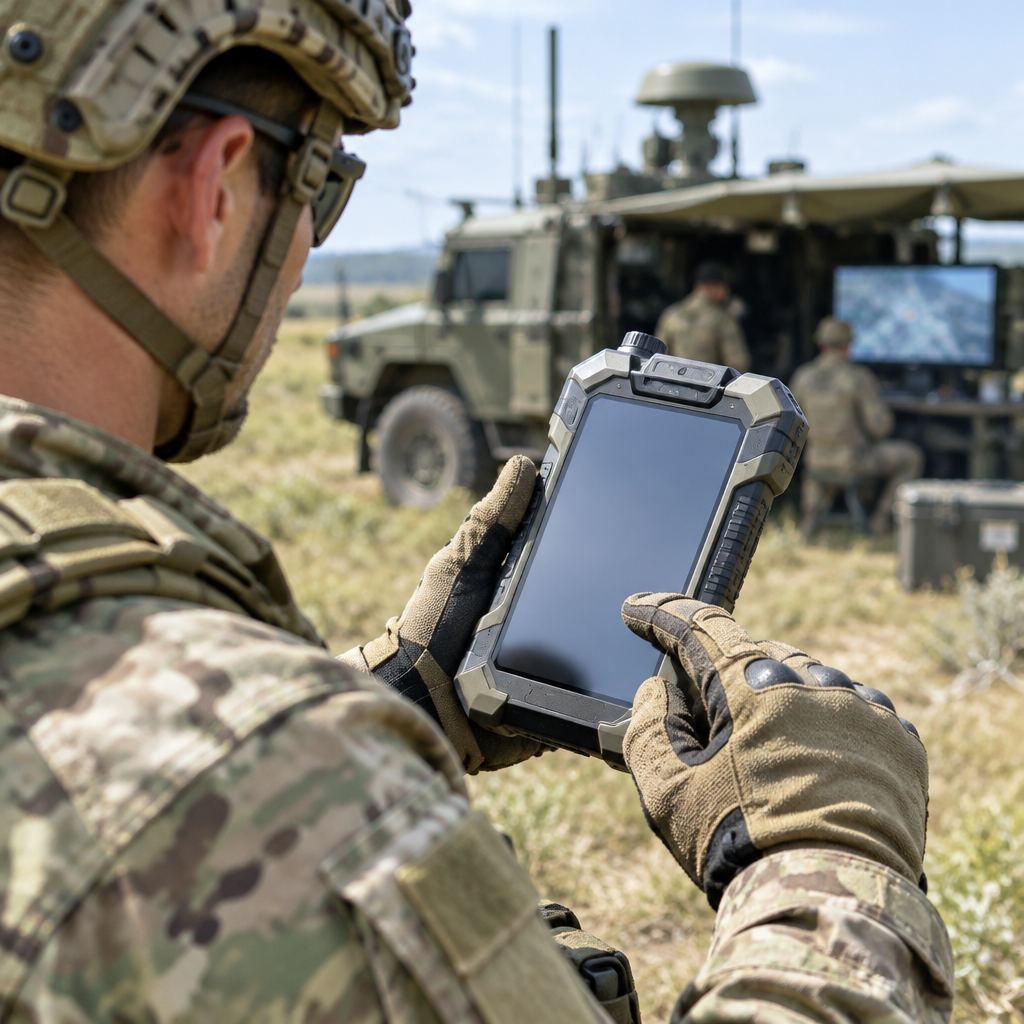
A final operational change envisioned is pushing software skills forward. Rather than routing requests back to headquarters, “troops with software skills will be able to build apps or programs on the fly to meet their specific challenges.” Berntsen summarized the envisioned pattern bluntly: “They build the digital capability on the spot, execute the mission, and tear it down.” That model depends on rapid development cycles, secure wrapping of commercial models for classified networks, and tight feedback loops between engineers and operators.
What this means for nation-states, defense procurement leaders, and front-line forces
- Nation-states and rogue actors: the line between classified capability and widely available tools is narrowing; the source warns adversaries will “act faster” as frontier models spread.
- Defense procurement leaders: current multi-year cycles and rigid specifications clash with the need for adaptive, mission-specific software and “ecosystem” approaches that embed industry models into defense networks.
- Front-line forces and operators: the future described puts developers and operators in the same feedback loop, and pushes software creation forward so units can respond in hours or days rather than waiting for centralized development.
The central tension the source leaves on the table is temporal: advanced agentic SI can change the speed and shape of both attacks and defenses, but realizing the defensive promise requires institutional change — faster procurement, edge-ready prototypes, and a trained front line. The practical test will be whether governments and militaries can re-tool processes and push secure, mission-fit software to the field quickly enough to meet the “ticking clock” Berntsen describes.