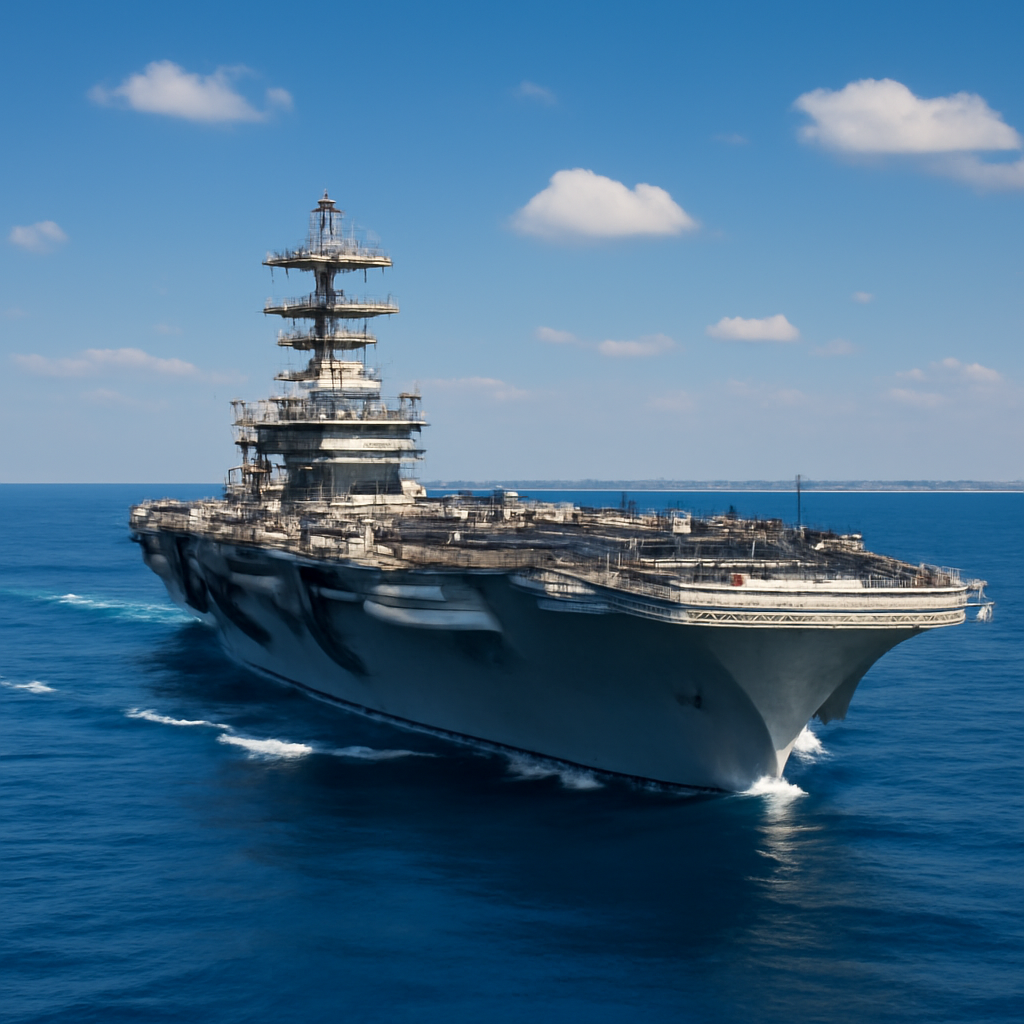
"We’ve officially claimed the title for most consecutive days at sea for any modern aircraft carrier," Lt. Commander Alexis Travis wrote on Instagram on June 16.
USS Abraham Lincoln and Carrier Strike Group 3: a continuous presence
The Nimitz-class aircraft carrier USS Abraham Lincoln has been underway for 210 straight days, operating in Middle Eastern waters in support of Operation Epic Fury and the subsequent blockade of Iran. Lincoln is the flagship of Carrier Strike Group 3 (CSG-3), a formation described in the reporting as "the most capable CSG in the fleet," and is carrying more than 5,000 Sailors and Marines. The strike group left Naval Base San Diego on November 21, 2025, made an exceptionally brief one-day port visit to Naval Base Guam on December 12, 2025, and then conducted operations in the South China Sea and the Indian Ocean before entering the northern Arabian Sea in late January.
Operation Epic Fury: sorties, blockade enforcement, and retaliatory strikes
Carrier Air Wing 9 (CVW 9) launched sorties in the opening phase of Operation Epic Fury and has been central to enforcing the naval blockade that followed. According to the report, CVW 9 "launched thousands of sorties" during the campaign, pressed Iran’s southern axis during a 40-day period of intensive activity, successfully escorted commercial ships through the contested Strait of Hormuz, and hunted and disabled Iranian-affiliated vessels attempting to run the blockade. Since a Memorandum of Understanding (MOU) was signed on June 17, Lincoln has remained in the northern Arabian Sea, launching retaliatory strikes during recent skirmishes.

This site is the portfolio.
OSINTSights runs on Cloudflare Workers, D1, R2, and Vectorize, with an AI pipeline on Hetzner ARM. Nubivance designed, built, and operates it. We do the same for clients.
See what we buildDestroyer Squadron 21, Tomahawks, and defensive measures
The Lincoln CSG included guided-missile destroyers from Destroyer Squadron (DESRON) 21. DESRON 21 is reported to have fired dozens of Tomahawk Land Attack Missiles (TLAMs) against Iran and provided layered defensive measures for the carrier strike group, employing Standard Missiles and other armaments to intercept incoming threats. The reporting notes that these surface combatants — more than 20 U.S. Navy ships remain in the region — have sustained prolonged periods at sea; some destroyers have been at sea for over four months, while a few made limited port calls before hostilities escalated.
Named ships and movements: Spruance, Michael Murphy, and formation operations
Several specific ships and movements are documented. USS Frank E. Petersen Jr., identified as the strike group's Integrated Air and Missile Defense commander, moored at the Port of Duqm, Oman, for two days in mid-February. USS Michael Murphy docked in Dubai from February 25–27 and departed the day before the city was targeted in Iran’s initial counterattack. USS Spruance, the only San Diego–based destroyer operating with CSG-3, deployed with Lincoln on November 21 and has matched Lincoln’s long underway period, apart from a December port call in Guam; Spruance was reported firing a Tomahawk on the first day of Epic Fury. Formation photos from February 6, 2026, show USS Abraham Lincoln alongside USS Michael Murphy, USS Frank E. Petersen Jr., USNS Henry J. Kaiser, USNS Carl Brashear, USCGC Robert Goldman, and USCGC Clarence Sutphin Jr. sailing in the Arabian Sea.
How Sailors, CENTCOM, and Iranian negotiators are affected
- Sailors aboard Lincoln and other ships: prolonged deployments and very limited liberty. The brief one-day visit to Guam is described as so short that much of the crew likely never went ashore; repeated Instagram posts from a serving officer emphasize morale and strain, including the line, "Literally no one signed up for this."
- U.S. Central Command (CENTCOM): the Lincoln CSG is presented as one of the principal assets in theater and would "likely be among the first naval assets to rotate out of the theater" if an agreement is reached. The MOU commits American and Iranian officials to determine drawdown details within 30 days if a final deal is reached before a mid‑August deadline.
- Iranian negotiators and Tehran’s operational posture: a new spate of tit-for-tat strikes described in the report has "created serious uncertainty" around future talks and the implementation timetable for any drawdown.
Records, precedents, and an unresolved confirmation
Lincoln’s claimed milestone follows earlier long at-sea periods recorded by other carriers. The reporting notes that in June 2020 the Nimitz-class USS Dwight D. Eisenhower and cruiser USS San Jacinto had spent 161 consecutive days at sea (with Eisenhower ultimately at sea for 206 consecutive days), and that USS Theodore Roosevelt held a previous 160-day mark in 2002. Separately, USS Gerald R. Ford logged a 326-day deployment earlier in 2026 while operating primarily in the U.S. European Command and U.S. Southern Command areas and making at least nine port calls. The Lincoln claim has not been independently confirmed by the Navy; the author states they "reached out to the Navy to confirm whether this is indeed a record-breaking period at sea" but had not received a response as of publication.
The immediate practical question is concrete and narrow: with the MOU timetable tied to a mid‑August deadline and recent strikes complicating diplomacy, when and where the Lincoln crew will next set foot on land remains unknown.