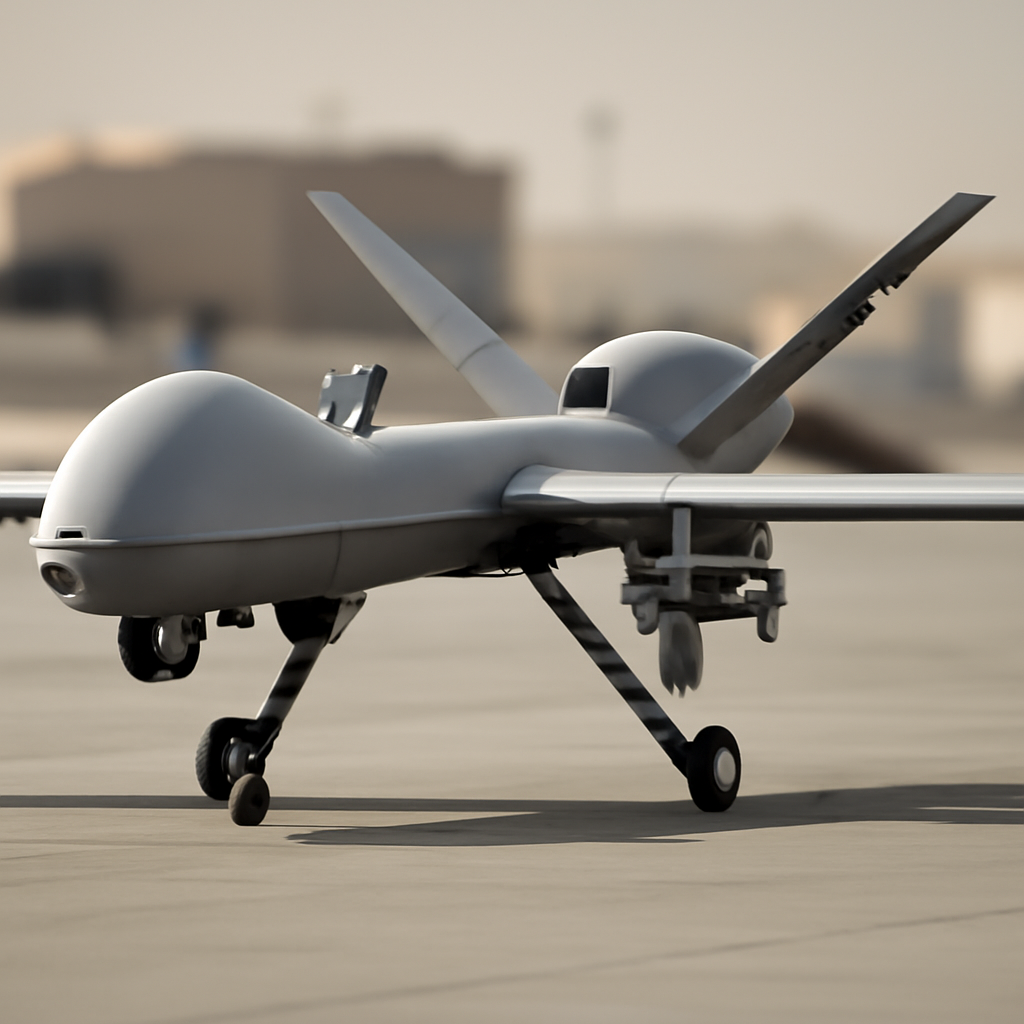
"There are less than 10 total 'new' MQ-9As available to any customers anywhere in the world," General Atomics spokesperson C. Mark Brinkley told TWZ.
USAF to buy unused MQ-9A Block 5 aircraft from General Atomics
The U.S. Air Force confirmed to TWZ that it "intends to purchase several unused MQ-9A Block 5 from GA-ASI [General Atomics Aeronautical Systems, Inc.]." A service spokesperson said these aircraft "were manufactured based on forecasted purchases for other customers but are no longer needed" and that the available aircraft are currently company-owned. The Air Force added that it "has received funds to begin the acquisition process."
General Atomics reports a very small inventory
General Atomics told TWZ it has very few factory-new MQ-9As to offer. Brinkley said the company has "less than 10 total 'new' MQ-9As available to any customers anywhere in the world." He added that "there are some number of decommissioned Reapers out there, and some number of those could potentially be brought back into service." The MQ-9A model is out of production, the company has moved on to the MQ-9B, and any Air Force purchases of B-model aircraft would need to be worked into the existing MQ-9B production schedule.

This site is the portfolio.
OSINTSights runs on Cloudflare Workers, D1, R2, and Vectorize, with an AI pipeline on Hetzner ARM. Nubivance designed, built, and operates it. We do the same for clients.
See what we buildOperational losses and shrinking fleet numbers
The scramble to buy unused airframes follows substantial aircraft attrition. The downed Reapers have a reported combined value of about $1 billion. As of May, "nearly 30 MQ-9 Reapers have been lost in the course" of Operation Epic Fury against Iran, Air & Space Forces Magazine reported, citing "people familiar with the matter." That toll is in addition to "dozens of Reapers reportedly downed" while conducting operations targeting Iranian-backed Houthi militants in Yemen over the past year.
At a congressional hearing on May 13, Air Force Lt. Gen. David Tabor, Deputy Chief of Staff for Plans and Programs, said the service was trying to "buy back as many of the MQ-9As as we possibly can right now" in a short-term effort "in this fiscal year." Tabor told members of Congress the Air Force's total MQ-9A fleet had shrunk to 135 aircraft. Official budget documents, however, show the Air Force had 165 Reapers in inventory at the start of Fiscal Year 2026, down from 231 at the beginning of Fiscal Year 2025.
Parts cannibalization, the MQ-1 question, and storage limits
To bolster the supply of operational Reapers, the Air Force said it repurposed parts from retired MQ-1 Predator aircraft. The service stopped using the MQ-1 in 2020; more than 50 were sent to the 309th Aerospace Maintenance and Regeneration Group (AMARG) and "heavily cannibalized for spare parts for the MQ-9 aircraft," a service spokesperson told TWZ. The Air Force noted it never regenerated MQ-1 Predators back into service.
On the topic of storage and regeneration, the 309th AMARG — known as "The Boneyard" — told TWZ it "has zero MQ-9s in storage nor have they ever regenerated a MQ-9 back into service." Separately, the Air Force said 20 MQ-1s had been transferred to the Navy.
Questions about current MQ-1 operations surfaced after U.S. Central Command (CENTCOM) acknowledged the loss of an "MQ-1" drone to Iranian fire. The Air Force declined to say whether it lost any MQ-1s and referred questions to CENTCOM, which declined comment. TWZ noted it is "very possible, if not likely, that the uncrewed aircraft in question was an MQ-1C Gray Eagle, a related but different design still in active U.S. Army service."
What this means for the Air Force, General Atomics, and AMARG/Navy
- Air Force: The service is pursuing near-term buys of GA-owned MQ-9A Block 5 aircraft and has "received funds to begin the acquisition process," while also beginning an early-stage effort to acquire an "MQ-9 Next" — a program the Air Force itself says will take years, if ever, to come online.
- General Atomics: The manufacturer holds the only confirmed pool of unused MQ-9As, but that pool is small — "less than 10" new airframes — and the company points to decommissioned aircraft and parts stock as limited additional sources.
- 309th AMARG and the Navy: AMARG reports no MQ-9s in storage to regenerate, while the Air Force has used retired MQ-1s for spares and transferred 20 Predators to the Navy, constraining but not eliminating short-term options for replenishment.
The Air Force faces a narrow set of near‑term options: buy the few unused MQ-9As General Atomics still holds, attempt to restore decommissioned airframes, cannibalize parts from retired MQ-1s, or shift to MQ-9B buys that must be fit into an existing production line. What remains uncertain in the public record is how many Reapers have actually been lost overall and where the service will find enough replacement capability to close gaps revealed by operations in the Middle East.