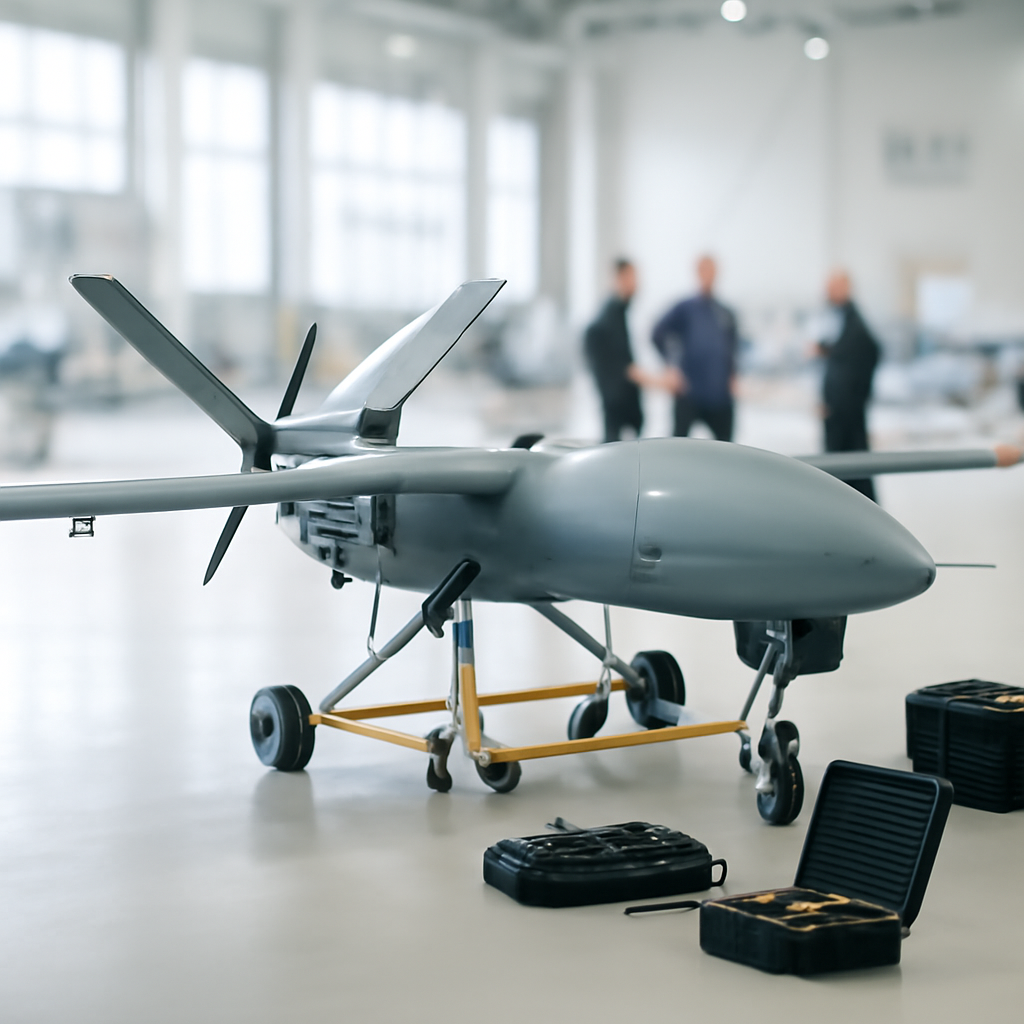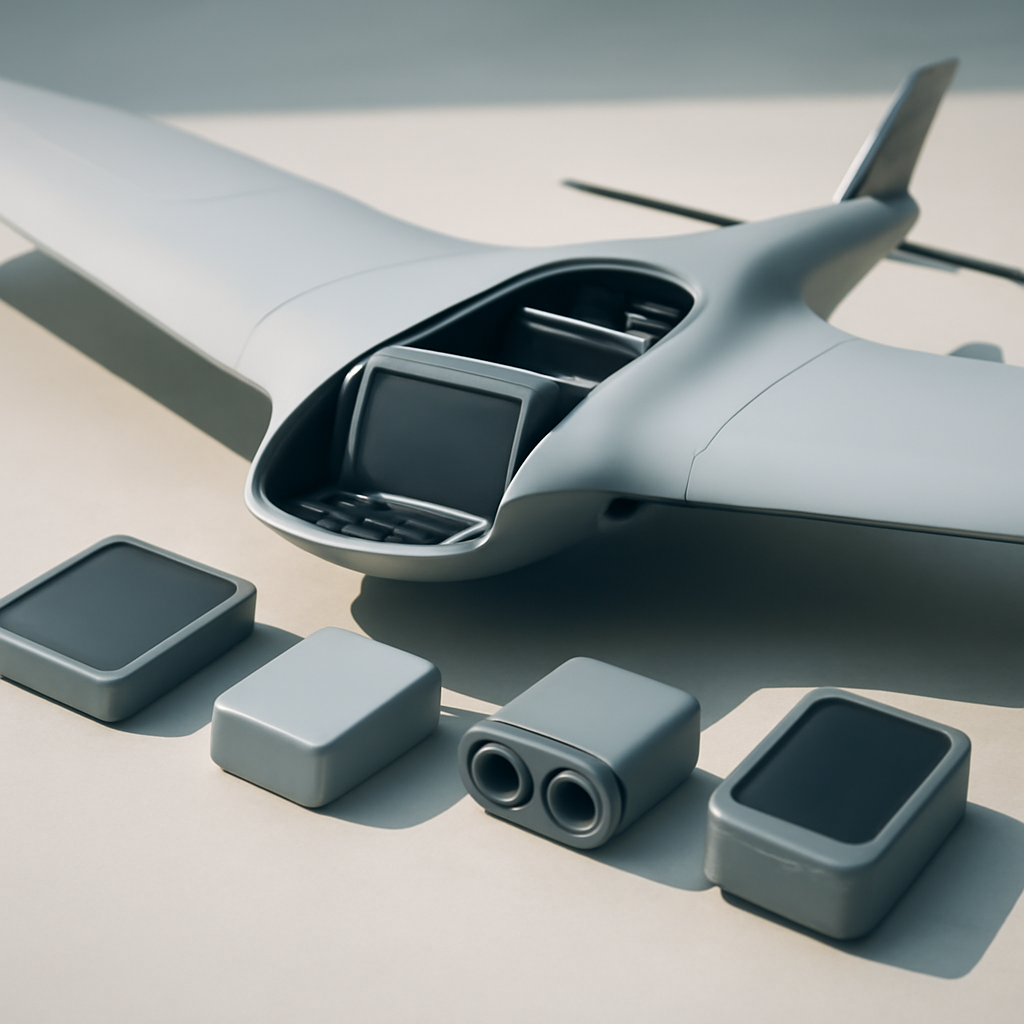
"We could hang ISR sensors, we could hang weapons, we could hang fuel — something that we could line‑in/ line‑out, very modular," Gen. John Lamontagne said, describing the Air Force's vision for an "MQ‑9 Next" during a virtual talk hosted by the Air & Space Forces Association’s Mitchell Institute for Aerospace Studies.
Gen. John Lamontagne on modularity, software ownership, and flexibility
Gen. Lamontagne, the U.S. Air Force’s Vice Chief of Staff, set modularity at the center of the service’s emerging requirements for a successor to the MQ‑9 Reaper. He described modularity as encompassing both hardware and "very simple software that we own, and we could change, so it’s almost like an iPhone." Lamontagne said owning and controlling the software would allow the service to "change the speed of warfare, change the speed of need," by rapidly modifying payloads and capabilities.
He framed MQ‑9 Next as a more MQ‑9‑like platform with "perhaps more range, perhaps a lot more modularity," able to accept ISR sensors, weapons, or fuel as mission needs dictate. His remarks were offered as the Air Force is still in early work on requirements, with an Air Force Futures team "to figure out exactly how we want to tackle that going forward."
Air Force Futures and the "attritable" concept — Maj. Gen. Christopher Niemi
Maj. Gen. Christopher Niemi, the acting head of Air Force Futures, has testified that an MQ‑9 replacement should leverage open architectures, be easier and cheaper to produce "in mass numbers," and be usable "in a more attritable way." The service has used the term "attritable" in recent contracting notices seeking information about new ISR drone designs; within the Air Force context the term denotes systems intended to be low‑cost enough to be sent into higher‑risk missions where some loss is expected while remaining capable enough to be relevant on those missions.
Lamontagne aligned MQ‑9 Next conceptually with other uncrewed efforts, saying the performance of MQ‑9s in the recent conflict with Iran "affirms the path that we’re on with Collaborative Combat Aircraft," while distinguishing CCAs as "different [from MQ‑9], much more autonomous" and controlled by a human who would direct them on missions.

Audit-ready is a season. It shouldn't be.
Evidence in spreadsheets, controls drifting between audits, frameworks multiplying on flat headcount. Nubivance runs continuous compliance on Rapid7 Cyber GRC - SOC 2, HIPAA, ISO 27001, PCI, CMMC.
End the scrambleAttrition of MQ‑9s and production constraints
Operational losses are a driving pressure in the program. The source reports "losses of dozens of MQ‑9s just in the past year or so" tied to operations targeting Houthi militants in Yemen and more recently to conflict with Iran. The Air Force called this attrition "concerning," and those losses amplify the urgency for a replacement that can be produced in larger numbers.
Complicating short‑term options, the MQ‑9A Reaper is out of production. The manufacturer, General Atomics, has moved on to the MQ‑9B, an evolved design with significant differences. Any new Air Force purchases in the MQ‑9 family would have to be MQ‑9B aircraft and integrated into the existing production schedule — a constraint the service must weigh while defining MQ‑9 Next requirements.
General Atomics pushes back — capability, survivability, and hard lessons
General Atomics, the maker of the MQ‑9 family, has publicly questioned the shift toward cheaper, more disposable designs. C. Mark Brinkley, a spokesperson for the company, told TWZ that calls for "cheaper, disposable aircraft" overlook "actual capability, ready today" and "all of the hard lessons, already learned, about icing and weather and weapons integration." Brinkley warned against treating future designs as "unscratched lottery tickets, promising all of the win and none of the lose."
His comments underscore a central tension in the effort to define MQ‑9 Next: balancing survivability and capability against affordability and mass producibility. While earlier Reaper‑replacement studies emphasized low observability for contested environments, the latest thinking — as reported — reorients toward lower‑cost platforms that could be fielded en masse to absorb anticipated attrition. The service does not rule out low‑observable elements, but says they would be "more aggressively balanced against cost."
What this means for the Air Force, General Atomics, and potential manufacturers
- For the Air Force: Expect a requirements process focused on modularity, open software architectures, and cost trade‑offs between survivability and mass producibility. Finalizing those requirements and an acquisition strategy remains an open task for the Air Force Futures team.
- For General Atomics: The company will need to reconcile ongoing production of the MQ‑9B and its views on capability and survivability with a service appetite for lower‑cost, attritable options. Brinkley’s comments signal the company will press for investment in survivability and upgrades to existing platforms.
- For potential new manufacturers and legacy primes such as Northrop Grumman and Lockheed Martin: The marketplace has shifted; the source notes more contenders now aim to scale production at low cost. New entrants and primes alike face the challenge of proving they can deliver sufficient capability while meeting the Air Force’s modular, lower‑cost objective.
The Air Force has tried several times before to replace the Reaper without success. The current debate — modularity and software ownership on one side, survivability and mature capabilities on the other — will determine whether MQ‑9 Next is configured as a higher‑end, stealth‑focused heir, or a broadly producible, attritable workhorse. The immediate next steps are procedural and concrete: finalize the requirements, decide an acquisition strategy, and reconcile production realities for the MQ‑9B while the service defines the path forward.