"The U.S. Air Force, in partnership with Australia, has conducted a flight test of the Hypersonic Attack Cruise Missile (HACM) as part of our continuous work to advance long-range strike capabilities," an Air Force spokesperson confirmed to TWZ today.
What the Air Force and RAAF said
The Air Force confirmed, via a spokesperson to TWZ, that a HACM flight test was conducted under the Southern Cross Integrated Flight Research Experiment (SCIFiRE) partnership with Australia. The spokesperson said the Royal Australian Air Force "executed the release of a HACM flight test unit over a designated Australian test range, gathering crucial data to advance the program’s objectives," and described the event as the culmination of "an extensive series of tests designed to measure the missile’s performance under realistic flight conditions." The Air Force did not name the test range, provide a date for the release, say whether the missile operated under its own power after release, or identify the aircraft that carried it aloft.
Program lineage, industrial partners, and designation
HACM is a scramjet-powered, air-breathing hypersonic cruise missile developed under U.S.–Australian cooperation. The effort has been conducted, in part, under the SCIFiRE umbrella and draws on earlier work from DARPA’s Hypersonic Air-breathing Weapon Concept (HAWC) project. Raytheon — identified in the reporting as now formally RTX — in cooperation with Northrop Grumman, was chosen to develop HACM in 2022. The weapon has reportedly been designated AHM-4A in a new joint service nomenclature for aircraft and missiles.

This site is the portfolio.
OSINTSights runs on Cloudflare Workers, D1, R2, and Vectorize, with an AI pipeline on Hetzner ARM. Nubivance designed, built, and operates it. We do the same for clients.
See what we buildBasic technical profile reported
According to the Government Accountability Office (GAO), HACM is a two-stage weapon: a rocket booster and a scramjet "cruiser" that separates from the booster and eventually dives toward its target. The reporting notes scramjets require an initial boost to high Mach numbers to function, and while hypersonic speed is generally defined as above Mach 5, HACM’s peak speed was not reported. The program sits in a lineage of prior scramjet and air-breathing tests — the report mentions Boeing’s X-51 Waverider and HyFly 2 among earlier two-stage air-breathing hypersonic test vehicles and refers to design concepts such as waverider configurations, though it is not confirmed whether HACM uses this principle.
Schedule pressure, testing cuts, and GAO findings
HACM has experienced repeated schedule slips: an initial goal to start flight testing in 2024 moved first to 2025 and then to 2026. GAO reported in July that "The HACM program is on track to conduct its first flight test in the second quarter of fiscal year 2026, but officials said there is effectively zero margin left in the schedule for the rapid prototyping effort. The program has already descoped the rapid prototyping effort from seven to five planned flight tests." GAO added that the Air Force planned to produce 13 missiles during the rapid prototyping effort "including test assets, test spares, and operational rounds," and warned that "If a significant flight test failure occurs, it is likely that the program will not be able to complete all five tests within the 5-year rapid prototyping timeframe."
GAO’s report also noted program leaders see completing at least the first three flight tests as critical to informing a decision to initiate a rapid fielding effort and procure HACM in fiscal year 2027. The reporting states the Air Force has taken on scheduling risk, "aggressively resequencing activities to focus almost exclusively on those necessary to support the first flight test date" and in some cases concurrently validating parts while completing system design — a strategy GAO flagged as risky because part failures could force redesigns.
What this means for the Air Force, the RAAF, and RTX
- For the U.S. Air Force: the release marks an important program milestone — the transition to flight testing — but the service remains under tight schedule pressure to inform a potential rapid fielding decision in fiscal year 2027, with a truncated five-test plan and little margin for failure.
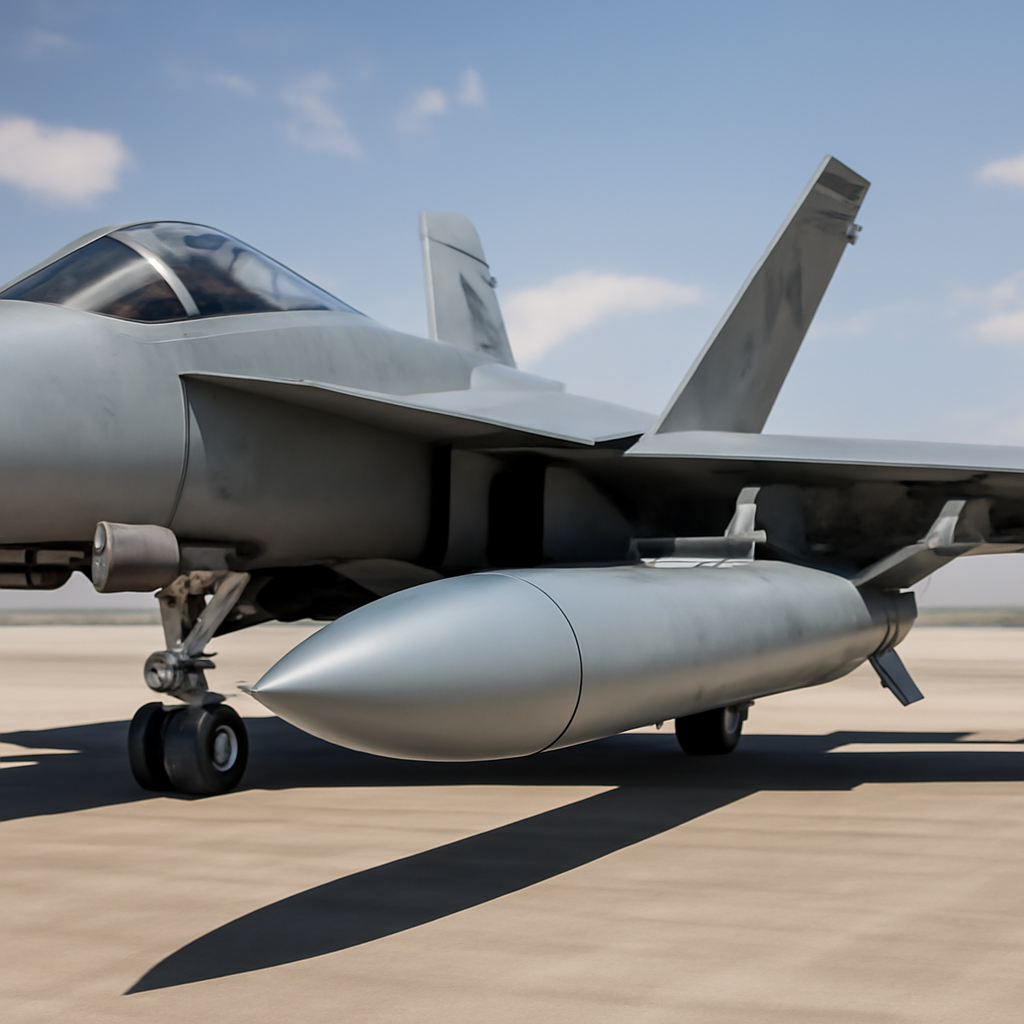
- For the Royal Australian Air Force: the RAAF executed the release and has been a partner under SCIFiRE. GAO previously reported that RAAF F/A-18F Super Hornets would be used for at least some HACM launches, aligning with the Air Force’s statement that Australia carried out the release on a domestic test range.
- For RTX (and Northrop Grumman): the prime contractors face an accelerated, risk-embracing schedule that has required resequencing of activities and concurrent validation of parts and design work — practices the GAO characterized as increasing the chance of costly redesign if validation fails.
The program has now passed a key threshold: a flight-test release over an Australian range. But the details that determine whether HACM will meet its compressed timeline remain unanswered in the public record — notably whether the missile sustained powered flight after release, the identity of the launch aircraft, and how many of the trimmed five tests will succeed without forcing further schedule slips. The Air Force’s target to initiate rapid fielding in fiscal year 2027, and the program’s ability to absorb a significant test failure, will be the immediate measures by which this milestone is judged.