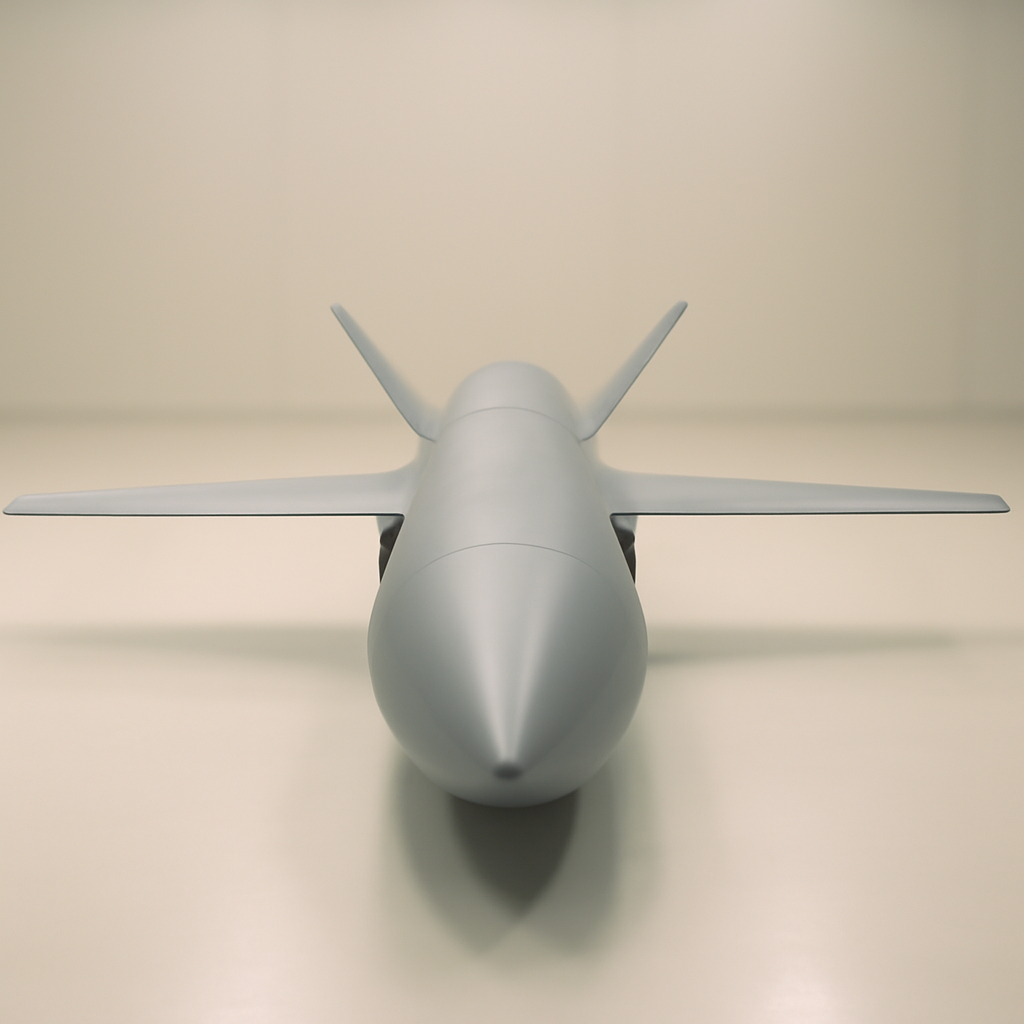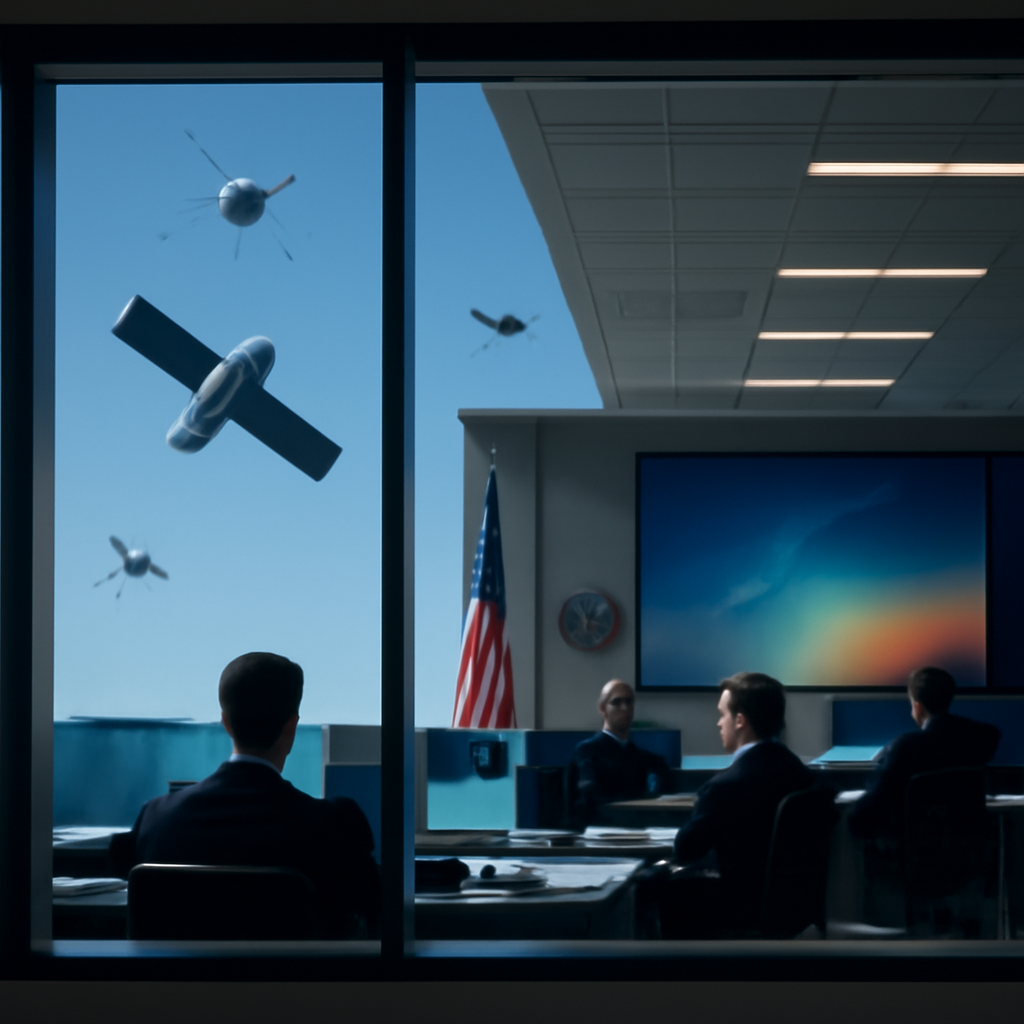
"The United States now has on-orbit space control weapons capable of defending the joint force against hostile adversary action."
U.S. officials Troy Meink and Gen. Douglas Schiess acknowledge on-orbit weapons
At a recent Air and Space Forces Association conference, U.S. Air Force Secretary Troy Meink announced that the U.S. Space Force has launched what he called "space control weapons" into orbit. Chief of Space Operations Gen. Douglas Schiess reinforced the claim, saying the U.S. Space Force "uses active space-based weaponry to support United States national defense," and described the space domain as "increasingly contested" by technologies meant to disrupt or destroy satellites. Details about the systems themselves were not provided in the comments quoted in the source material.
Russia's A-235 / PL-19 Nudol test and Gen. James Dickinson's warning
The return of kinetic anti-satellite (ASAT) testing has drawn particular attention. Russia's 2021 ASAT test, using the A-235 / PL-19 Nudol kinetic interceptor missile system, produced what U.S. Space Command characterized as "more than 1,500 pieces of trackable orbital debris." Gen. James Dickinson, commander of U.S. Space Command, warned that "Russia is developing and deploying capabilities to actively deny access to and use of space by the United States and its allies and partners," calling the test a clear demonstration of counterspace capabilities that "undermine strategic stability and pose a threat to all nations."

This site is the portfolio.
OSINTSights runs on Cloudflare Workers, D1, R2, and Vectorize, with an AI pipeline on Hetzner ARM. Nubivance designed, built, and operates it. We do the same for clients.
See what we buildChina's 2007 ASAT test and the broader comeback of kinetic ASATs
The diplomatic and operational landscape shifted after China conducted the first successful modern ASAT test in January 2007, an event the source says effectively broke an informal moratorium on such tests. Since then, kinetic ASAT tests have been conducted by other states at different times: the United States (2008), India (2019), and Russia (2021). The source emphasizes that some of these tests occurred at relatively high altitudes — cited examples at 865 km and 480 km — meaning any debris generated could remain in orbit for decades because of lower atmospheric drag at those heights.
Non-kinetic counterspace tools: lasers, microwaves, cyber, jamming, and data seizure
Beyond kinetic interceptors, the source describes a wide spectrum of non-kinetic counterspace capabilities that have been developed and employed. These include electromagnetic pulses, high-powered lasers, high-powered microwaves, and electronic and cyber techniques such as jamming, spoofing, data interception or corruption, and even "taking full control of data." Incidents of interference and disruption trace back as far as 2008; attribution is difficult, but the source reports that many of those threats are thought to be sourced from China and Russia. The source also notes U.S. intelligence revelations from February 2024 that Russia was developing and potentially deploying nuclear anti-satellite (ASAT) weapons, which would present an especially indiscriminate risk to satellite orbits if used.
What this means for the U.S. Space Force, allied partners, and civil/commercial space users
- The U.S. Space Force and military planners: The Space Force has publicly framed the deployment of on-orbit "space control weapons" as a direct response to adversary activities; planners will be operating in a domain where both kinetic and non-kinetic counterspace capabilities are acknowledged and in apparent use.
- U.S. Space Command and allied partners: The creation of long-lived debris from kinetic tests and the development of capabilities "to actively deny access to and use of space" are cited as threats to shared capabilities, meaning command-level concerns about strategic stability and allied access to space systems will likely intensify.
- Civil and commercial space users and the public: High-altitude debris that "will stay afloat in space orbits for decades" increases collision risk for satellites and raises the prospect of disruption to services that depend on space-based eyes and ears for operations the source calls central to national security and warfighting.
The tenor of the reporting in the source is blunt: Beijing and Moscow have been developing and employing both kinetic and non-kinetic counterspace systems for years, even as they publicly voice support for non-weaponization and peaceful use of space. U.S. officials, in turn, say they have placed active capabilities on orbit; Meink rejected the suggestion from journalists that the U.S. announcement might "give permission" to adversaries to pursue space weapons, arguing instead that the race is already under way. With kinetic tests that seed long-lived debris and a wide array of non-kinetic tools in play, the scenario depicted in the source points to an accelerating arms dynamic in orbit with consequences for military planners, allied coordination, and the everyday functioning of space-based services.