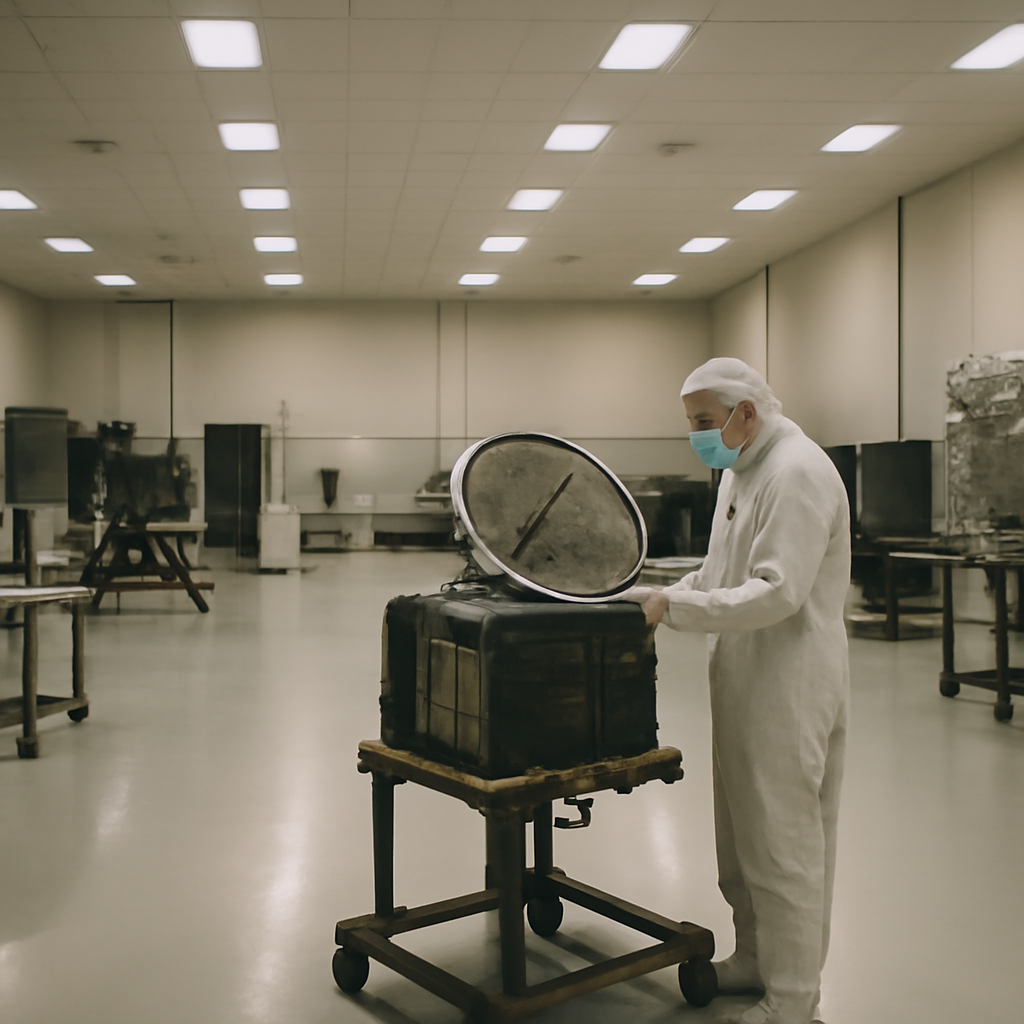
"Modern warfare relies on space-based capabilities; therefore, a key question is how quickly then United States can replace those capabilities during a conflict," the RAND report said.
The engineering shortfall in hard numbers
RAND's analysis finds the U.S. space-focused defense sector employs roughly 3 percent of the nation's engineers and faces persistent recruitment gaps. Researchers identified about 30,000 annual job openings for technicians and technologists but only 11,000 credentialed individuals enter that pipeline each year. RAND estimates the space industrial base demands approximately 5,000 of those annual openings — about 17 percent.
On the assembly side, the picture is similarly constrained: 244,000 assembly-related job fields are hired for annually, but only 13,000 people are credentialed to fill them. RAND notes the space industrial base accounts for roughly 11,000 of the annual openings for assemblers — about 5 percent — and warned that competition for the 13,000 credentialed workers "will be fierce." Those shortfalls, the report argues, could limit how quickly the United States could reconstitute satellites and other space-based capabilities within 12 to 24 months of an attack.
Workforce lead times, clearances, and doctorate availability
RAND's lead author Alexandra Gerber emphasizes that building a surge-capable workforce is not a short-term task. "The timelines for creating people to work in the space industry are much much longer than that," she said, urging planners to think 10, 20, 30 years ahead rather than months. The report also flags practical bottlenecks: security-clearance processing can take six months or more, and foreign nationals hold 70 percent of electrical and computer engineering doctorates, making a large portion of the highest-level technical talent unavailable for most national security-related work.

Audit-ready is a season. It shouldn't be.
Evidence in spreadsheets, controls drifting between audits, frameworks multiplying on flat headcount. Nubivance runs continuous compliance on Rapid7 Cyber GRC - SOC 2, HIPAA, ISO 27001, PCI, CMMC.
End the scrambleLaunch demand, the "double surge," and the Space Academy
RAND ties workforce constraints to current civilian and military plans for expanded activity in space. The White House's new space transportation policy aims for "more than 1,000 launches and reentries" by 2030, up from "about 200 launches per year in the U.S.," Gerber told Defense One. She warned that meeting that baseline growth will require many more workers to build launch infrastructure — and a conflict would create a "double surge" demand: peacetime expansion plus wartime reconstitution.
Last week, President Donald Trump announced plans to create a U.S. Space Academy to "educate and train an entire generation of skilled service members, engineers, and civil operators." Gerber responded that the expected throughput — "what, a couple hundred graduates a year" — would be too small to materially affect the scale needed for rapid reconstitution, calling the Academy's planned output insufficient for the problem RAND outlines.
Policy and industry options RAND recommends
RAND recommends a mix of education, incentives, and structural changes to grow the available talent pool. Suggested measures include funding additional internships; expanding vocational, bachelor's, and advanced-degree scholarships for STEM students; investing in fellowships; and promoting space engineering careers. The report also proposes that the Space Force "allow Reserve Officers’ Training Corps graduates and specialized program scholars to fulfill service obligations by working in qualifying" space defense firms, widening the routes that satisfy service commitments.
On the production side, RAND urges defense firms to adopt automation, robotics, and AI-enabled productivity tools as a complement to workforce growth. The report notes such technologies were "notably absent" from many public discussions and cautions that current plans emphasize volume-based hiring over process automation, leaving a structural productivity challenge unaddressed.
What this means for the Space Force, defense industry, and STEM educators
- Space Force and Pentagon planners: will need to invest in long-lead workforce pipelines, scholarships, and flexible service-obligation pathways if they expect reconstitution within 12–24 months during a conflict.
- Defense industry: faces intense competition for credentialed technicians and assemblers and is advised to accelerate adoption of automation, robotics, and AI tools to reduce labor intensity and enable surge production.
- STEM educators and program sponsors: may be asked to scale internships, vocational tracks, and degree programs to increase annual credentialing well beyond current outputs, given RAND's finding that many entry fields currently produce far fewer credentialed workers than open positions.
RAND frames the problem starkly: adversaries have demonstrated the ability to threaten or destroy U.S. space assets, and restoring those capabilities within a year or two will require a workforce and production base that do not yet exist at needed scale. The report leaves a clear choice for policymakers and industry — accelerate long-term talent pipelines and adopt automation now, or accept the risk that U.S. space capabilities will be slow to recover in a prolonged conflict.