“Our number one priority right now is: How do we improve support to space control operations?” Col. Barry Croker asked, framing a practical and immediate goal that is driving a new software effort the Space Force plans to roll out later this fall.
Mission Delta 2’s stated shift: favor timeliness over peak accuracy
Col. Barry Croker, who leads Mission Delta 2, told reporters at the AMOS conference in Maui that the new prototype will emphasize speed. The aim is to provide “a bias towards timeliness” by accepting lower-fidelity observations when they deliver faster situational awareness. Croker used concrete scenarios — a newly formed debris cloud or “a whole bunch of satellites” newly launched — to illustrate why a quicker, if imperfect, state estimate can be operationally useful.
That stance reflects Mission Delta 2’s responsibility. The organization is charged with organizing, training and equipping Guardians to undertake space domain awareness (SDA) operations and includes the 18th and 19th Space Defense Squadrons, which operate the Space Surveillance Network of telescopes and radars around the globe and the software systems needed to analyze data about space objects, “in particular those operated by potential adversaries.”
Prototype plan: a separate “software environment” and a minimum viable product
The Space Force plans to launch a prototype “software environment” later this fall and to build a “minimum viable product” that can be stood up quickly, Croker said. The prototype is explicitly intended to automate integration of commercial and military space tracking data so operators can get more timely and more accurate information overall.
Croker emphasized that the prototype will be established in a separate environment so that military-sensor tracking is not “watered down” by commercial data with different accuracy characteristics. He put it plainly: the intent is to work “with having the right environments that I can do that type of work and not perturbate the high accuracy collision avoidance type missions.” That separation is a design choice meant to protect high-precision collision-avoidance workflows while enabling faster, broader awareness elsewhere.

Audit-ready is a season. It shouldn't be.
Evidence in spreadsheets, controls drifting between audits, frameworks multiplying on flat headcount. Nubivance runs continuous compliance on Rapid7 Cyber GRC - SOC 2, HIPAA, ISO 27001, PCI, CMMC.
End the scrambleGen. Stephen Whiting: data sits in the cloud but not yet fused into operations
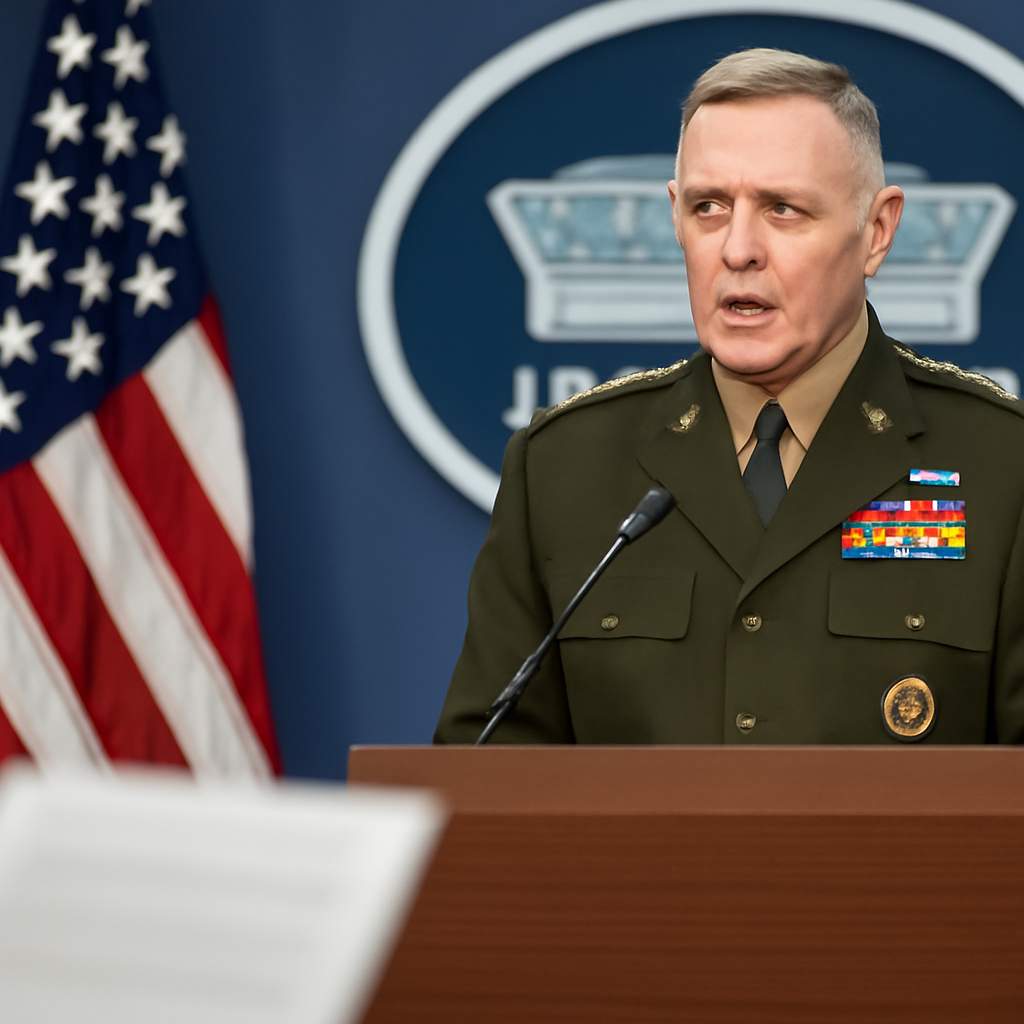
Gen. Stephen Whiting, commander of SPACECOM, described the present data flow to reporters at AMOS: the Space Force acquires commercial space tracking information via the Joint Commercial Operations cell and stores it in the cloud-based Unified Data Library, but that commercial data is “not fused directly into operational space domain awareness computer systems,” instead “running on a ‘parallel’ system.”
Whiting framed automatic integration of commercial tracking as a practical fix for capability shortfalls. “We could take the largest step forward if we could just better integrate the [commercial] data and consistently fund the acquisition of that data, and then be able to drive it into our programs of record for space domain awareness,” he said, calling that combination the “biggest initial step we could take” and saying it could be done “in the short term.”
What this means for Mission Delta 2, policymakers, and commercial trackers
- Mission Delta 2 and operational teams: Expect an operational trade-off between speed and precision. The prototype’s separate environment is meant to let analysts use faster, lower-fidelity commercial observations without degrading the high-accuracy collision-avoidance tools the service already relies upon.
- Policymakers and procurement leaders: Gen. Whiting tied improved capability to two levers — better integration and consistent funding of commercial data — and to the need to “drive it into our programs of record for space domain awareness.” How funding and acquisition processes adapt will determine whether the prototype’s outputs are absorbed into long-term systems.
- Commercial space trackers: Their data could be pushed into more operational roles sooner, but only if integration mechanisms and governance are agreed upon to prevent unwanted interactions with precision SDA workflows. The prototype seeks to automate that integration while preserving separate environments for different mission needs.
The near-term indicator to watch is technical and calendar-based: the launch of the prototype “software environment” later this fall and mission work to deliver a “minimum viable product.” Those steps will test whether a faster, hybrid commercial–military feed can be reconciled with the Space Force’s existing high-accuracy SDA operations and whether the commercial stream can be moved from a parallel cloud repository into programs of record, as Gen. Whiting described.