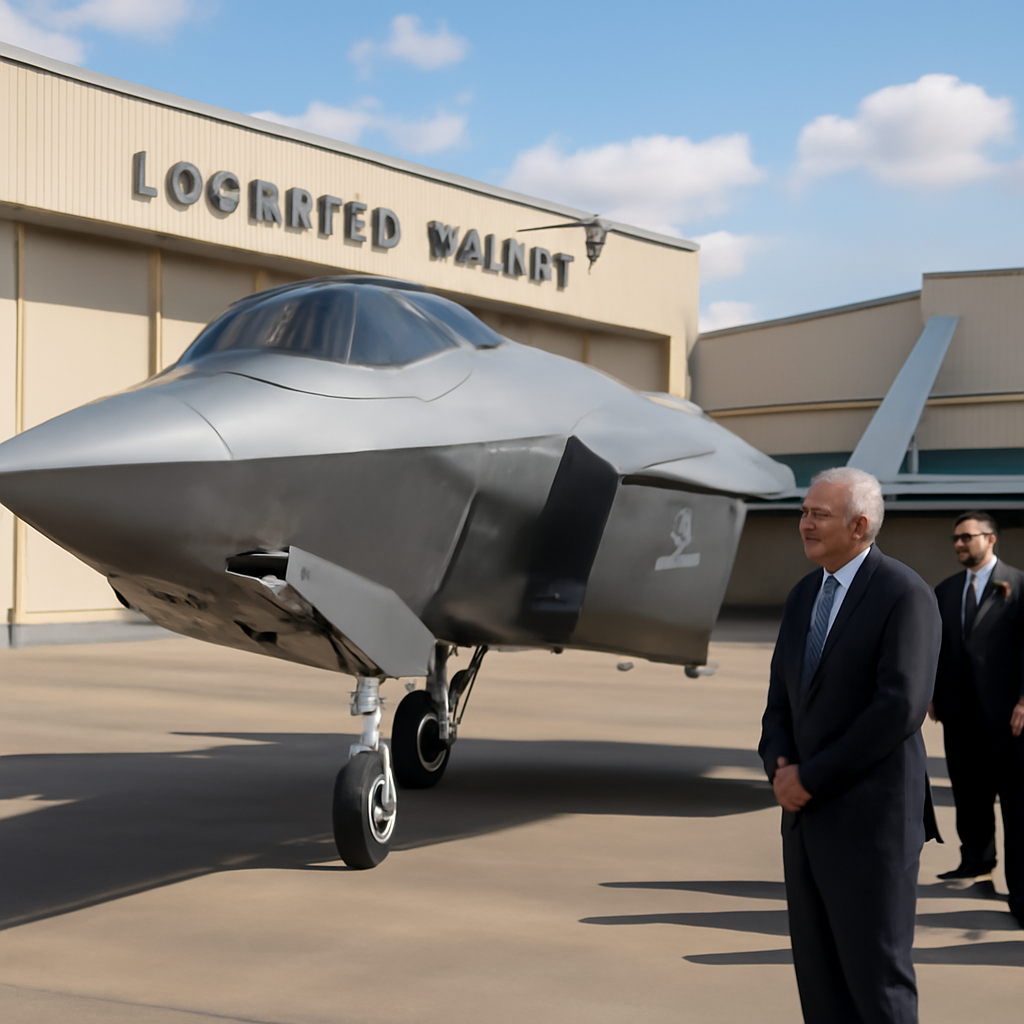
"A promise that Germany will step up to defend itself and defend its allies," Germany’s defense minister Boris Pistorius said as he turned to look at the jet during a ceremony at Lockheed Martin's Ft. Worth facility, marking the rollout of Berlin’s first F-35A.
Rollout at Lockheed Martin's Ft. Worth facility
German and U.S. officials gathered at Lockheed Martin’s Ft. Worth, Texas, site to celebrate what both sides described as a tangible sign of transatlantic defense alignment. Pistorius called the jet “living proof” of the health of the transatlantic relationship and an “important step towards further strengthening collective deterrence and defense.” Dan Zimmerman, who is performing the duties of the U.S. deputy undersecretary for acquisition and sustainment, called Germany “a model ally” and said the procurement “reinforces our shared vision for defense in the European theater.”
The purchase and its timeline
Germany signed a $8.8 billion deal in 2022 for 35 F-35 jets after the Russian invasion of Ukraine shifted Berlin’s procurement choices. Lockheed Martin stated that the first eight German aircraft will head to Ebbing Air National Guard Base in Arkansas in the fall to begin pilot training, and that the first German F-35s will actually arrive in country in “late 2027.”

This site is the portfolio.
OSINTSights runs on Cloudflare Workers, D1, R2, and Vectorize, with an AI pipeline on Hetzner ARM. Nubivance designed, built, and operates it. We do the same for clients.
See what we buildIndustry framing and program context
Lockheed’s aeronautics president, OJ Sanchez, framed the rollout as the continuation of a long partnership, saying, “As Germany prepares to take ownership of its first F-35A, we are proud to build on more than 50 years of partnership and deliver a capability that will strengthen European security and support the Luftwaffe for decades to come.” The rollout also comes amid talk of a possible follow-on order for Germany, in part prompted by the collapse this year of the Franco-German-Spanish sixth-generation FCAS program.
Defense ties and recent diplomacy
The ceremony followed a visit by Pistorius to the Pentagon, where he met with U.S. Defense Secretary Pete Hegseth. A Pentagon readout said the two men signed a “Statement of Intent to significantly intensify defense-industrial collaboration.” Both sides — acknowledging that there have been political clouds between Washington and Berlin — emphasized that military ties remain strong.
What this means for the Luftwaffe, the Pentagon, and Lockheed Martin
- Luftwaffe: The service will begin pilot training on German-designated jets at Ebbing Air National Guard Base in Arkansas in the fall and expects the first in-country deliveries in “late 2027.”
- The Pentagon: U.S. acquisition leaders portray the sale as reinforcing a shared defense vision for Europe and as evidence of Germany’s role as “a model ally,” language used by Dan Zimmerman.
- Lockheed Martin: The company positions the program as an extension of a long industrial partnership, committing to deliver a capability that, in OJ Sanchez’s words, “will strengthen European security and support the Luftwaffe for decades to come.”
The rollout of Germany’s first F-35A is both symbolic and concrete: a public affirmation of the U.S.-German defense relationship and the opening act of a multi-year process that will move pilots to Arkansas in the near term and bring jets to German soil in “late 2027.” With the collapse this year of the FCAS effort and public discussion of follow-on orders, the F-35 program now occupies an outsized role in Germany’s air-power planning — a role the ceremony in Ft. Worth sought to underline.