"To be able to negate threats in space, we must be able to find, fix, track, and target those threats." — SPACECOM Commander Gen. Stephen Whiting
Gen. Stephen Whiting on the limits of targeting in space
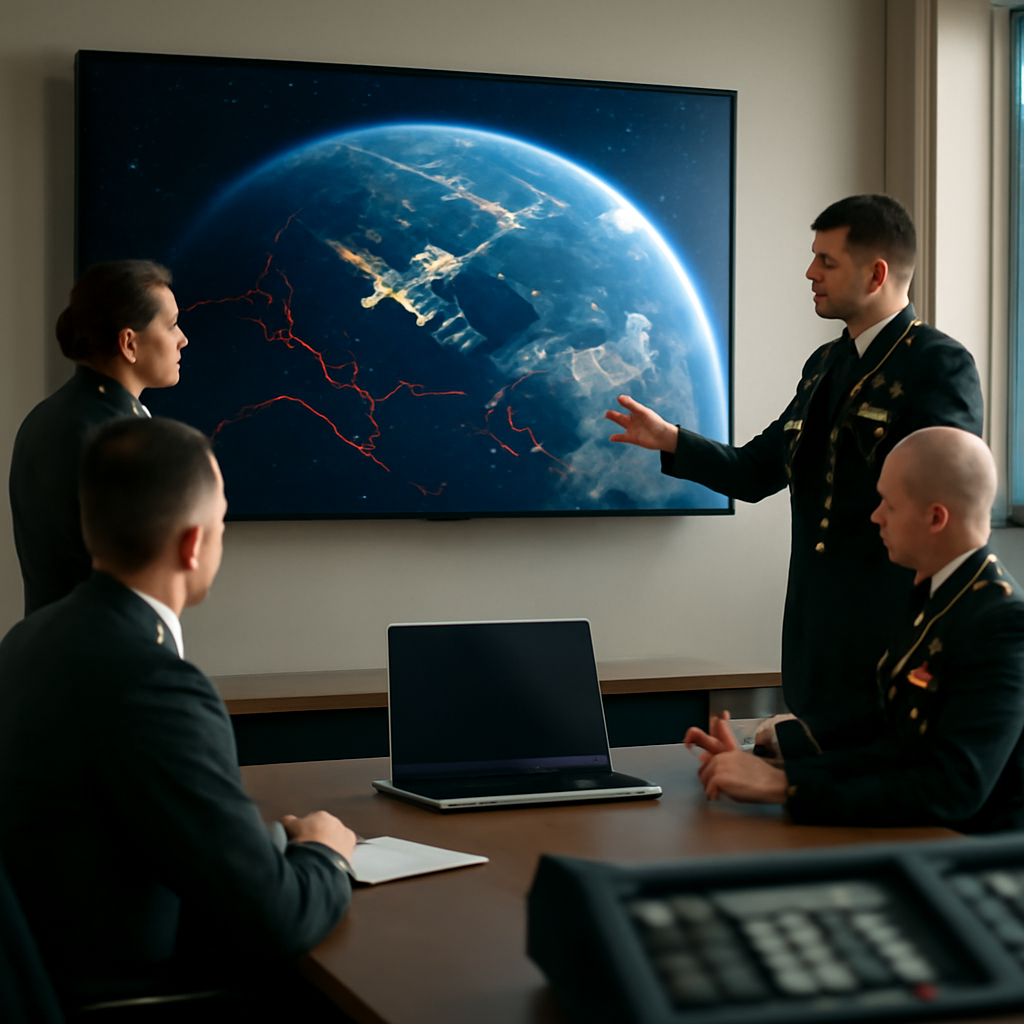
At the annual Advanced Maui Optical and Space Surveillance Technologies (AMOS) conference in Maui, SPACECOM Commander Gen. Stephen Whiting said U.S. Space Command does not yet possess the full set of capabilities required to target adversary space systems in a conflict. He described targeting in the space domain as "maturing" but said it "still has a long way to go." Specifically, he noted that SPACECOM lacks "robust target folders like the Joint Force does in other domains."
Real-time battlespace awareness and battle management shortfalls
Whiting emphasized that identifying a target is only the first step. "Once a target is engaged" he said, SPACECOM needs "real-time battlespace awareness in order to execute battle management." Those shortfalls, he warned, limit the command's ability to carry out offensive actions against adversary space systems — a set of activities Whiting framed under the concept of "space control."

This site is the portfolio.
OSINTSights runs on Cloudflare Workers, D1, R2, and Vectorize, with an AI pipeline on Hetzner ARM. Nubivance designed, built, and operates it. We do the same for clients.
See what we buildSpace control defined as offensive and defensive counterspace operations
Whiting outlined space control as a "cornerstone" of U.S. military operations in an era of proliferating adversary space systems and counterspace capabilities. He portrayed space control as active, not passive: "It encompasses the full spectrum of activities needed to actively contest and control the space domain, with the ultimate goal of achieving space superiority." He said this includes "active or passive measures, kinetic or non-kinetic fires, and reversible or nonreversible effects," and that at its core space control involves offensive and defensive actions collectively known as counterspace operations.
Space domain awareness (SDA) as the bedrock — and the cislunar scaling problem
Whiting repeatedly returned to space domain awareness (SDA) as foundational. "SDA truly is the bedrock of space control," he said, invoking Sun Tzu to stress that integrated knowledge of the enemy, ourselves, the terrain, and the weather must be translated into orbital intelligence. He warned that without robust SDA, "we're navigating blind in a contested domain where threats can emerge from any orbit or angle."
Looking beyond Earth orbit, Whiting said SPACECOM is increasingly focused on filling SDA and related capability gaps for operations in cislunar space and farther. He noted physical differences farther from Earth — differing levels of gravity, magnetic interference and solar radiation — that affect spacecraft operations and therefore complicate awareness and targeting. He cautioned that unless the SDA architecture is "scalable," the U.S. risks "leaving deep space unmonitored and vulnerable to exploitation by our opponents."
Gaps in PNT, satellite communications, and cislunar positional standards
Whiting identified concrete gaps beyond surveillance. The military "lacks capabilities for positioning, navigation and timing; satellite communications; and 'even a standard format for discussing positional states in cislunar space,'" he said. He added that "this represents a concern, and USSPACECOM is focused on addressing it." Those three shortfalls—PNT, SATCOM, and a common positional-state format for cislunar operations—are presented as discrete technical and interoperability problems tied directly to expanding operations away from Earth.
What this means for technologists, policymakers, and adversaries
- Technologists and security teams: The explicit gaps Whiting named—SDA scalability, PNT, satellite communications, and a standard cislunar positional format—point to engineering and standards work that must be prioritized to enable real-time battlespace awareness and battle management in distant orbits.
- Policymakers and procurement leaders: Whiting’s emphasis that USSPACECOM "is focused on addressing" these shortfalls signals likely prioritization choices: investments to scale SDA architecture and to close PNT and SATCOM gaps that are unique to cislunar and deep-space operations.
- Adversaries and threat actors: The warning that deep space could be "unmonitored and vulnerable to exploitation" makes clear the operational risk Whiting outlined — an explicit invitation to any opponent that can operate beyond low Earth orbit where current U.S. SDA and standards are limited.
Gen. Whiting's testimony at AMOS framed a simple but consequential argument: without scalable, real‑time awareness and the standards and communications that let forces act on it, space control — including offensive counterspace actions — will remain constrained. USSPACECOM says it is working those problems; how rapidly SDA can be scaled, PNT and SATCOM gaps closed, and a common cislunar positional format agreed and fielded will determine whether the command can move from "maturing" targeting to operationally dependable space battle management.