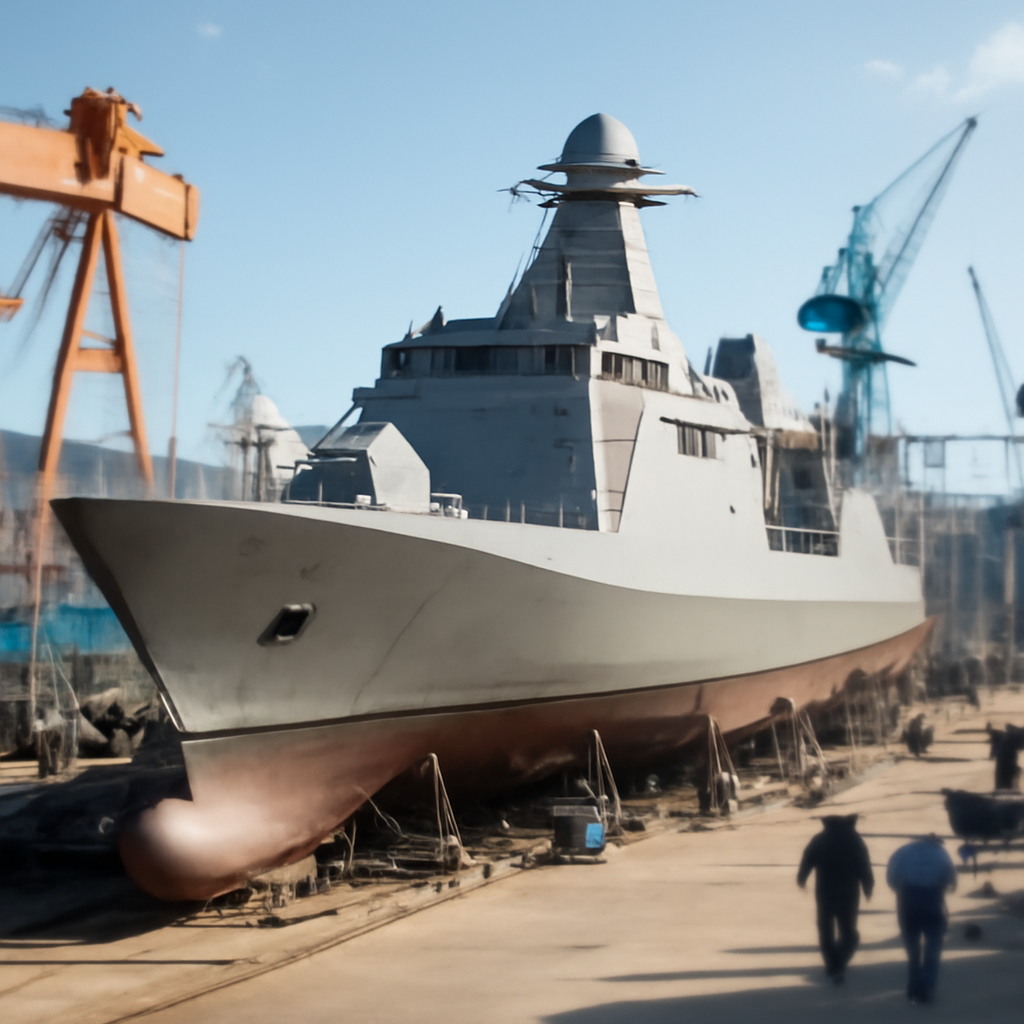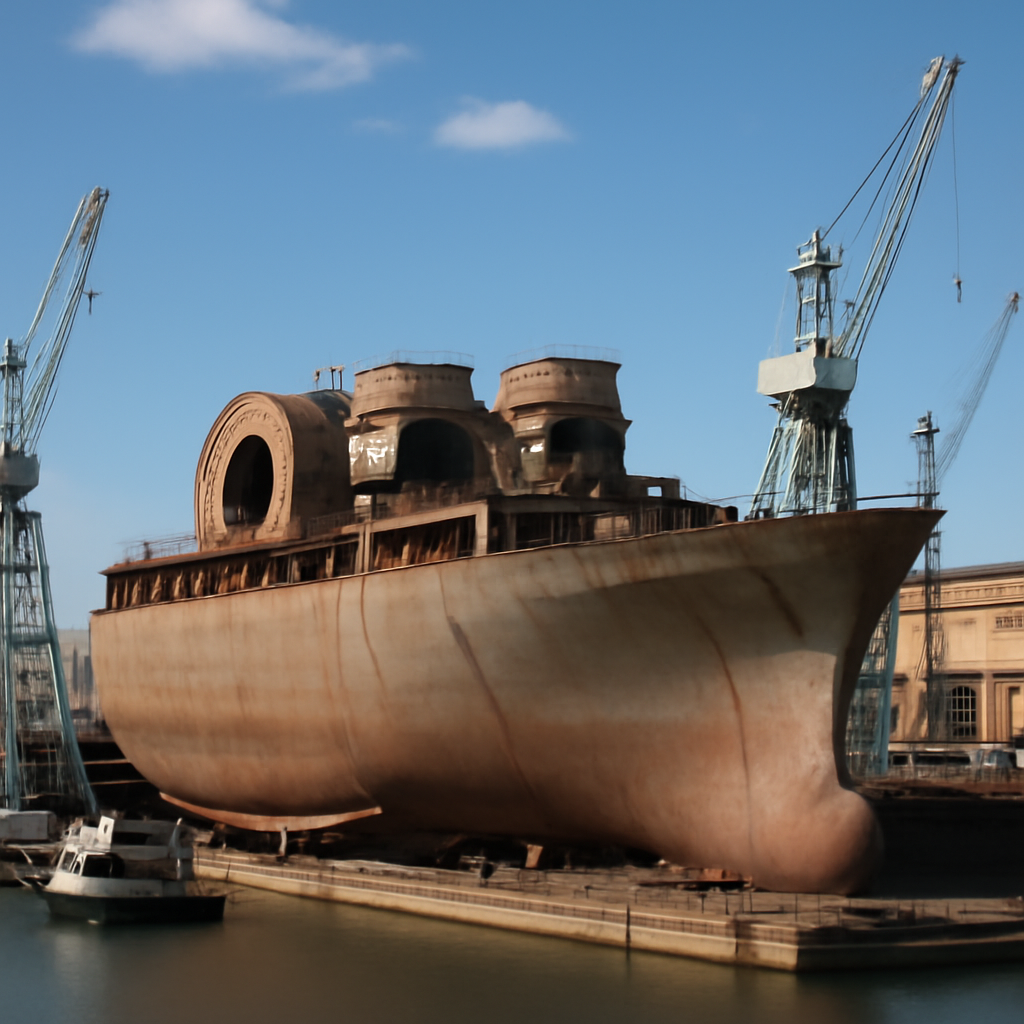
721-foot-long and displacing 15,540 tons, the remnant hull of the USS Long Beach — including its two defueled reactor plants — has sat at Puget Sound Naval Shipyard since being decommissioned in 1995, and the Navy is now asking industry to propose how to finish what decades of mothballing began.
What the ship is now: stripped, towed, and judged non-historic
The Long Beach was launched in 1959 and commissioned in 1961. According to a Naval Vessel Historical Evaluation (NVHE) completed in April, the ship “was deactivated in 1994 and towed to Newport News Shipbuilding where the entire superstructure was removed and the reactors were defueled.” After that work was finished in the winter of 1995, the hull was towed through the Panama Canal to Puget Sound, where it has remained.
The NVHE concluded the vessel is ineligible for listing in the National Register of Historic Places because “major alterations have been made in design that do not maintain the historic design of the vessel (loss of the superstructure and major hull elements).” The review added that character‑defining features — main armament, superstructure, bow and stern — have been lost and the hull “does not evoke the aesthetic of a 20th Century USN warship.” A 60‑day public comment window closed earlier this month with no responses.
How the Navy framed the task in its RFI
This week the Navy issued a request for information (RFI) calling for companies able to “transport, dismantle, demilitarize, and dispose” of the remaining hull. The service will host an Industry Day on June 24 and 25 in Washington, D.C., for interested firms.
The RFI is specific about method and legal obligations. Because the vessel’s “current structural condition precludes an open ocean tow,” any successful offeror must move the hull by “dry transport via semi‑submersible barge, deck barge, or semi‑submersible heavy lift vessel.” Disposal must “include dismantling, demilitarizing, and recycling the remnant hull sections at an authorized commercial facility in accordance with applicable federal, state, and local laws, and removing and packaging the reactor plant components for transportation and disposal as low‑level radioactive waste (LLRW) at an authorized radioactive waste facility or facilities.”
The RFI includes no timelines or cost estimates and does not guarantee that a formal request for proposals (RFP) will follow.

Audit-ready is a season. It shouldn't be.
Evidence in spreadsheets, controls drifting between audits, frameworks multiplying on flat headcount. Nubivance runs continuous compliance on Rapid7 Cyber GRC - SOC 2, HIPAA, ISO 27001, PCI, CMMC.
End the scrambleWhy this is harder than scrapping an ordinary ship — the Enterprise precedent
The Navy has only once before selected a commercial yard to dismantle a nuclear‑powered warship: the ex‑USS Enterprise. That effort illustrates why nuclear vessels are expensive and prolonged projects. The Enterprise was far larger and more complex — with eight reactors versus Long Beach’s two — and had required more extensive inactivation work before dismantling began.
A 2019 Government Accountability Office review cited by the Navy found Enterprise’s disposal could cost more than $1.5 billion and take more than 15 years. Earlier Navy estimates for Enterprise had ranged from $500–$750 million before climbing past $1 billion by 2013. In 2025 the Navy awarded a $536.7 million contract to NorthStar Maritime Dismantlement Services, LLC, with work initially expected to finish in November 2029, but that contract was later entangled in a legal appeal that forced the Navy to pause and reassess bids. The Navy was then “expected to re‑award the contract by June 2026,” the public record shows.
What this means for the Navy, commercial yards, and regulators
- Navy planners: The service must balance legal and programmatic obligations — including Navy policy for inactive nuclear ships and Naval Nuclear Propulsion Program responsibilities — against operational constraints such as Puget Sound’s workload. The shipyard there has already completed limited prep work (removal of bow and stern and a 2015 hull preservation availability), but continuing work at Puget Sound risks worsening maintenance backlogs for active ships.
- Commercial dismantling firms: Any bidder faces heavy lift and transport requirements, handling of two defueled reactor plants, packaging reactor components as low‑level radioactive waste, and compliance with federal, state, and local laws. The commercial route is potentially faster and cheaper than doing all work at a Navy yard, but private yards have limited precedent with military naval reactors at this scale.
- Regulators and permitting authorities: Past disputes between the Navy and the Nuclear Regulatory Commission over applicable standards for commercial dismantling — along with NRC’s direct authority being limited to 13 states — could constrain where and how dismantling proceeds.
Next step and an open question
The immediate milestone is the Industry Day on June 24–25, when potential bidders can ask the Navy for technical details and constraints. The Long Beach project will test whether lessons from the Enterprise effort — including cost escalation, regulatory friction, and legal challenges to contracts — will be applied or avoided. The Navy has signaled interest in commercial disposal, but whether an RFP will emerge, what schedule and price it will carry, and where final dismantlement will occur remain to be seen.