"What I can do today is go make our force generation more efficient," Adm. Daryl Caudle said, framing a potential overhaul of how the Navy and Marine Corps prepare amphibious ships for deployment.
Adm. Daryl Caudle on reshaping force generation
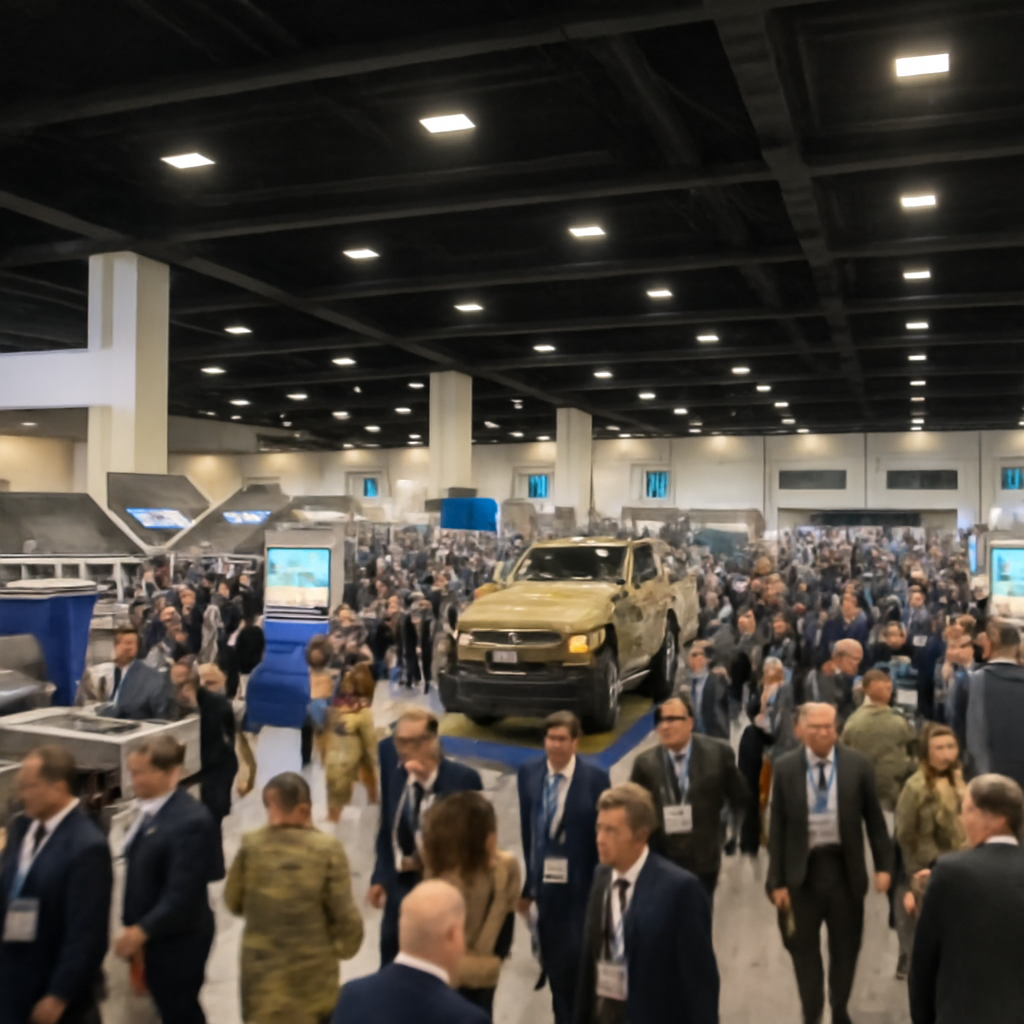
Speaking at the Modern Day Marine exposition, Adm. Daryl Caudle outlined an active effort to cut what he called "overhead" from the current force generation cycle for amphibious vessels. Caudle said the Navy uses a 36-month Optimized Fleet Response Plan that covers maintenance, training and seven-month deployments, but that the effective cycle is "really probably closer to [a] 40-month cycle."
He suggested the services could explore models that allow two deployments within a longer cycle — "kind of a 50, 52-month cycle" — as a way to increase operational output without immediately adding new hulls. "So you reduce the overhead, so you will gain some efficiency," Caudle said.
The 36-month Optimized Fleet Response Plan and proposed alternatives
The currently employed plan sequences maintenance, training and a seven-month deployment over roughly three years. Service leaders are evaluating alternatives to that pacing, including a 56-month model Lt. Gen. Jay Bargeron identified as one of the options under consideration. The intent is to find force generation models that shorten or eliminate phases that "don't add significantly to getting it ready for its next deployment," in Caudle's words.

Audit-ready is a season. It shouldn't be.
Evidence in spreadsheets, controls drifting between audits, frameworks multiplying on flat headcount. Nubivance runs continuous compliance on Rapid7 Cyber GRC - SOC 2, HIPAA, ISO 27001, PCI, CMMC.
End the scrambleAmphibious Force Readiness Board (AFRB) and demand signals
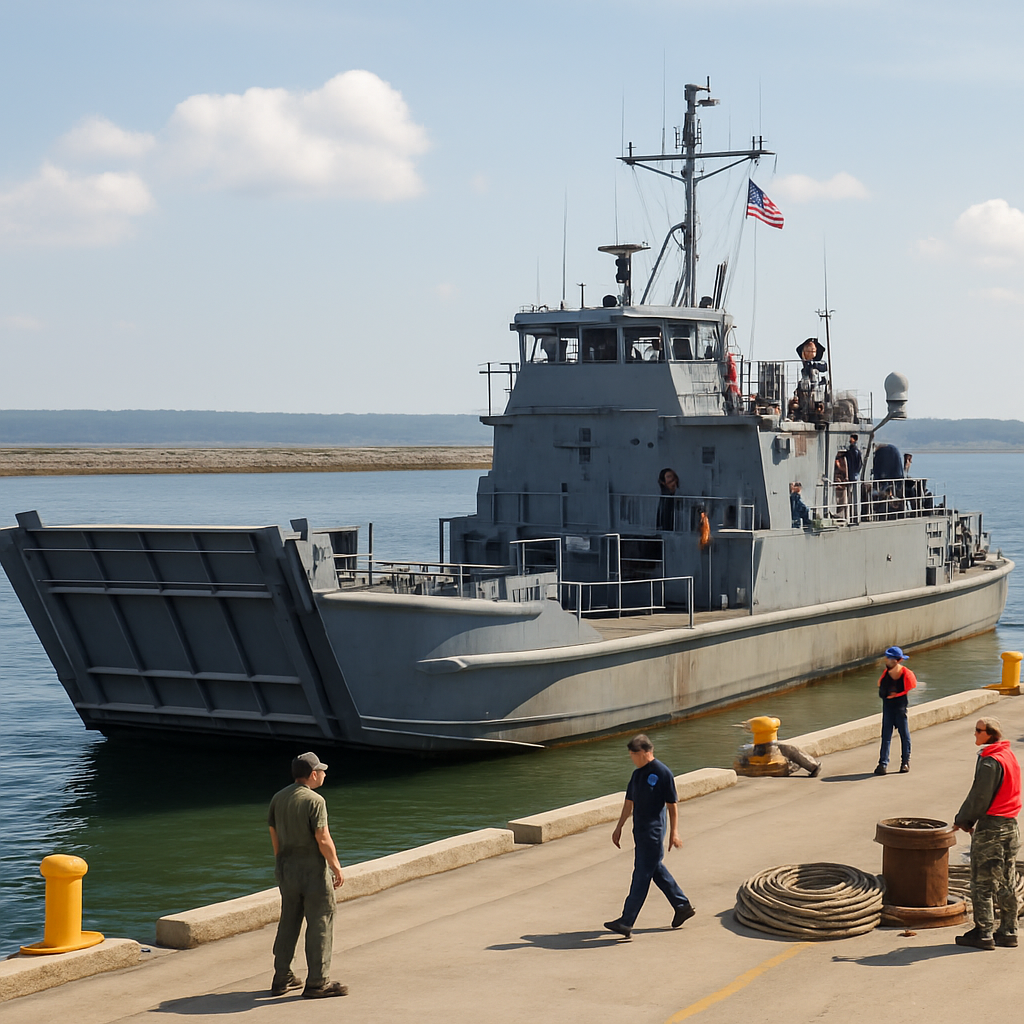
The Navy and Marine Corps stood up the Amphibious Force Readiness Board (AFRB) in March to address amphibious readiness shortfalls and to determine how many amphibious ships are required. The Department of the Navy is required to maintain a fleet of at least 31 amphibious ships, but leaders from both services have said more are required to meet demand. Because procuring new ships is time intensive, service leaders are looking at near-term levers — such as maintenance optimization, force generation changes, and life extensions — to increase availability.
Gen. Eric Smith on ARG-MEU demand and mission sets
Commandant of the Marine Corps Gen. Eric Smith stressed the breadth of demand from combatant commanders and the flexibility of amphibious forces. The services aim to keep a 3.0 ARG-MEU presence globally; currently, three ARG-MEUs are deployed. But Smith said "every combatant commander is calling for an ARG-MEU" — listing SOUTHCOM, EUCOM, CENTCOM and AFRICOM — and noted the formation's utility "from humanitarian assistance crisis response to non-combatant evacuation operations, to key strike capabilities and lethality."
Smith acknowledged the gap between demand and supply directly: combatant commanders want more ARG-MEUs than the force can provide, and the formation's perceived value is increasing "as the world becomes less and less predictable."
Brig. Gen. Lee Meyer on USS Wasp and service life extensions
Expeditionary Warfare Director Brig. Gen. Lee Meyer disclosed at the expo that the amphibious assault ship USS Wasp's service life has been extended five years, to 2034. Meyer said studies are ongoing to develop recommendations and that other amphibious vessels could also see service life extensions. He said the services intend to "look at every class of amphibious ship in a deliberate way" to find investment points — modernization and maintenance — that support longer service lives.
What this means for combatant commanders, the Navy, and procurement planners
- Combatant commanders: Will continue to request ARG-MEUs across theaters — the services say demand is broad (SOUTHCOM, EUCOM, CENTCOM, AFRICOM) while current deployments total three ARG-MEUs.
- The Navy and Marine Corps leadership: Are weighing operational changes (force generation pacing), maintenance optimization, and life extensions to increase near‑term availability without immediate new construction.
- Procurement and fleet planners: Face the statutory requirement to maintain at least 31 amphibious ships while also evaluating longer-term ship buys; meanwhile, service life extensions and revised force generation models are being studied to bridge capability gaps.
The immediate, concrete steps are already in motion: the AFRB launched in March; leaders are evaluating alternative force generation models including a 56-month approach; and ship‑by‑ship service life studies are underway, with USS Wasp extended to 2034. Whether those measures will close the gap between combatant commanders' demand and the amphibious fleet's availability depends on the AFRB's recommendations and subsequent decisions on maintenance, modernization and procurement.