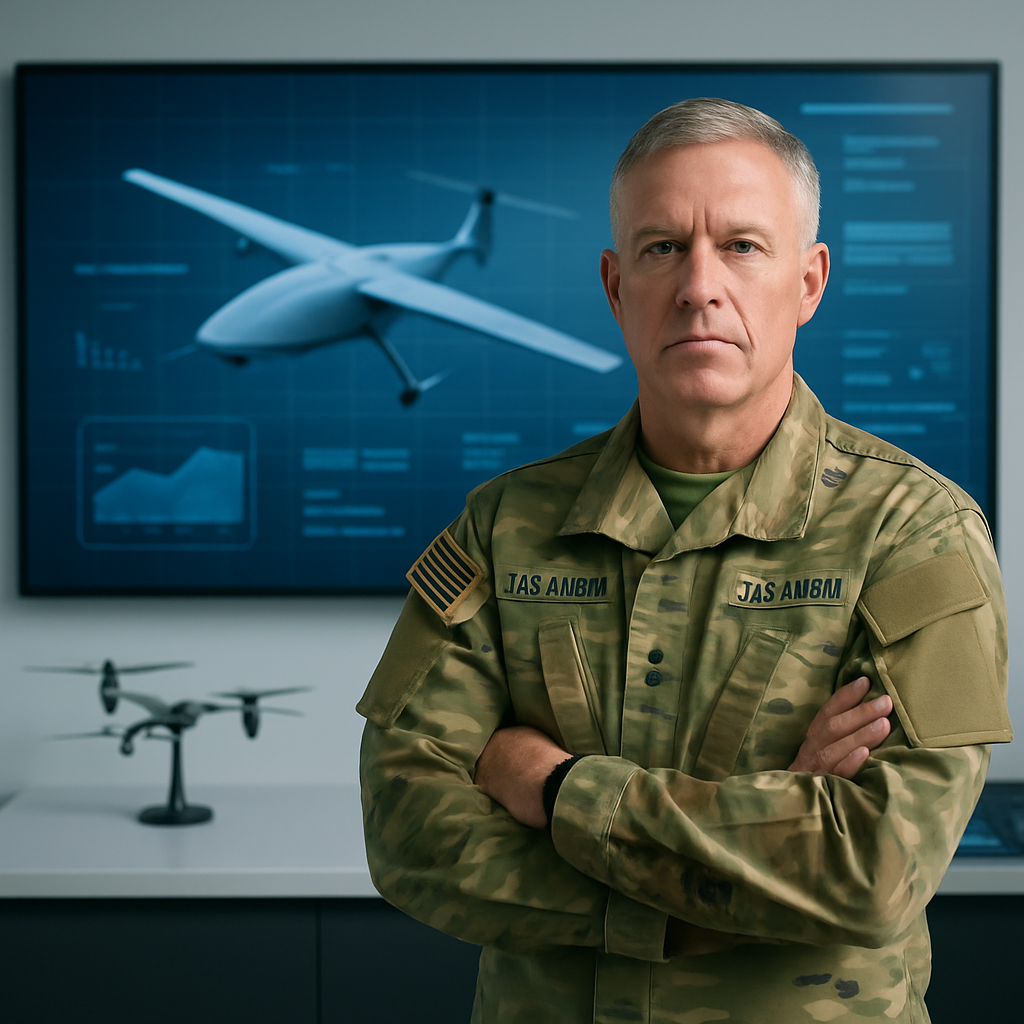
"Autonomous weapons are going to be a 'key and essential part of everything we do,'" Joint Chiefs Chairman Gen. Dan Caine said Thursday during a fireside chat at Vanderbilt University's Asness Summit on Modern Conflict and Emerging Threats.
Gen. Dan Caine: normalizing AI and autonomous systems in the joint force
Caine framed autonomous technology not as a distant possibility but as an operational imperative. "We are doing a lot of thinking about this in the joint force right now," he said, identifying drones and command-and-control as areas where autonomy could be applied. He pushed for cultural change inside the Pentagon, noting that "probably everybody in this room uses some flavor of a [large language model] every single day," and adding, "so, we have to really normalize this and become early adopters."
Where autonomous tools would be applied: drones and command-and-control
In Caine's description, autonomy is being discussed at scale across mission areas. He singled out drones and command-and-control operations as concrete applications the Defense Department is examining. The implication from his remarks is that automation may be layered into decision chains that today are largely human-driven, though Caine stopped short of outlining specific systems or timelines.

The cyber insurance questionnaire just landed. Now what?
SOC 2, HIPAA, insurance renewals - someone has to own security strategy. Nubivance provides fractional CISO leadership without the full-time salary.
Get a security leadTensions with Anthropic, Mythos Preview, and federal controls
Caine's comments arrive against a backdrop of public friction between the Pentagon and the AI company Anthropic. Anthropic unveiled a frontier AI model, Mythos Preview, that the company held back from public release citing cybersecurity risks and tied to a new initiative to study the model's effects on global networks. Intelligence community units have expressed interest in Mythos, Nextgov/FCW previously reported, and the NSA, described in the source as a component of the Department of Defense, "has been granted access to it," Axios reported.
Earlier this year Anthropic declined to ease restrictions against its tools being used for domestic surveillance or fully autonomous weapons for Pentagon use. That stance triggered a "supply chain risk" designation from the Defense Department and a White House order that all federal agencies phase out their uses of Anthropic tools. Anthropic legally challenged that designation and ban, and a federal judge issued a temporary injunction on the designation and ban in late March; the government has said it intends to appeal the injunction. This week, President Donald Trump said in a CNBC interview that the company is "shaping up" and can "be of great use," a comment the source framed as a sign tensions may be easing.
Lawmakers' scrutiny: accountability and lethal force
Lawmakers have raised direct questions about the use of AI in lethal operations. The source reports that "lawmakers have asked the Pentagon whether AI systems were used in a deadly strike on an Iranian school during the opening hours of the U.S.-Israel war against Tehran." Those inquiries underscore the broader concerns that accompanied Caine's advocacy for accelerated adoption: AI can speed battlefield decisions while also "blurring human accountability," and there are questions about whether such systems would reliably comply with the laws of war.
Acquisition headaches and Caine's contracting prescription
Caine linked the push for autonomy to procurement reform. "We have to write better contracts," he said, criticizing current acquisition frameworks as slowing contract workflows. He recommended structuring contracts so "risk is shared between buyers and sellers with the goal of bringing better outcomes for servicemembers," signaling the Pentagon wants acquisition changes to match its technological ambitions.
How the Pentagon, Anthropic, and lawmakers will respond
- Pentagon and joint force: Expect continued internal planning and discussion around integrating autonomous tools into drones and command-and-control roles, accompanied by efforts to change acquisition practices so those tools can be bought and managed more quickly and with shared risk.
- Anthropic: The company's decision to restrict certain uses of Mythos Preview has already produced a legal and regulatory standoff — a supply chain risk designation, a White House phase-out order, a judicial injunction, and an announced government appeal — and its public posture will shape whether models like Mythos become available to defense and intelligence units.
- Lawmakers and oversight: Congressional questions about a deadly strike that may have involved AI indicate oversight will remain active; accountability and compliance with the laws of war were raised explicitly in the source and will likely shape legislative and investigative attention.
Caine's remarks capture a key tension: a military leadership that views autonomy as essential and wants faster adoption, set against legal, ethical, procurement and vendor-relations frictions that are already playing out in courtrooms and in public statements. The immediate, named next steps in the record are legal appeals over the Anthropic designation and ongoing congressional interrogation of how AI is used in lethal operations — concrete battlegrounds where policy, procurement and practice will collide.