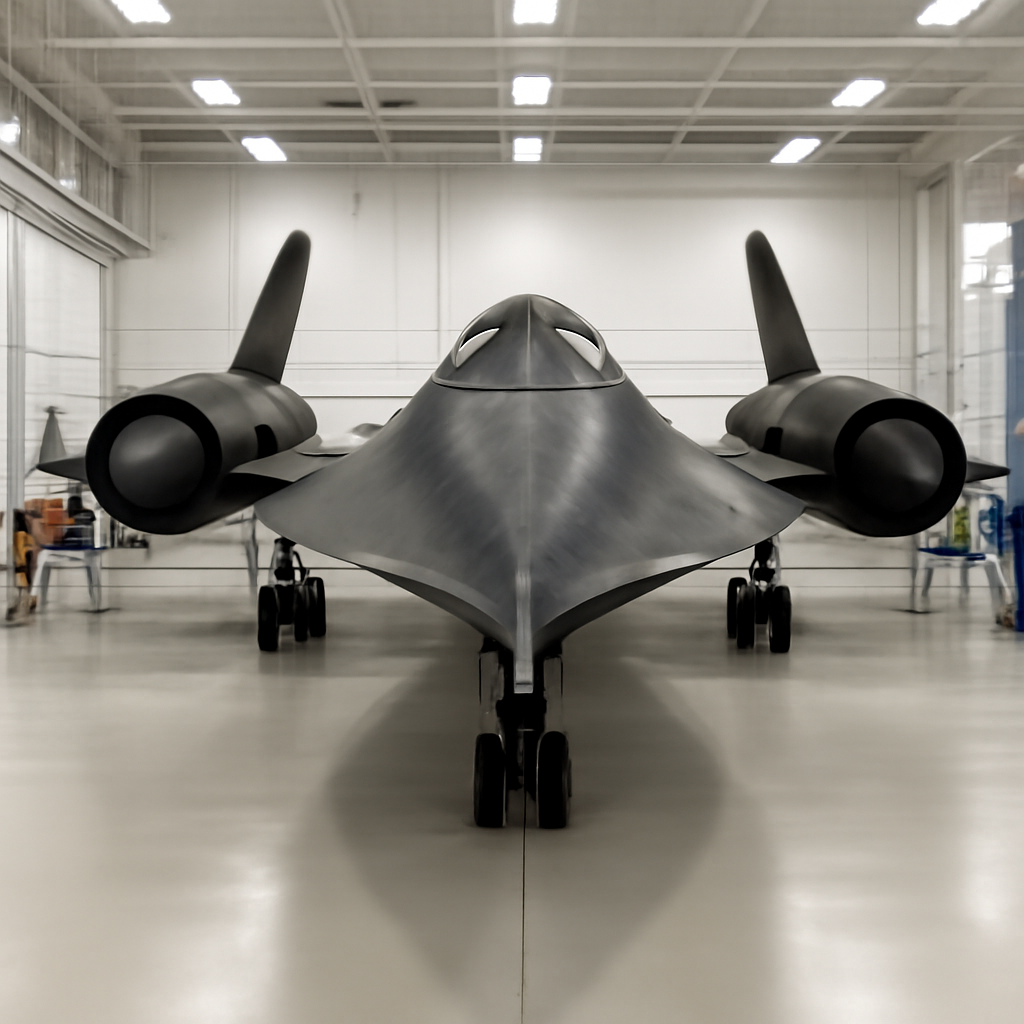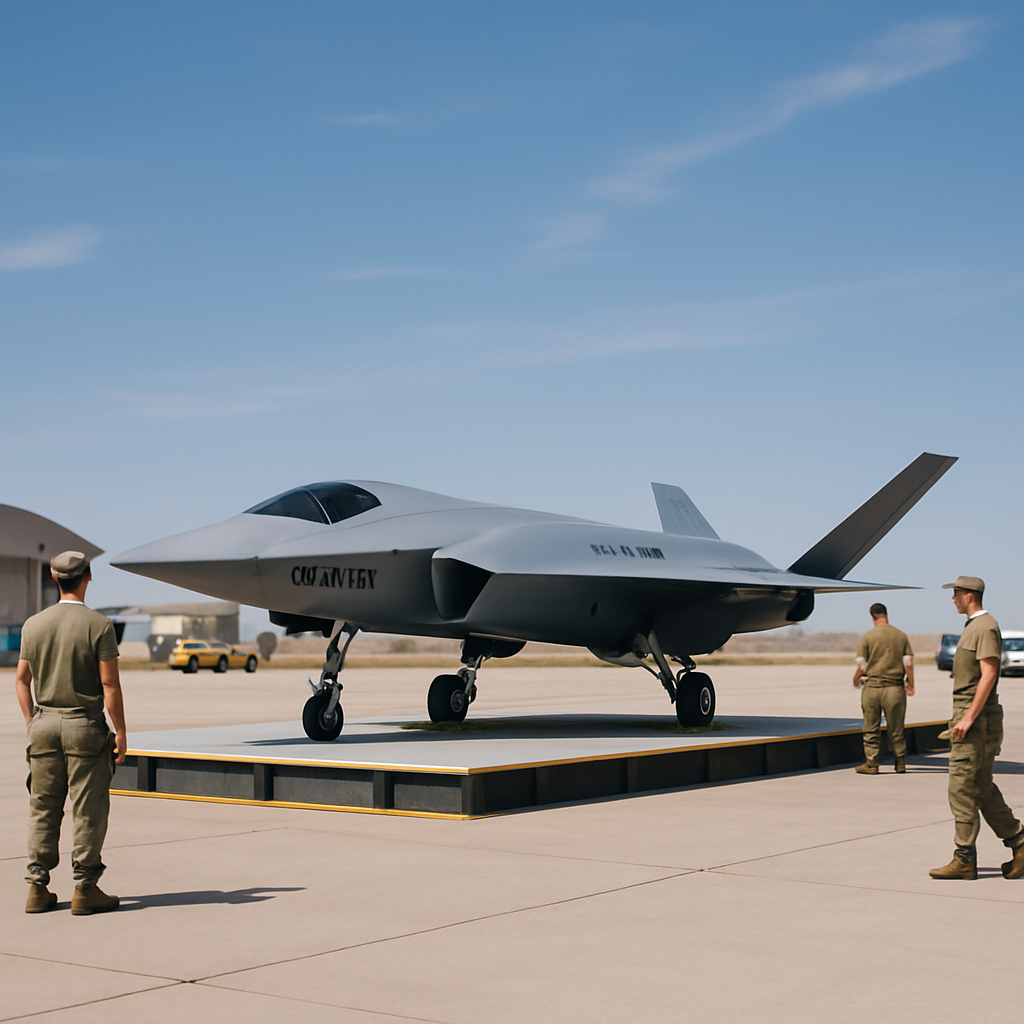
"How do we take that essential [XQ-58] airframe itself and turn it into a conventional takeoff and landing [CTOL] platform so that it’s reusable at a higher rate?” — Col. Scott Shadforth.
MAGTF Uncrewed Expeditionary Tactical Aircraft (MUX TACAIR) and PAACK‑P origins
The Marine Corps’ Collaborative Combat Aircraft (CCA) effort is organized under a program called MAGTF Uncrewed Expeditionary Tactical Aircraft, or MUX TACAIR. Col. Scott Shadforth, a program manager for the Expeditionary and Maritime Aviation Advanced Development Team (XMA‑ADT), told attendees at Modern Day Marine that MUX TACAIR grew out of a prior Office of the Secretary of Defense‑sponsored Rapid Defense Experimentation Reserve effort known as PAACK‑P (Penetrating Affordable Autonomous Collaborative Killer — Portfolio). Shadforth defined the CCA program as “how the Marine Corps is going after increasing the lethality of existing and future tactical aircraft in a high‑threat environment.”
Near‑term flight activity and the path to CTOL testing
The service has already executed a series of tests using rocket‑assisted takeoff (RATO) variants of Kratos’ XQ‑58. The Office of the Secretary of Defense effort included four flights of the XQ‑58 culminating in the fall of 2024, and, "at the beginning of this month," the Marine Corps completed a risk‑reduction flight involving XQ‑58 payloads and integration at China Lake. The Marines are targeting a first flight using conventional takeoff and landing “sometime in the mid‑ to late summer of this year,” according to Shadforth — a milestone that would transition the airframe away from purely RATO launches toward runway‑based operations.

This site is the portfolio.
OSINTSights runs on Cloudflare Workers, D1, R2, and Vectorize, with an AI pipeline on Hetzner ARM. Nubivance designed, built, and operates it. We do the same for clients.
See what we buildTimeline to prototypes: VMX‑1 and summer 2029
Shadforth said the “ultimate goal” for the MQ‑58 effort is to obtain “deliverable prototypes” in the summer of 2029. In the ideal scenario those prototypes would be delivered to VMX‑1 in Yuma so the Marine Corps can "actually get their hands on the aircraft and fly the aircraft in a tactical environment and develop the CONOPS for how they’re actually going to employ those.” VMX‑1, Marine Operational Test and Evaluation Squadron One, is identified as the unit responsible for operational testing and helping generate tactics, techniques, and procedures (TTPs).
Airframe tradeoffs: CTOL, RATO, runway independence, and STOVL interest
The Corps is beginning with a landing gear‑equipped version of the XQ‑58 — described in reporting as the first operational CCA‑type drone for the service. That CTOL variant, Kratos has said, will still be capable of rocket‑assisted takeoffs from static launchers, preserving a degree of runway independence while requiring a runway to recover at the end of a sortie. Kratos has also demonstrated a launch trolley concept that allows gearless XQ‑58 variants to take off from traditional runways but not land back on them.
Shadforth emphasized that the Marine Corps remains interested in runway‑independent options. He said an aircraft with some kind of STOVL capability “just kind of opens up the world to us, where we don’t need 7,000‑, 8,000‑, 9,000‑, or 10,000‑foot paved runways.” The service is therefore weighing CTOL alongside options that reduce or eliminate the need for conventional runways — including consideration of short takeoff and vertical landing (STOVL) or vertical takeoff and landing (VTOL) concepts. The X‑BAT, a jet‑powered autonomous stealth drone designed for vertical takeoff and tail‑first vertical landings, was cited as an obvious candidate in those discussions.
Payloads, weapons, and mission focus: electronic warfare first
For initial MUX TACAIR employment, the Marine Corps is prioritizing an “electronic warfare type platform,” Shadforth said. Beyond EW, the Valkyrie airframe under consideration can carry a range of payloads: Small Diameter Bombs (SDB) fit internally; renderings and demonstrations have shown the ability to carry miniature cruise missiles such as Kratos’ Ragnarok inside the internal bay and underwing, and Valkyrie renderings have also depicted AIM‑120 AMRAAMs under the wings. The XQ‑58 has demonstrated drone‑launch capability, and Shadforth noted that launched effects are “almost certain” to be part of the electronic warfare mission set as the Corps explores internal and external payload options.
What this means for VMX‑1, F‑35B operations, and Kratos (and other vendors)
- VMX‑1: Will receive prototypes in the hoped‑for summer 2029 window to evaluate CONOPS and fly CCAs in a tactical environment.
- F‑35B operations: The Corps is explicitly considering how CCAs will integrate with F‑35Bs (short takeoff and vertical landing aircraft) and other tactical assets; Shadforth stressed experimentation and evaluation will determine how CCAs operate alongside STOVL‑type platforms.
- Kratos and other vendors: Kratos’ CTOL Valkyrie work is the near‑term focus, while the Marine Corps is also exploring offerings from General Atomics, Anduril, and working with Northrop Grumman as part of the MQ‑58 effort; other vendor concepts that remove landing gear remain of interest.
The Marine Corps’ CCA program is squarely in a prototyping phase: a CTOL Valkyrie is the starting point, further RATO capability will be retained, and the service is actively weighing runway independence and STOVL‑type performance as it moves toward prototypes in 2029. The immediate milestones to watch are the planned mid‑ to late‑summer CTOL flight and the delivery of prototypes to VMX‑1 in 2029 — and the practical question the record leaves squarely on the table: once those aircraft exist in the fleet, exactly how will the Corps integrate CTOL and runway‑independent CCAs into the operating patterns of F‑35Bs and other tactical aircraft? The answer, Shadforth said, will come through experimentation and evaluation.