Every combatant command has asked for an ARG-MEU
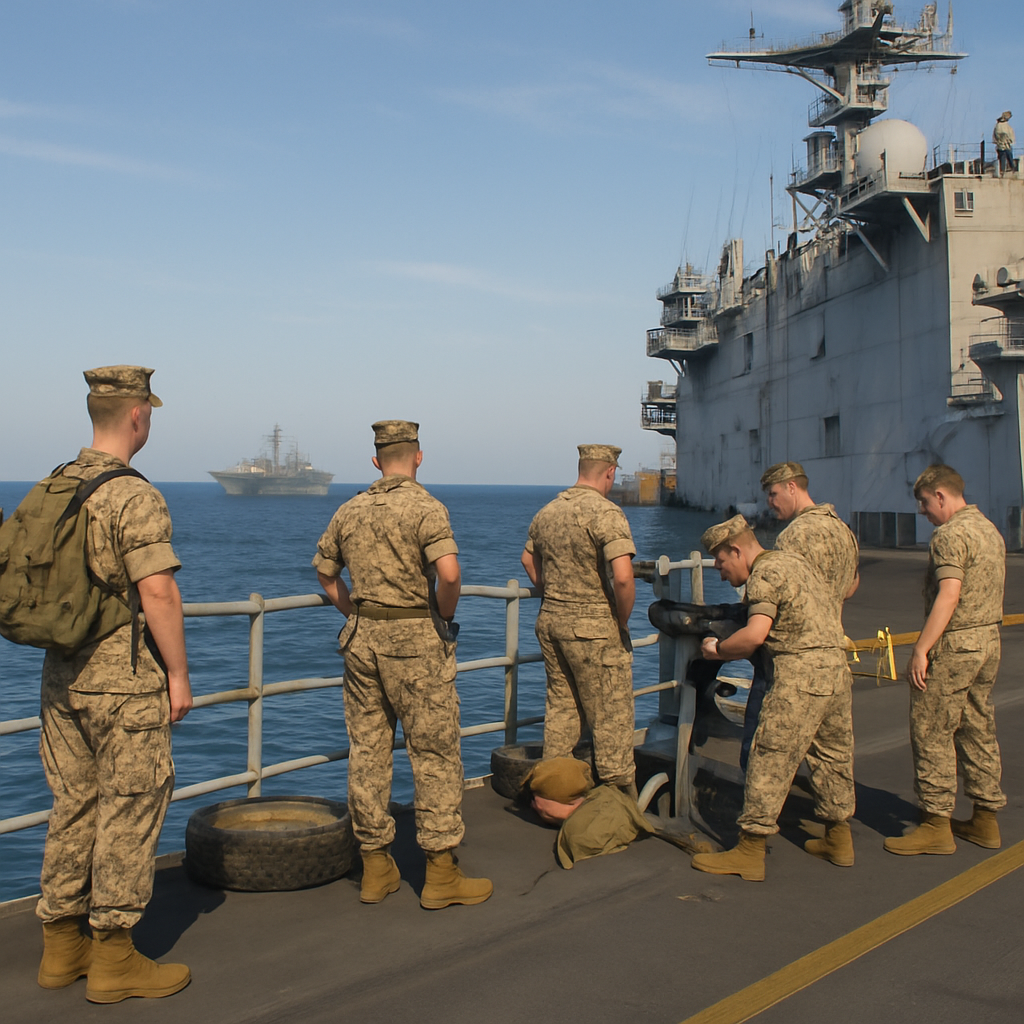
At the Modern Day Marine conference in Washington, D.C., Gen. Eric Smith, the Marine Corps commandant, said every combatant commander — from U.S. Central Command to U.S. Africa Command to U.S. Southern Command — has requested an amphibious ready group (ARG) with a Marine Expeditionary Unit (MEU) embarked. Smith framed that demand as far exceeding the Marine Corps’ stated objective of keeping three ARG-MEUs continuously deployed. He acknowledged the Corps has the Marines to meet that posture but said the shortfall is ships, not personnel.
Current ARG-MEU deployments named in public remarks
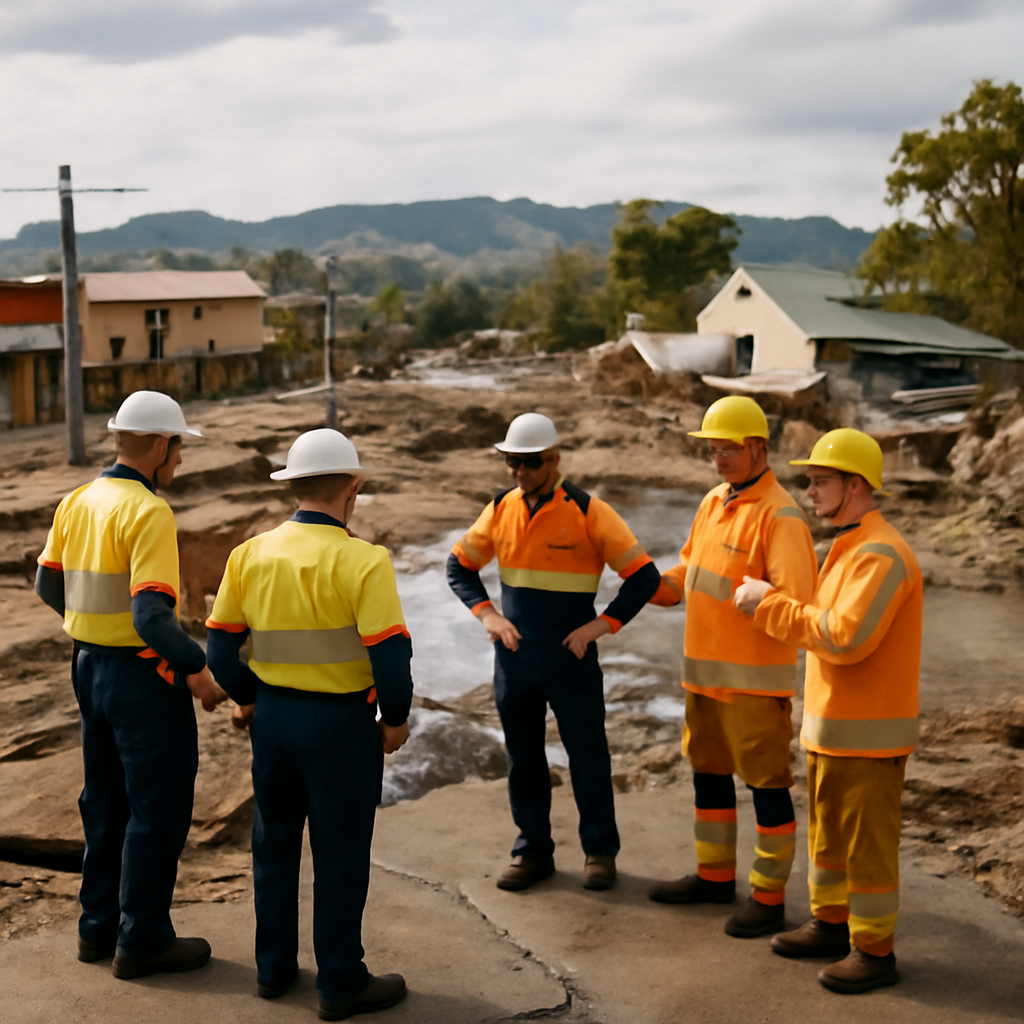
Smith identified three MEUs already active or recently active: the 22nd MEU is deployed off the coast of South America in support of Operation Southern Spear, described as the administration’s anti‑drug trafficking effort; the 31st MEU is in the Middle East supporting the U.S. blockade of Iran; and the 11th MEU, which Smith said recently completed typhoon disaster response in the Northern Mariana Islands, is due to join them. Smith said he wished he had more ARG-MEUs to offer combatant commanders.

Audit-ready is a season. It shouldn't be.
Evidence in spreadsheets, controls drifting between audits, frameworks multiplying on flat headcount. Nubivance runs continuous compliance on Rapid7 Cyber GRC - SOC 2, HIPAA, ISO 27001, PCI, CMMC.
End the scrambleShip readiness and the 2024 Government Accountability Office report
Readiness of amphibious shipping emerged as the central constraint in the conference discussion. The Navy has 32 amphibious ships in its inventory, but a 2024 Government Accountability Office (GAO) report found only about half of those are in condition to keep deploying. The GAO’s assessment was cited as the basis for the shortfall: to sustain the three‑ARG presence the Marine Corps desires, the Navy would need nine amphibious ships in deployable condition at any given time to allow for vessels to cycle through maintenance and pre‑deployment training.
Lieutenant Gen. Jay Bargeron, the Marine Corps deputy commandant for plans, policies, and operations, told the conference the service needs more like 40 amphibious ships to support the effort, while noting an ongoing analysis is refining that precise number. He also reminded listeners that by law the Navy must have 31 amphibious ships, but that statutory floor does not guarantee deployability. "31 is not the right number," Bargeron said. "It's a floor, as was described."
Amphibious Force Readiness Board and the Navy response
The Navy is pursuing a two‑track response: build more amphibious ships and reduce the maintenance backlog to raise availability among existing hulls. Adm. Daryl Caudle, the chief of naval operations, described the Amphibious Force Readiness Board and laid out its purpose in direct terms: "to increase operational availability, to reduce maintenance delays, to prioritize modernization that actually improves readiness, to improve accountability across the enterprise, better synchronize daily Marine Corps demand signals, and last, generate more usable presence from the force we already have."
Caudle said he is encouraged by some fast‑tracked maintenance on West Coast ships and that the East Coast is making a similar effort, but cautioned that "we are not declaring victory early." He added that addressing the problem "will take sustained pressure and leadership from the Pentagon to the commanding officers on the waterfront."
What this means for combatant commanders, the Navy, and the Marine Corps
- Combatant commanders: Their requests for ARG-MEUs are unanimous and recurring — every combatant command has sought ARG presence — which means operational demand will continue to outpace current deployable capacity unless ship availability increases.
- The Navy: Faces a twofold task identified at the conference — build additional amphibious ships and accelerate overhaul and maintenance to move more hulls into deployable condition. The Amphibious Force Readiness Board is the focal mechanism for that work.
- The Marine Corps: Retains the manpower to staff ARG-MEUs but lacks sufficient usable amphibious shipping to meet the Corps’ own three‑ARG objective and the higher level of demand described by Gen. Smith; senior leaders are conducting further analysis to quantify ship‑level requirements precisely.
The facts presented at Modern Day Marine knit a straightforward equation: demand for forward‑deployed amphibious capability is high — Gen. Smith said it is "well north of three" and "like double that" — while the supply of deployable amphibious ships is constrained by fleet availability and maintenance backlogs. The Navy is focused on both building more amphibs and squeezing more usable presence from the hulls it already has, and senior officers warned that success will require sustained leadership from the Pentagon down to commanding officers on the waterfront.
Original reporting: Defense One — "Marine commandant: Every combatant command has requested an amphibious ready group"