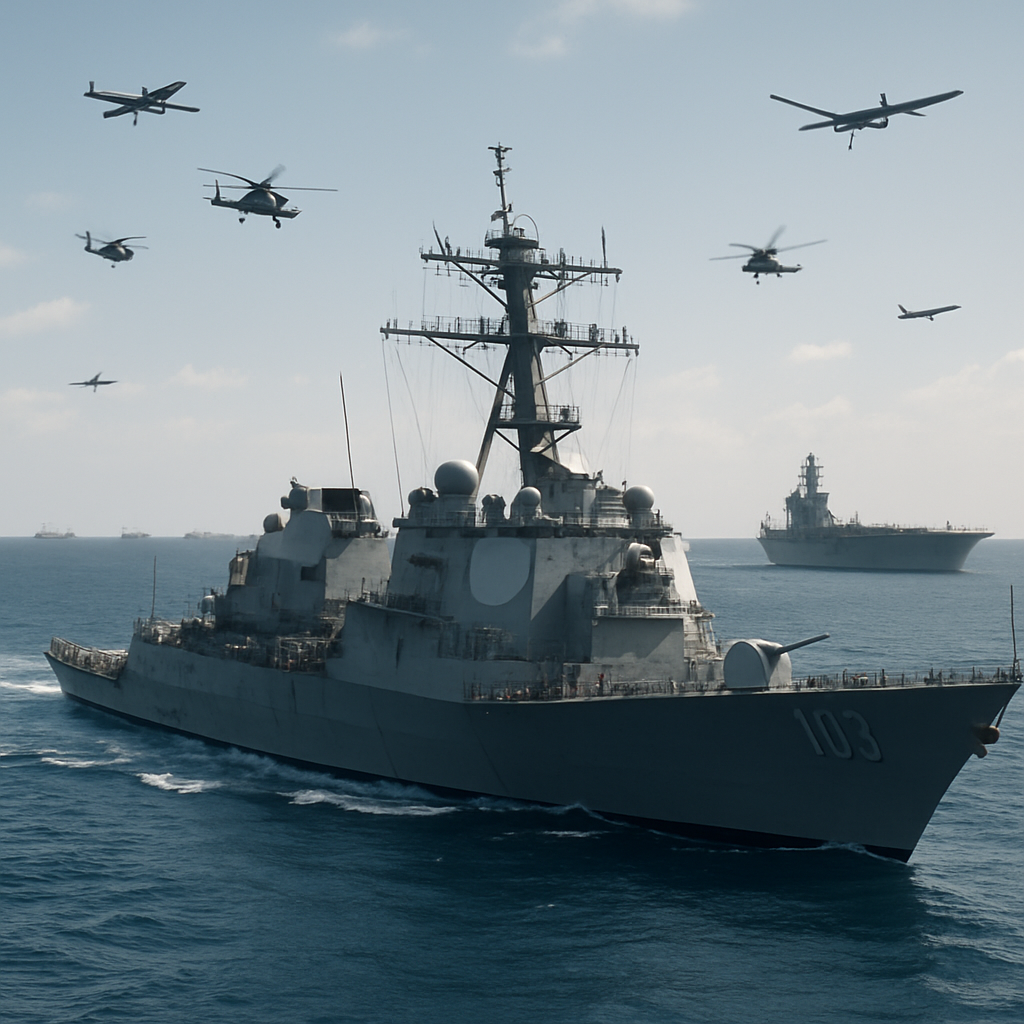
“inherently a defensive operation,” US Central Command head Adm. Brad Cooper said, describing Project Freedom as Washington’s new effort to shepherd commercial ships through the Strait of Hormuz while keeping U.S. forces and passing vessels under a layered, defensive umbrella.
What Project Freedom is deploying
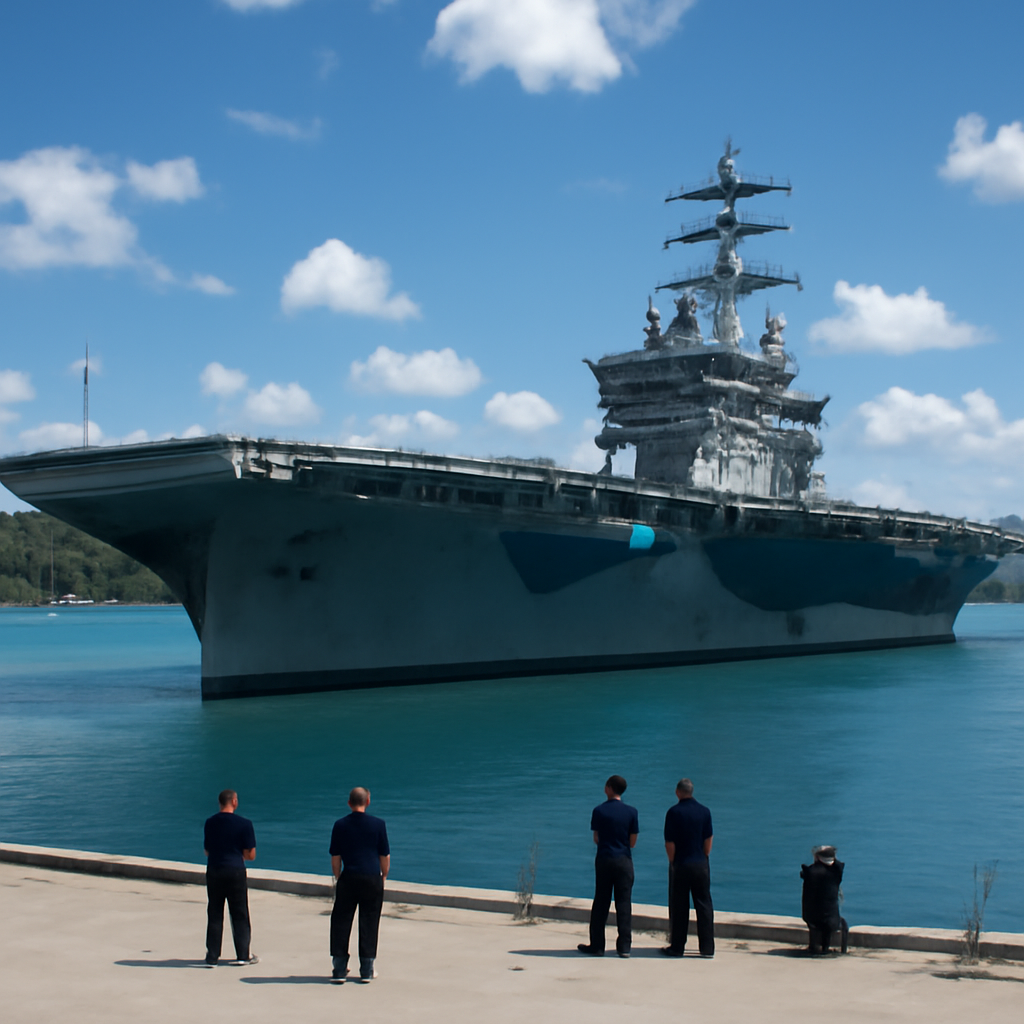
The U.S. officially launched Project Freedom to help commercial vessels transit the Strait of Hormuz. Adm. Cooper said the effort will employ “US ballistic missile defense-capable destroyers, over 100 land and sea based aircraft, multi-domain unmanned platforms — meaning under the sea, on the sea and from the air — and then 15,000 service members to extend this defensive umbrella across the Strait of Hormuz to protect our forces and … defend commercial shipping.”
Cooper described the operation as not a conventional maritime escort: the U.S. has mapped a narrow path intended to be safe and is using ships, AH-64 Apache and MH-60 helicopters, and fighters including F-15s, F-16s, F-35s and the EA-18G Growler, together with airborne early warning and electronic warfare assets, to cover vessels that transit that corridor. He also told reporters the U.S. has hit six Iranian small boats so far.
Transit so far and the broader blockade picture
As of noon Eastern on Monday, two U.S.-flagged merchant vessels had transited the corridor, Cooper said, with more possible in coming hours and days. The strait remains the focal point of competing measures: commercial traffic had largely halted after concerns about Iranian mines and aerial weapons, and both the U.S. and Iran announced competing blockades. Cooper confirmed the U.S. is still enforcing its blockade in the Gulf of Oman while Project Freedom operates.
The Strait of Hormuz is a key shipping lane that moves nearly a quarter of the world’s maritime oil trade — a fact analysts say helps explain Tehran’s incentives and why clearing the waterway is strategically consequential for shippers and states alike.

Audit-ready is a season. It shouldn't be.
Evidence in spreadsheets, controls drifting between audits, frameworks multiplying on flat headcount. Nubivance runs continuous compliance on Rapid7 Cyber GRC - SOC 2, HIPAA, ISO 27001, PCI, CMMC.
End the scrambleAnalysts on why commercial shipping may not return immediately
Multiple analysts told Breaking Defense that Project Freedom faces hurdles before it restores mass commercial transit. Mick Mulroy, a former deputy assistant secretary of defense for the Middle East, put a human scale on the pause: roughly 20,000 commercial captains and crew are stuck on ships now because of the dueling blockades, creating humanitarian strains. Mulroy added that commercial captains, crews and insurers will have to be convinced the corridor is safe — otherwise “this effort will not have the impact we hoped.”
Michael O’Hanlon of the Brookings Institution warned Iran retains “a decent chance to score hits with drones, missiles, and/or mines if ships actually do try to traverse the Strait,” and noted that the U.S. had been pushing embargos further out to sea because of that danger. Jonathan Ruhe of JINSA said shippers are “risk averse,” observing that even a single mine or drone strike could cause crew casualties and take ships offline for months, and that “the US hasn’t made clear how it plans to reopen the Strait, which gives Iran plenty of leeway to keep deterring any shippers who might think of risking the transit.”
Risk tradeoffs for U.S. forces and readiness impacts
Analysts warned that the operation shifts more immediate risk onto U.S. forces. Ruhe said Project Freedom “puts US forces right up against the IRGC Navy” and that Iran retains enough fast attack craft, naval mines, missiles and drones “to credibly threaten U.S. forces.” Mark Cancian of CSIS noted that while the U.S. has said it is providing ships with insurance — which may encourage U.S.-flagged vessels to begin transits — other shippers will likely wait to see several convoys transit successfully before risking a passage.
Cancian also cautioned that running escorts or convoys could increase the likelihood of renewed fighting and heavier casualties than seen in earlier operations; he highlighted that Iranian anti-ship missiles and mines “have very large warheads, about 1,000 lbs, and can therefore cause tremendous damage.”
Beyond combat risk, analysts emphasized cumulative wear on U.S. platforms. Bryan Clark of the Hudson Institute warned that deployment extensions for carriers Ford and Lincoln and for destroyers would push maintenance back at Norfolk Naval Shipyard and Puget Sound Naval Shipyard, and could make it difficult to sustain more than two carrier strike groups deployed at a time in 2027 and 2028. Dan Shapiro added that Project Freedom and other ongoing Middle East operations augment wear-and-tear since Operation Epic Fury and raise questions about deferred maintenance and mission tradeoffs, noting that “for over two months, we have had no aircraft carrier operating in the IndoPacific.”
How commercial shippers, the U.S. Navy, and insurers are likely to respond
- Commercial shippers: Expect broadly cautious behavior. Analysts say many operators will wait for multiple undamaged convoys before restarting regular transits; U.S.-flagged vessels may lead early movement if insurance guarantees hold.
- U.S. Navy and forces: Will shoulder the immediate operational risk of defending transits, increasing exposure to IRGC fast attack craft, missiles, drones and mines and driving additional maintenance demand at major shipyards.
- Insurers: Their willingness to underwrite voyages will be decisive; analysts flagged that without insurer backing, captain and owner risk calculations will likely keep most commercial traffic anchored or diverted.
Project Freedom brings a significant U.S. combat and surveillance footprint to a narrow, strategically vital waterway — but analysts agree the operation’s immediate success hinges not just on military protection, but on convincing insurers, crews and commercial owners that the corridor is genuinely safe. Until that burden of proof is met with sustained, damage-free transits, experts say the program may protect a handful of ships while leaving broader merchant traffic reluctant to return — and will keep U.S. forces on a higher-risk footing with attendant readiness costs.