“I see that as a growing trend that needs to happen within the EU, as sort of, like, an edict that’s come out,” Honeywell Aerospace CEO Jim Currier told Breaking Defense at the Farnborough Airshow — a short, plain sentence that captures a shifting market reality: European capitals increasingly want weapons they can buy, sell and operate without U.S. export controls attached.
The "see-through rule" and ITAR's practical effect
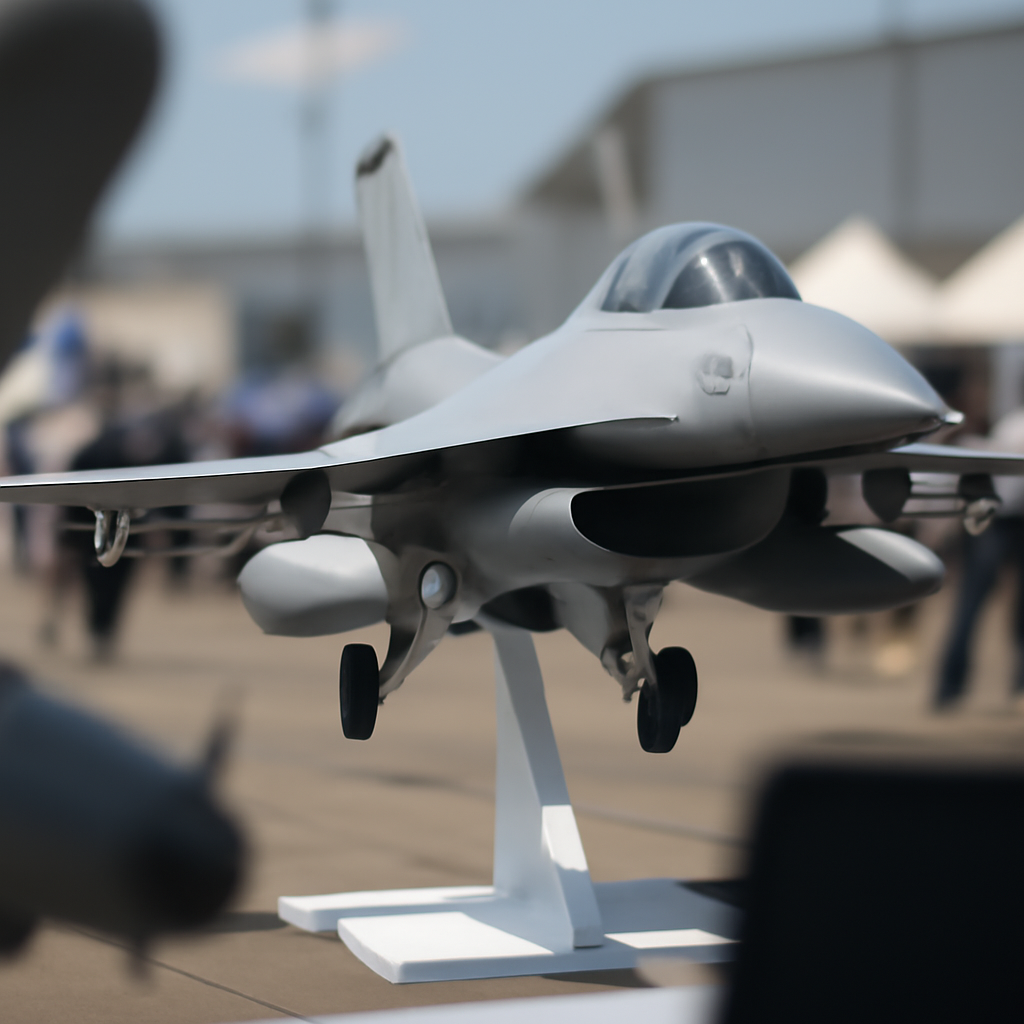
The core technical complaint driving that demand is ITAR’s so-called “see-through rule.” Scott Wise, a partner at Crowell & Moring and member of the firm’s international trade group, explained that ITAR regulators track U.S.-made components inside foreign-built systems and continue to control those parts wherever they go. Wise used the example of a fighter jet built in France: the jet itself may not be ITAR-controlled, but an engine, turbine or wing sourced from the U.S. would remain an ITAR item. A second lawyer working on ITAR issues, granted anonymity, warned that obtaining the required U.S. license to re-export those components can take “days, weeks or months” and could be delayed for political reasons if the sale does not align with U.S. interests.
European policy moves and the marketing of "ITAR-free"
The timing of this complaint matters. The piece notes a two-pronged shift: waning political alignment between Washington and some European capitals, and a “sudden surge” in European defense spending that is driving a push to build arms domestically. Canada’s recent Defence Industrial Strategy was cited as an example of a partner aiming to depend less on U.S. contractors while inking “new, ambitious, and comprehensive” partnerships with the European Union and the United Kingdom. Europe’s 2024 European Defence Industrial Strategy likewise seeks to shore up production lines on the continent.
Industry observers say European companies are now weaponizing the term “ITAR-free” as a sales pitch. Tom Kanewske, chief strategy officer for Zone 5, said potential European partners have become “increasingly opposed” to ITAR restrictions and that European firms are using ITAR-free branding to gain “unique market access” in places where U.S. firms once held advantage.

This site is the portfolio.
OSINTSights runs on Cloudflare Workers, D1, R2, and Vectorize, with an AI pipeline on Hetzner ARM. Nubivance designed, built, and operates it. We do the same for clients.
See what we buildHow U.S. firms and vendors are reacting
Responses from U.S. companies range from accommodation to calls for reform. Honeywell’s Currier said his company is emphasizing its European footprint — “13 European countries” of operation and five with manufacturing facilities — and trying to “look, act [and] feel like you’re a European company” when competing there. Smaller European vendors such as Lithuania’s Aktyvus Photonics are explicitly marketing laser targeting payloads as an ITAR-free option. Aktyvus CEO Laurynas Šatas warned, however, that producing systems “equally good or better” without U.S. components is a “huge challenge,” noting deep dependencies in dual-use and military supply chains.
Trade groups and executives are pressing for changes to U.S. export rules. Aerospace Industries Association CEO Eric Fanning said ITAR reform is “always a big topic” and urged accelerating and streamlining the system while protecting sensitive technologies. Fanning argued that reforms should prioritize informing allies quickly about whether a U.S.-made component can be sold to a foreign buyer: “The worst thing is to make an ally wait,” he said. “If we’re not gonna sell to them, we ought to just say that up front.”
What this means for European firms, U.S. primes, and policymakers
- European defense firms: Expect to continue marketing ITAR-free options and to push R&D into non‑U.S. supply chains, even as they confront the “huge challenge” of matching U.S. component performance, size, weight and power.
- U.S. prime contractors and trade groups: Firms such as Honeywell and voices like Eric Fanning will likely press Washington for export reform and faster licensing timelines to avoid losing European workshare.
- Policymakers in Washington: The debate is active at senior levels. Undersecretary of Defense for Policy Elbridge Colby publicly disputed that friction with Europe will force U.S. market losses, writing that “this is neither feasible nor accurate,” and asserting that “no alternative country or countries can compete with the U.S. defense industrial base.” At the same time, reform advocates in industry and parts of Europe argue that operational risk — for example, systems that could be disabled if U.S. support is withheld — is driving the push for sovereign-capable supply chains.
Long-term implications and the narrow path forward
ITAR has been around for decades, and its critics have warned about market friction for almost as long. What is new, according to the reporting, is both scale — enlarged European budgets and industrial strategies — and political appetite in Europe to decouple certain defense purchases from U.S. control. U.S. officials insist the American defense industrial base remains unmatched in “quantity or quality,” while European firms and some buyers are actively seeking alternatives or at least hedges that remove U.S. gating rights.
The crucial question the reporting leaves in focus is procedural: can the United States reform licensing and interpretation of ITAR — speeding decisions and carving clearer rules around re-export and technical-data tainting — while preserving the technology safeguards that Eric Fanning and others say are essential? How Washington answers will shape whether U.S. firms retain privileged access to Europe’s growing defense market or cede ground to ITAR-free competitors.