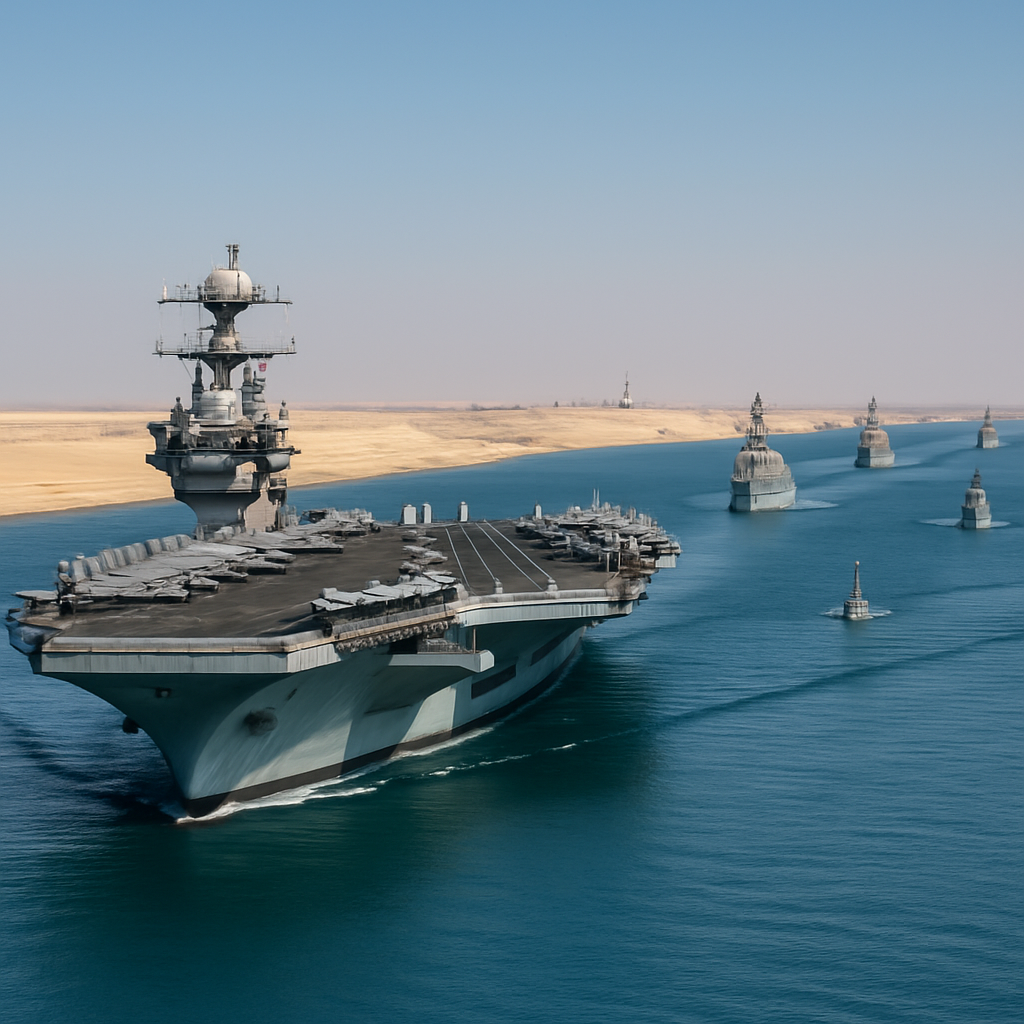
“The strike group – now deployed for a record-setting 314 days – transited the Suez Canal northbound on May 1 and has reportedly begun the journey back home to Norfolk,” the reporting notes — a rare, long-delayed end to the Gerald R. Ford carrier strike group’s extended deployment.
Gerald R. Ford CSG finally heads for Norfolk
The Gerald R. Ford carrier strike group, after a deployment described in the source as a record-setting 314 days, transited the Suez Canal northbound on May 1 and has “reportedly begun the journey back home to Norfolk,” according to reporting cited in the tracker. The movement marks the apparent winding down of that historic deployment.
The tracker presents the transit and return as a milestone in fleet movements; it does not list the Ford’s precise position beyond the Suez transit and the Washington Post report that the strike group is en route to Norfolk.
Two carriers operating together in the Arabian Sea: Abraham Lincoln and George H.W. Bush
While Ford heads west, CENTCOM’s command currently includes two carrier strike groups operating in the region. The USS Abraham Lincoln and USS George H.W. Bush are positioned together in the Arabian Sea “for the first time since the conflict kicked off,” the tracker reports.
A presence of two carriers in the same sea was framed in a tweet quoted in the source as providing “additional flexibility to enforce the blockade, support the just‑announced ‘Project Freedom’ mission to get commercial vessels out of the Persian Gulf, and, should combat operations resume, strike Iran with double the firepower.” That tweet was posted by Rapid Response 47 on May 3.
The tracker also records a CENTCOM public-communications action over the weekend: Adm. Brad Cooper, CENTCOM’s commander based in Florida, visited USS Milius (DDG 69) on May 2 as that guided-missile destroyer “patrolled regional waters in support of the U.S. blockade operations against Iran,” according to CENTCOM’s social media post cited in the tracker.

The cyber insurance questionnaire just landed. Now what?
SOC 2, HIPAA, insurance renewals - someone has to own security strategy. Nubivance provides fractional CISO leadership without the full-time salary.
Get a security leadProject Freedom: CENTCOM’s pledge and reporting caveats
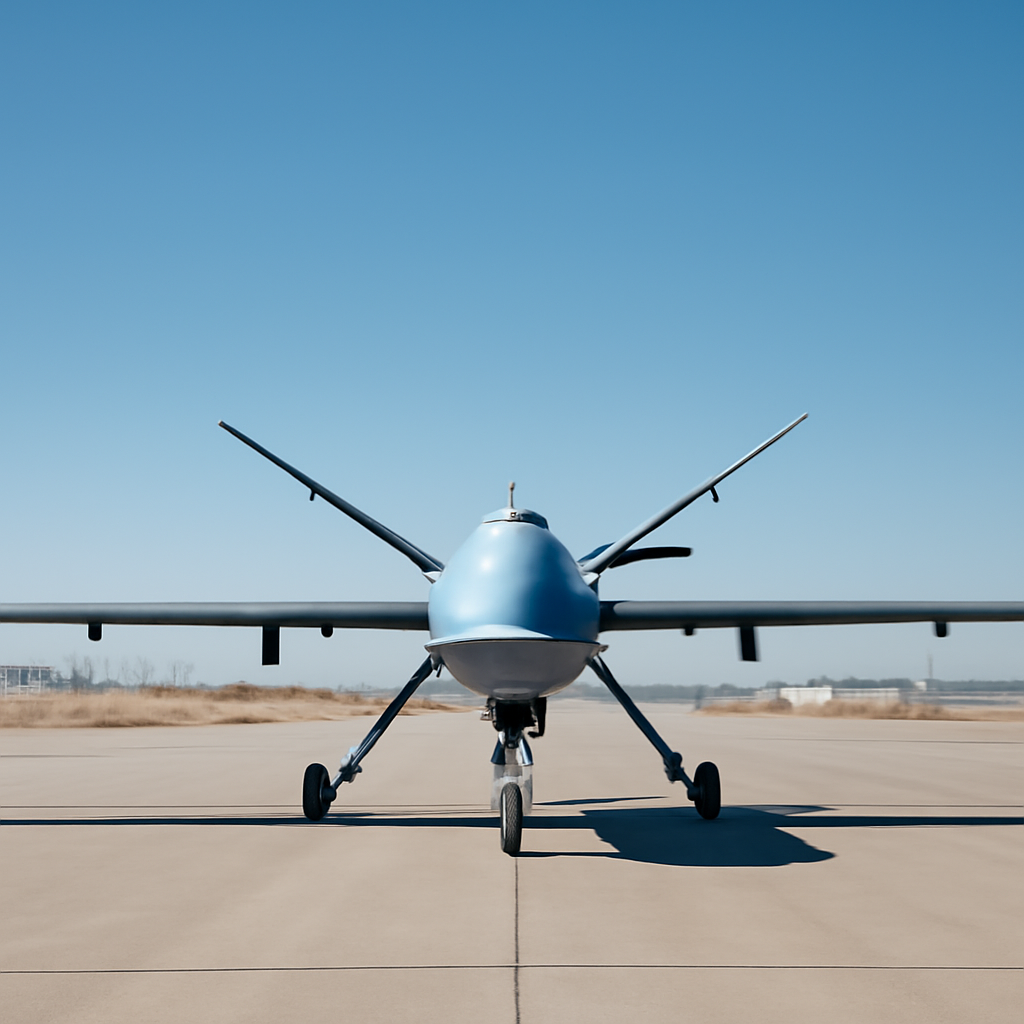
CENTCOM’s release on Sunday laid out the U.S. military elements slated to support “Project Freedom,” saying, verbatim: “U.S. military support to Project Freedom will include guided-missile destroyers, over 100 land and sea-based aircraft, multi-domain unmanned platforms, and 15,000 service members.”
But the tracker cites reporting in the Wall Street Journal that says the plan “doesn’t currently involve U.S. Navy warships escorting vessels through the strait,” and that the operational mechanics of Project Freedom remain unclear. The juxtaposition of CENTCOM’s list of supporting assets and the Journal’s reporting highlights a gap between announced resources and publicly reported execution details.
Boxer ARG transit, AIS blackout, and USS Nimitz movements
The Boxer amphibious ready group steamed northbound through the Malacca Strait on April 30 and entered the Indian Ocean on May 1, a movement the tracker says it was among the first to report. Boxer “went dark on AIS shortly after completing the transit” and, if following a direct route to the Middle East to reinforce the Tripoli ARG, “could arrive in the U.S. Central Command area of responsibility sometime next week.” As of publication, Boxer remained listed under U.S. Indo‑Pacific Command.
Separately, the USS Nimitz continued a circumnavigation of South America: Nimitz moved through the Strait of Magellan into the Atlantic on April 26. While the tracker notes the carrier’s exact position as currently unknown, images posted to DVIDS show the Nimitz most recently participating in a PHOTOEX off the southeast coast of Argentina.
The tracker cautions that listed positions are general approximations and notes that non‑deployed LHA/LHD amphibious warships are not shown.
What this means for U.S. Navy planners, commercial shippers, and CENTCOM forces
- U.S. Navy planners: The Ford’s passage through the Suez and reported return to Norfolk closes a long deployment that the tracker calls record‑setting at 314 days; planners will be tracking redeployment timelines while managing two carriers already operating in CENTCOM’s waters.
- Commercial shippers: Project Freedom is explicitly aimed at getting “commercial vessels out of the Persian Gulf,” but Wall Street Journal reporting that the plan “doesn’t currently involve U.S. Navy warships escorting vessels through the strait” means commercial operators will be watching for clarification on who escorts ships and how the mission will be executed.
- CENTCOM forces: CENTCOM’s statement lists specific force elements — guided‑missile destroyers, “over 100 land and sea‑based aircraft, multi‑domain unmanned platforms, and 15,000 service members” — and the presence of two carriers in the Arabian Sea plus forward patrols such as USS Milius indicate a posture that combines air, sea, and unmanned capabilities while officials define Project Freedom’s operational details.
The week’s tracker presents a transitional moment for the U.S. flattop fleet: a record deployment appears to be ending even as two carriers hold position in the Arabian Sea and an amphibious group moves into the Indian Ocean. The contrast between CENTCOM’s public list of assets for Project Freedom and media reporting that the plan may not include warship escorts underscores a central question the coming days will answer — who will move, how, and under what authorities.