"Let me be very clear, like we are not slowing down on drones or autonomous systems, and we are not walking away from them," Alex Miller, the Army's chief technology officer, told reporters on Thursday.
Why the 3rd Battalion, 504th Parachute Infantry Regiment was redesignated
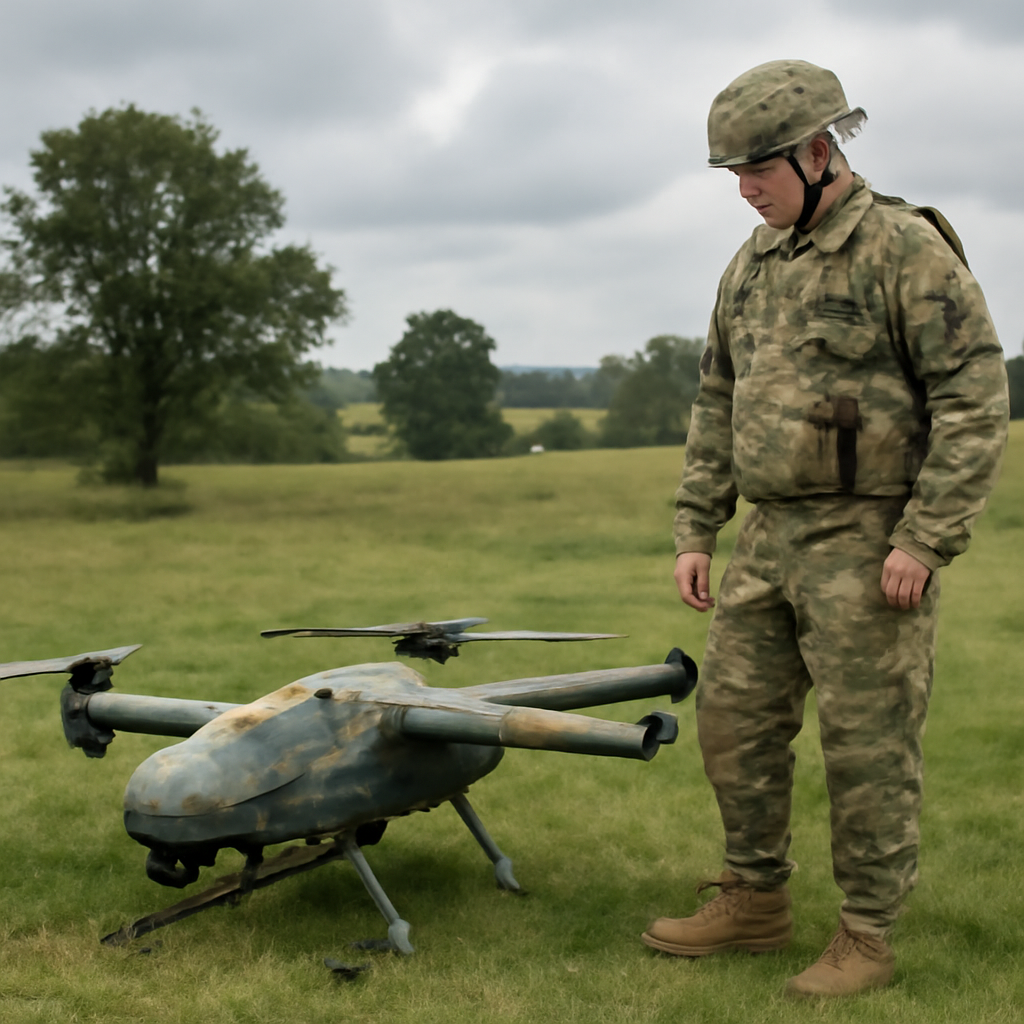
The Europe-based 3rd battalion of the 504th Parachute Infantry Regiment — part of the 173rd Airborne Brigade — was officially designated as an "unmanned systems battalion" in January, the Army said. That designation was framed as a time-limited specialization: soldiers would focus on drone and autonomy concepts for roughly "six or seven months" while the unit finished forming as a conventional infantry battalion, an Army official told reporters.
After participating in two exercises in Germany and a series of engagements with Ukrainian drone operators in NATO territory over several months, the unit's temporary unmanned-systems mission was ended in August when Acting Chief of Staff of the Army Gen. Christopher LaNeve directed the battalion to revert to a traditional infantry unit, the Army official said. The last of those exercises concluded "this month," the Army said.
Army leadership’s rationale: decentralize learning, not a retreat from technology
Alex Miller pushed back against characterizations that the Army was abandoning drone development. "So I don't want anybody to take that as a perception that we're walking away or this is less important," he told reporters, adding the service is "not slowing down on drones or autonomous systems."
Miller said the Army never intended the 173rd unit to be a permanent, centralized drone corps. He said the service opposed creating a centralized drone unit from the outset because centralization, in his view, "what you lose is the ability to actually scale that learning and send that out to the rest of the Army." The temporary designation was designed to let personnel "learn some of those lessons and then pass them out to the rest of the Army," he said.
Miller also acknowledged that some of the political backlash was "probably" caused by the Army not "telling the full story fast enough."

The cyber insurance questionnaire just landed. Now what?
SOC 2, HIPAA, insurance renewals - someone has to own security strategy. Nubivance provides fractional CISO leadership without the full-time salary.
Get a security leadLawmakers' objections and the request for answers
Lawmakers pushed back after the August directive, writing to Gen. LaNeve and then-Army Secretary Dan Driscoll to seek to "better understand" the decision "to eliminate the drone battalion of the 173rd Airborne Brigade." In their letter, they said they had "deep concerns that eliminating this specialized drone unit will limit our ability to learn from allies, particularly the Ukrainian Armed Forces, and hinder our efforts to modernize drone warfare at the speed necessary to compete on the modern battlefield."
The letter cited recent conflicts — naming both the Ukraine-Russia War and the "ongoing conflict in Iran" — as evidence that the U.S. needs to "make significant improvements in drone warfare" and learn from Ukrainian innovations, according to the lawmakers' text as reported.
Exercises in Germany and engagement with Ukrainian operators
According to Army officials and reporting, soldiers from the battalion took part in two exercises in Germany and engaged with Ukrainian drone operators in NATO territory over the past several months. The Wall Street Journal was the first outlet to report that the drone-focused unit would shutter, per the Army's account of events.
The Army framed those engagements as the core mission of the temporary designation: concentrate learning quickly, then distribute that knowledge across the force rather than centralize it in a single battalion.
What this means for the 173rd Airborne, lawmakers, and Ukrainian Armed Forces
- 173rd Airborne Brigade: The battalion will revert to a traditional infantry role after completing its short-term unmanned-systems focus and exercises, with the Army describing the unmanned designation as time-limited from the start.
- Lawmakers who asked for answers: They will continue to press Army leadership for explanations and assurances that lessons from allied operations — specifically Ukrainian drone use — are being captured and propagated instead of being lost by disbanding a specialized unit.
- Ukrainian Armed Forces and allied operators: Their tactics and innovations were explicitly cited as a source of lessons the Army wanted the temporary battalion to study; those lessons, Army officials say, are intended to be passed outward across the force rather than retained in one centralized unit.
The Army's message is unambiguous in tone if not in optics: the temporary experiment with a drone-focused battalion was a learning cell, not a program of record, and the service intends to spread what that cell learned across the force rather than keep it concentrated. But the change prompted immediate questions from lawmakers about whether rapid operational lessons — notably those credited to Ukrainian operators — will be institutionalized at the speed they say is required. The Army says it is reinforcing those lessons, and Alex Miller's public insistence that the service is "not walking away" from drones closes one chapter and opens a second on how the Army will distribute autonomy expertise throughout its ranks.