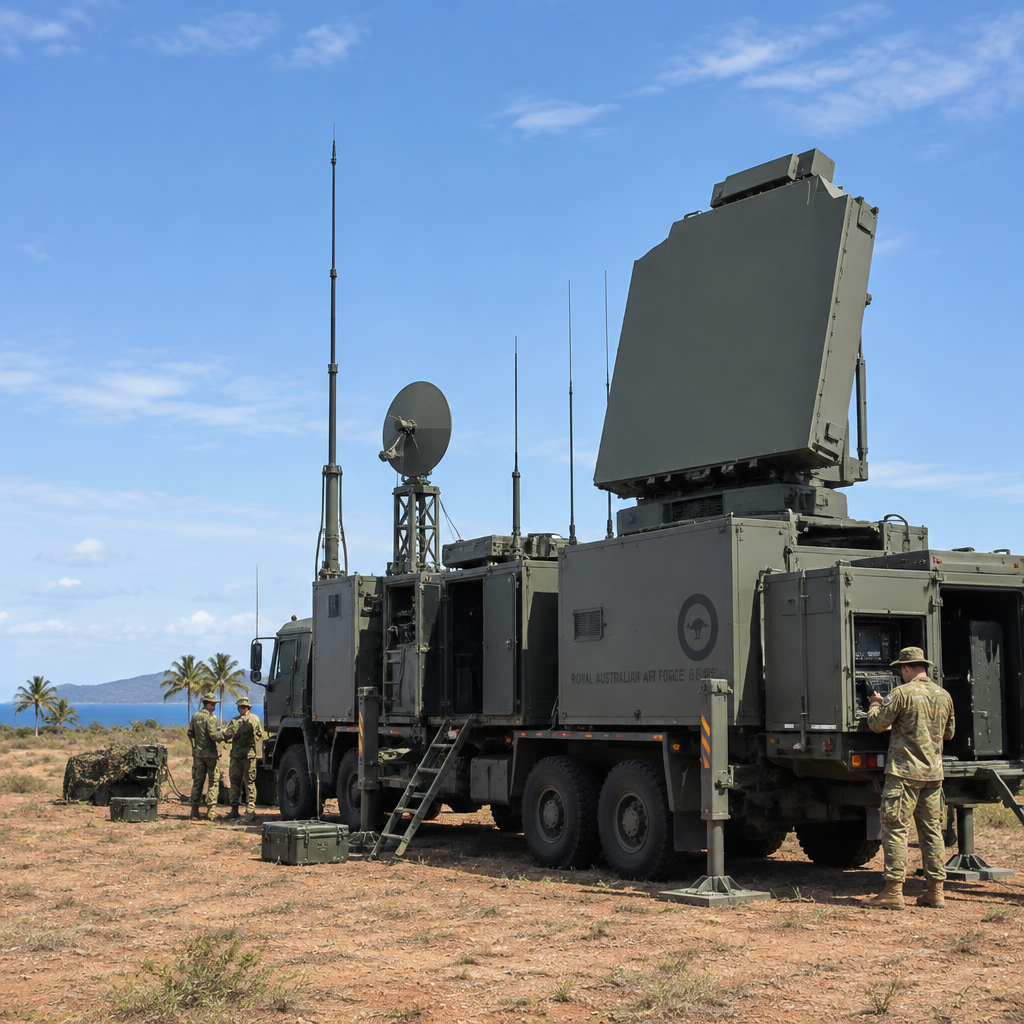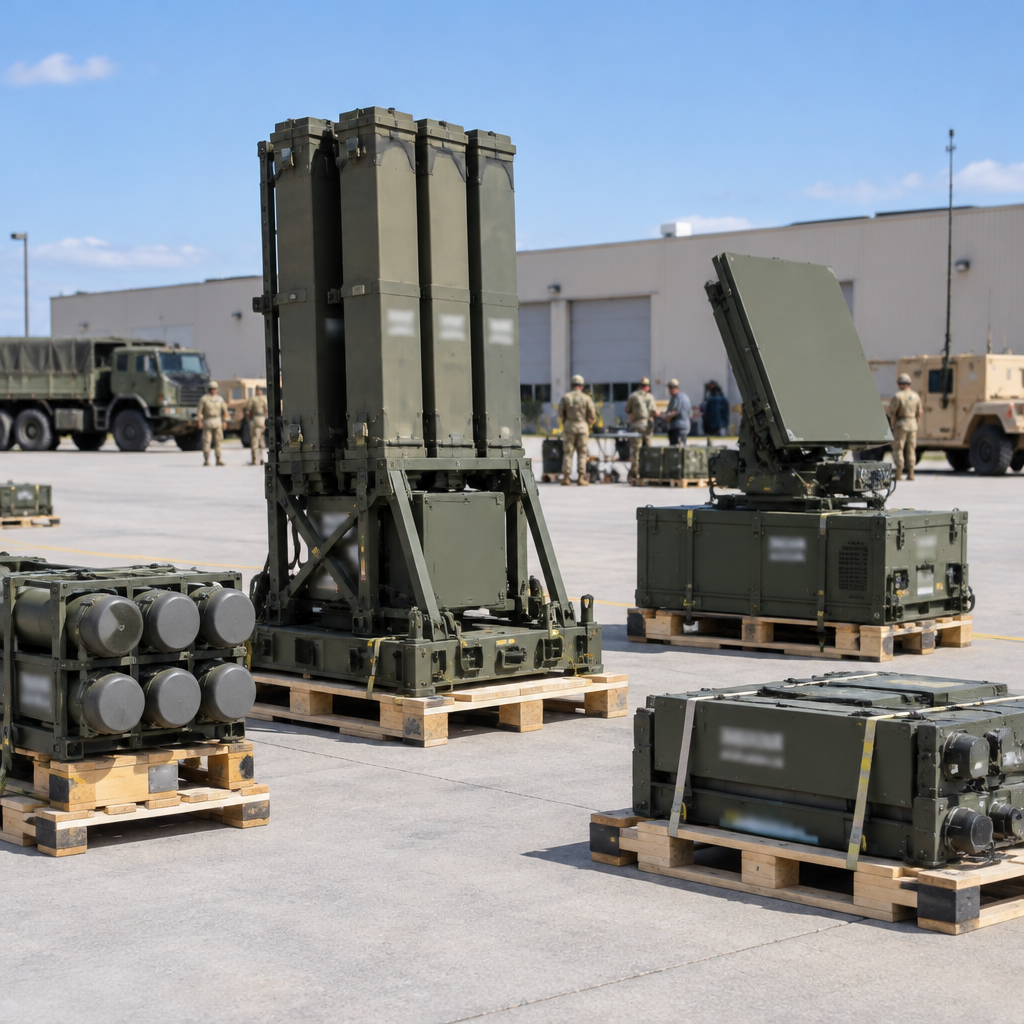
The Army wants to reach First Unit Equipped with a battalion-sized palletized short-range air defense element in the first quarter of Fiscal Year 2030 — the three-month window running from October 1 to December 31, 2029.
Program timeline and milestones
The Maneuver-Short Range Air Defense Increment 4 (M-SHORAD Inc 4) program aims to field palletized short-range air defense systems before the end of calendar 2029, with the service planning to hit Initial Operational Capability in Fiscal Year 2030. The briefing slides released after an industry day in Huntsville show the Army’s specific objective: First Unit Equipped (FUE) with a battalion-sized element in the first quarter of FY2030 (Oct. 1–Dec. 31, 2029).
Increment 4 first emerged in 2025, and Army planners had earlier said they were looking for options fieldable between Fiscal Years 2027 and 2029; the newly published schedule moves formal IOC into FY2030 while still aiming to field systems to units before the close of 2029.
Vehicle-agnostic pallet design and logistics demands
The Army requires Increment 4 systems to be palletized — a Self-Loading Equipment Dock (SLED) — so they can be mounted on and dismounted from light crewed and uncrewed vehicles or emplaced in static positions without additional trailers. The service named 4×4 Joint Light Tactical Vehicles (JLTV), Infantry Squad Vehicles (ISV), and uncrewed ground vehicles (UGV) as potential hosts.
Operational endurance and transportability are explicit constraints: the pallet must “be able to operate for 72 hours independently, and semi-independently with supported force for 3–7 days.” The system must be C-130 loadable in both normal SLED and vehicle configurations without special equipment, and be air-droppable, sling-loadable and dismount-capable.

This site is the portfolio.
OSINTSights runs on Cloudflare Workers, D1, R2, and Vectorize, with an AI pipeline on Hetzner ARM. Nubivance designed, built, and operates it. We do the same for clients.
See what we buildThreat set, mission scope, and allowed capabilities
Increment 4 is being designed to defeat a broad range of uncrewed aerial systems (UAS) — from small quadcopters up to longer-range one-way-attack drones such as Iran’s Shahed 136 — whether operating individually or in swarms. The Army also expects the systems to provide point defense against helicopters and fixed-wing aircraft making attack runs on friendly ground units. The briefing explicitly highlights a secondary “direct fire capability for ground targets.”
The slides make no explicit mention of cruise missile threats for Increment 4; the Army is addressing cruise missiles through other air defense systems, though the briefing notes it is possible some Increment 4 designs could engage lower-end cruise missiles in certain flight profiles.
Open-ended sensor and effector requirements
The Army left sensor and effector specifics intentionally broad. Increment 4 pallets must support a “reconfigurable multi-effector MEP [mission equipment package] integrating kinetic effects (e.g., missiles, direct-fire guns), and non-kinetic defeat.” That plug-and-play, modular approach is central to the concept: pellets should accept different radars, counter-drone interceptors and other weapon pods and adapt the operator interface automatically to the fitted sensors and effectors.
Both kinetic and non-kinetic means are on the table. The service emphasizes fusing multiple sensor types — acoustic, bistatic, active radar and EO/IR — at the platform and tactical edge and eventually aggregating that fusion in the cloud via networks such as the Integrated Battle Command System (IBCS), which is replacing the older Forward Area Air Defense Command and Control (FAAD C2).
How maneuver commanders, vendors, and tactical units will respond
- For maneuver commanders: the palletized format promises a “menu of options” for tailoring point defense to mission needs. As then-Army Col. Marc Pelini described at AUSA in 2025, “Think of like a pallet or a sled that I could put in the back of any vehicle… and I can have that self-contained capability that allows the maneuver commander to have a menu of options.” Pelini has since been promoted to brigadier general and is now the Army’s top air defense artillery officer.
- For vendors and integrators: the Army’s open-ended MEP requirement favors modular, vehicle-agnostic systems that are C-130 transportable and support multiple effectors and sensors. Companies already showcasing relevant designs include L3Harris, Leidos, Leonardo DRS, MDH Strategic Services, Moog, MSI Defense Solutions, SAIC, and Sierra Nevada Corporation (SNC), among others.
- For tactical units and sustainers: expected fielding timelines and the requirement for 72-hour independent operation place emphasis on logistics, power, and operator training for rapidly reconfigurable pallets used across different host vehicles and static sites.
Industry offerings and common effectors
Several existing platforms already match aspects of the palletized concept. L3Harris’ VAMPIRE and MSI’s EAGLS are in limited military use, while SNC’s BRAWLR and other designs have seen combat employment in Ukraine. Common armaments among contender systems include 30mm M914 cannon variants, 7.62x51mm M134 Miniguns, Stinger and AGM-114 Hellfire interceptors, and capability to host AIM-9X Sidewinders in some mockups.
Nearly all contenders integrate 70mm laser-guided Advanced Precision Kill Weapon System II (APKWS II) rockets as a lower-cost counter-drone interceptor; APKWS II has been fielded in surface-to-air roles in Ukraine and across U.S. military units for counter-drone missions.
The Army’s Increment 4 plan is an explicit move toward a distributed, modular short-range air defense layer that can be moved rapidly and reconfigured on the ground. If the schedule holds, palletized M-SHORAD systems will begin joining the force in the final quarter of 2029, ahead of the service’s FY2030 IOC milestone.