“There will be nothing in the world that we can’t touch with a combined range of HADES and what we can launch off of this thing,” Andrew Evans, Director of Strategy and Transformation in the Office of the Deputy Chief of Staff of the Army (G-2), said in April at the Army Aviation Association of America’s 2026 Warfighting Summit.
Fort Hood: the new home for ME-11B HADES and a first-of-its-kind UAS battalion
The Army has announced that its future ME-11B High Accuracy Detection and Exploitation System (HADES) fleet will be based at Fort Hood, Texas, and that the post will host an inaugural Unmanned Aircraft System (UAS) Battalion as part of a broader consolidation of aerial intelligence, surveillance, and reconnaissance (ISR) assets. The basing decision accompanies the relocation of the 116th Military Intelligence Brigade from Fort Gordon, Georgia, to Fort Hood — a move “authorized on March 3, 2026, by then-Chief of Staff of the Army General Randy George,” according to the Army release published today.
ME-11B HADES jets: procurement, basing, and capabilities
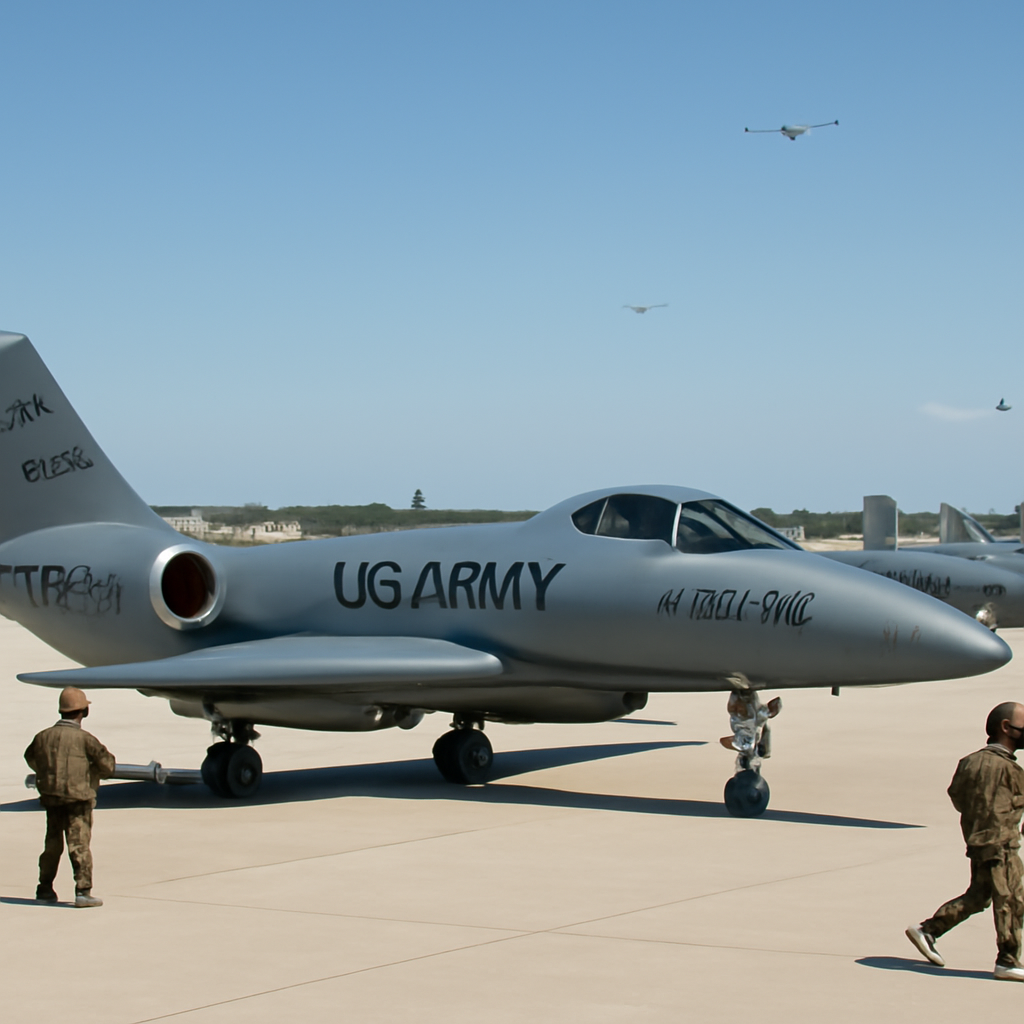
The ME-11B HADES is a conversion of the Bombardier Global 6500 business jet into a fixed-wing aerial ISR platform. The Army expects delivery of the first ME-11B prototype “before the end of the year” and is acquiring two additional prototypes. The current plan calls for at least six production HADES jets, on top of the three prototypes; the service notes this number could grow over time. Contracting activity last month for hangar work at Robert Gray Army Airfield — collocated with Killeen Regional Airport at Fort Hood — had already hinted at the jets’ arrival.
The Army frames HADES as a leap over the turboprop ISR aircraft it retired “last year.” According to the release, the ME-11Bs fly higher, faster, and farther than those legacy platforms, gaining longer on-station times, faster transit to operating areas, and improved sensor and datalink lines of sight. The higher operating ceiling also allows the jets to use slant angles to “peer deeper into denied areas while still flying in international airspace,” the Army says.

This site is the portfolio.
OSINTSights runs on Cloudflare Workers, D1, R2, and Vectorize, with an AI pipeline on Hetzner ARM. Nubivance designed, built, and operates it. We do the same for clients.
See what we buildAir-launched drones, external stores, and an ISR ecosystem
Public descriptions of HADES operations envision the jets launching very long-range drones with ranges “around 620 miles (1,000 kilometers) or more,” which would extend sensor reach while keeping the launch platform farther from hostile air defenses. Each ME-11B will have two hardpoints under each wing for external stores, potentially carrying sensor pods or other systems, the Army said. The service also sees HADES operating alongside other assets — high-altitude balloons, swarms of uncrewed aerial systems, high-altitude extreme-endurance drones, and space-based ISR — to create a layered aerial ISR ecosystem.
224th Military Intelligence Battalion, MQ-1C Gray Eagle companies, and the new UAS Battalion
The 224th Military Intelligence Battalion, currently at Hunter Army Airfield (Fort Stewart, Georgia), will form at least the core of the new UAS Battalion and is scheduled to change station to Fort Hood by 2027. The 224th’s official materials state it will transition to focus “entirely on unmanned aerial intelligence” and will become the Army’s first unmanned aerial system battalion. The newly formed battalion is described as including a Headquarters and Headquarters Company, two MQ-1C Gray Eagle companies, and one processing, exploitation, and dissemination (PED) company.
The Army’s release notes the 116th MIB “remains the Army’s sole unit deploying small, tailored forward elements to launch UAS remotely operated from home station, significantly reducing sustainment and mobility costs.” Still, the release does not specify whether personnel or assets from other units will be merged into the new battalion, and it leaves open the possibility the formation could grow beyond the 224th’s nucleus.
What this means for Fort Hood, the 116th MIB, and the 224th
- Fort Hood: The post will receive infrastructure and personnel to support fixed-wing HADES jets and an expanded UAS presence. Robert Gray Army Airfield’s collocation with Killeen Regional Airport and recent hangar work point to tangible basing preparations, and the Army expects to bring 1,228 additional personnel to Fort Hood from Fort Gordon, Fort Stewart, and Fort Bliss between now and Fiscal Year 2028.
- The 116th Military Intelligence Brigade (AI): The consolidation relocates the brigade’s elements into a single site, positioning it to “lead the deployment of the Army’s High Accuracy Detection and Exploitation System (HADES)” and redesigning the Army’s only fixed-wing AISR brigade to support multi-domain and large-scale combat operations, per the Army’s release.
- The 224th Military Intelligence Battalion and Gray Eagle units: The 224th will pivot from manned to unmanned aerial intelligence and form the initial UAS Battalion structure, even as the Army’s broader posture signals debate over the future relevance and survivability of MQ-1C Gray Eagle designs. The service has publicly questioned the MQ-1C’s future utility and faced congressional pushback, even as Gray Eagles have been active in operations against Iran this year.
For the Army, the move stitches new jets, long-range drones, and consolidated unmanned operations into a single hub at Fort Hood. For commanders and planners, the immediate markers to watch are delivery of the ME-11B prototype this year, hangar construction at Robert Gray Army Airfield, and the 224th’s change of station into the new UAS Battalion construct. As Maj. Gen. Timothy Brown, head of INSCOM, put it in the Army release: “The key to the future of Aerial ISR is the consolidation at Fort Hood of the mighty 116th!”
Original story: https://www.twz.com/air/new-jets-drones-will-transform-fort-hood-into-armys-aerial-intel-hub