"So what I saw from the squadron level, with my main command post and these new systems, was understanding the battlefield architecture, where things are not just on the ground, but their effects in the sky," Lt. Col. Jason Kruck said Thursday.
Project Flytrap 5.0 in Lithuania: larger scale, multinational participants
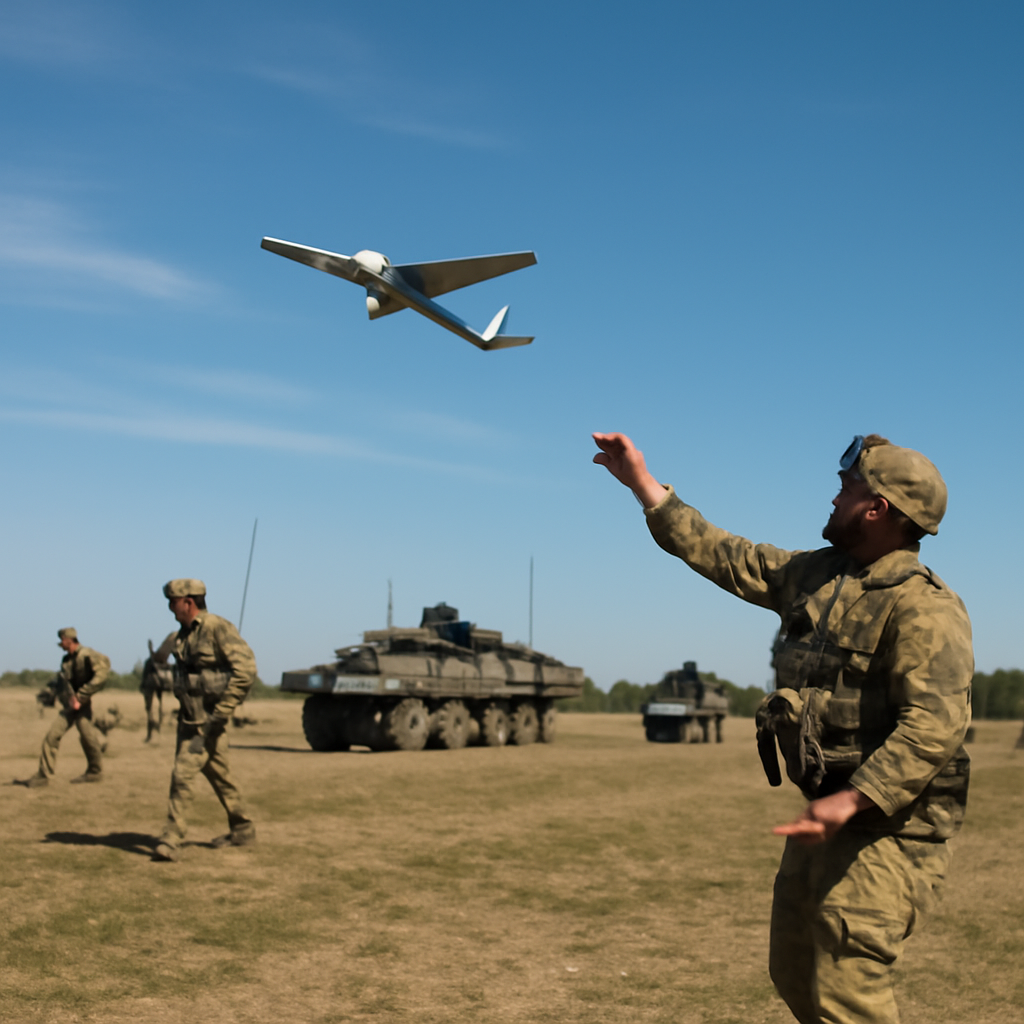
Over the past few weeks in Lithuania, infantry units from the 2nd Cavalry Regiment and international partners took part in the fifth iteration of Project Flytrap, a U.S. Army–NATO exercise designed to fold drone warfare into conventional ground-combat practice. The exercise tested more than 20 pieces of equipment integrated with Strykers and unmanned ground vehicles (UGVs), as troops worked to "add drone warfare to their ground-combat expertise."
How squads are rethinking battlefield roles — Lt. Col. Jason Kruck
Kruck framed Flytrap 5.0 as a lesson in seeing the battlespace vertically as well as horizontally. Units that once launched drones primarily to spot targets for indirect fire now must detect, track, and respond to aircraft overhead. "Well, now with the counter-UAS detect systems, we could identify that there is an enemy air drone coming through our sector, and then we developed new [tactics, techniques and procedures] on how we counter that," Kruck said. He described a doctrinal balancing act between intelligence collection, the fires element — "who now also has to cover down on that counter-UAS viewpoint" — and maneuver, noting the need for synergy among those three portions of warfighting.

This site is the portfolio.
OSINTSights runs on Cloudflare Workers, D1, R2, and Vectorize, with an AI pipeline on Hetzner ARM. Nubivance designed, built, and operates it. We do the same for clients.
See what we buildSystems under test: reconnaissance and attack drones, jammers, AI-enabled tools
The units used a range of assets during Flytrap 5.0: reconnaissance drones and first-person-view (FPV) attack drones, electronic jammers, and AI-enabled operating systems intended to help find and target enemy UAS. These tools were exercised alongside Strykers and unmanned ground vehicles to evaluate how layered capabilities operate together at the troop and squadron level — the cavalry equivalents of company and battalion headquarters, as described by the regimental executive officer.
Maj. Galen King on scaling: trend line to Flytrap 6.0
Maj. Galen King, the regimental executive officer, said Flytrap has followed a steady trend toward larger, more complex tests. "So I think with each one of the Flytraps, what I think we've seen a trend of is…we're always increasing scaling," he said. That scaling applies to the echelon being tested, the number of UAS in the air, and the realism and complexity of the scenarios and the [opposition force]. King signaled an intentional escalation for the next iteration: "We will move beyond the troop and the squadron headquarters that we were really focused on this time and continue to create an environment with a more realistic enemy, which is flying more UAS, using more electronic warfare, and continuing to provide increasing amounts of this kind of multi-layered counter-UAS approach for friendly forces as part of this scenario."
What this means for the 2nd Cavalry Regiment, NATO partners, and infantry squads
- 2nd Cavalry Regiment commanders: Expect to integrate counter-UAS detection and engagement responsibilities into existing command posts and to refine new [tactics, techniques and procedures] that distribute those tasks across intelligence, fires, and maneuver.
- NATO and international partners: Exercises will increasingly emphasize interoperability across Strykers, UGVs, and assorted UAS and electronic-warfare systems as multinational forces rehearse more realistic, multi-layered aerial threats.
- Infantry squads and troops: Soldiers will train to both employ and defeat drones in close-combat contexts, adding responsibilities for spotting, jamming, shooting down, or avoiding small air systems to standard reconnaissance and fires workflows.
Flytrap 5.0 demonstrated a deliberate shift: drone systems and countermeasures are no longer peripheral tools but integrated elements of ground maneuver. With organizers planning to move beyond troop and squadron headquarters and to field a more active aerial opposition in Flytrap 6.0, the exercise series points toward larger, more complex experiments where air and ground layers must be synchronized in real time.
Read the original story: Defense One — US infantry’s drone-warfare experiments are getting bigger