"All of this strengthens NATO, it strengthens Europe, and it strengthens Sweden," said outgoing Prime Minister Ulf Kristersson as Stockholm announced it will send Patriot batteries and fighters to protect a NATO logistics hub in southeastern Poland.
Swedish deployment: Patriots and Gripens to Poland
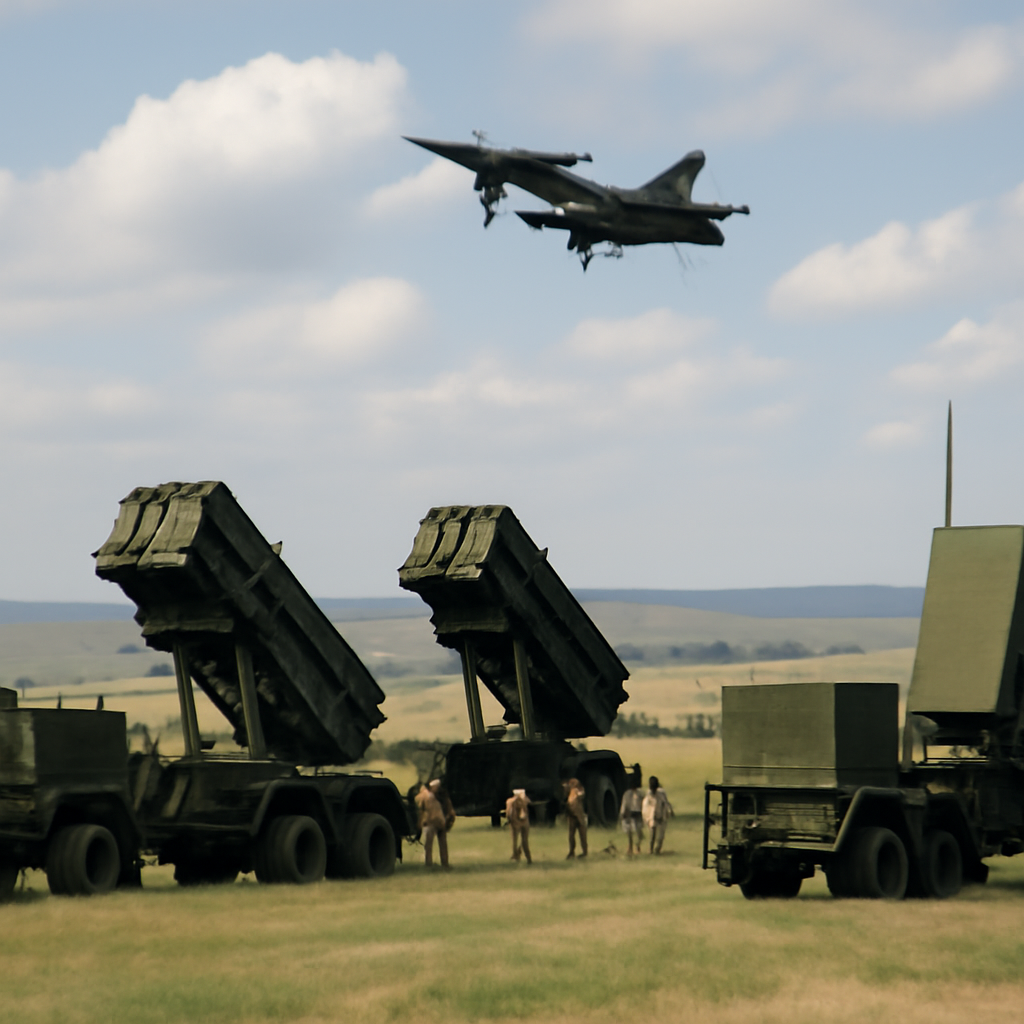
About 100 personnel from the Swedish Air Defense Regiment (Lv 6) in Halmstad will deploy to southeastern Poland to protect the NATO logistics hub near the Ukrainian border, the government said at a press briefing. Saab Gripen fighters from the Blekinge Air Wing (F 17) are already flying over Poland this month to protect the same hub. Stockholm described the move as the first time Sweden has deployed its high-end Patriot air-defense systems as part of a NATO mission.
Operational chain: command, mission dates, and role
The Swedish unit will operate under NATO Air Command and contribute to NATO’s Integrated Air and Missile Defense (IAMD), according to the announcement. Sweden is taking over the rotational Patriot role from the Netherlands, which has had Patriot batteries at the hub. The Swedish mandate is scheduled to begin in December and is planned to continue into the first half of 2027. The hub serves as the main transit point for military and civilian aid to Ukraine under NATO’s Security Assistance and Training for Ukraine (NSATU).

Audit-ready is a season. It shouldn't be.
Evidence in spreadsheets, controls drifting between audits, frameworks multiplying on flat headcount. Nubivance runs continuous compliance on Rapid7 Cyber GRC - SOC 2, HIPAA, ISO 27001, PCI, CMMC.
End the scrambleSecurity rationale: remarks by Pål Jonson and wider concerns
Defense Minister Pål Jonson framed the deployment as both a solidarity contribution and an opportunity to "gain important operational and strategic experience with a very close ally, as Poland is." Jonson described the rotation as one Sweden is "contributing in solidarity." He warned that the security situation in Sweden’s immediate neighborhood "is very serious," citing intensified hybrid operations directed against Europe.
Jonson said, "Moscow’s purpose is clear. It is about trying to undermine support for Ukraine. It is about trying to intimidate our societies and create division and fear. Russia will not succeed in that." He concluded that Sweden "must prepare for a deteriorated security situation in the neighborhood for a prolonged period" and pointed to recent incidents, including the incident at Germany’s Leipzig Airport in August and a claim by the Estonian security service that Russian intelligence services were behind the August attack on the defense company Milrem in Tallinn.
Domestic politics: a caretaker government and a public row over direction
The deployment comes while Sweden is governed by a caretaker cabinet. The current cabinet is a caretaker government after September’s parliamentary election, in which the red‑green‑center bloc won by a narrow margin; no government has been formed and "it is unclear when the parties will cohere around a new leader," officials said. Kristersson, who has been prime minister since October 2022, is acting as caretaker and emphasized that, while the caretaker government is limited on new domestic-policy initiatives, "it is not limited when it comes to protecting Sweden — that is, Swedish interests, Sweden’s security, and the security of Swedes in Sweden or abroad."
The announcement also intersected with an internal political row. Social Democratic leader and prime-ministerial candidate Magdalena Andersson told Politico on election day that the outgoing government had focused too narrowly on the Baltic region and ignored "the global south," comments that opponents seized on as an indication Sweden’s emphasis on NATO’s eastern flank might change under a Social Democrat-led coalition. Andersson’s office later clarified she was not criticizing efforts to strengthen work in the Baltic region.
Outgoing Foreign Minister Maria Malmer Stenergard criticized Andersson’s original comment on the sidelines of the briefing, saying, "I actually think it gives the impression that one does not really have a grasp of the situation, and that is very concerning because she [Andersson] aspires to become prime minister in a historically difficult period for security policy." Malmer Stenergard added, "I want a prime minister who is comfortable with the security issues," and one "who does not make sweeping statements about nuclear weapons without actually having grounds for them, and who truly prioritizes security in the immediate neighborhood, because that is how we build security for Sweden." Andersson later posted on X: "A government I lead will be a strong, reliable and active ally in NATO. In turbulent times, we are stronger together."
What this means for Poland, Sweden, and NATO
- For Poland: The Swedish Patriots and Saab Gripens will augment protection of the southeastern logistics hub that serves as the main transit point for aid to Ukraine under NSATU, maintaining rotational air-defense coverage after the Netherlands.
- For Sweden: The deployment will provide "important operational and strategic experience" with a close ally and represents the country’s first Patriot contribution to a NATO mission, even as Stockholm operates under a caretaker cabinet.
- For NATO: The rotation preserves integrated air- and missile-defense coverage of a critical support node for Ukraine, with the Swedish unit operating under NATO Air Command and contributing to NATO’s IAMD architecture.
Sweden’s decision stitches together immediate operational needs and political messaging: a tangible reinforcement for the NSATU hub starting in December and a public demonstration of solidarity with Poland and NATO even as domestic politics remain unsettled. The deployment is scheduled to run into the first half of 2027, and the timing leaves open the political question the Swedes themselves highlighted — when a new government will be formed and whether that government’s priorities will shift how Sweden engages on NATO’s eastern flank.