“Recent conflicts, especially in Ukraine have demonstrated that forces that can disrupt enemy communications, navigation, sensors, and command networks can gain a decisive advantage without destroying a large number of enemy platforms,” shared Joshua Carson, Director of Business Development at Chenega IT Enterprise Solutions (CITES) who attended TechNet Augusta 2026.
TechNet Augusta 2026: a forum for immediate military–industry exchange
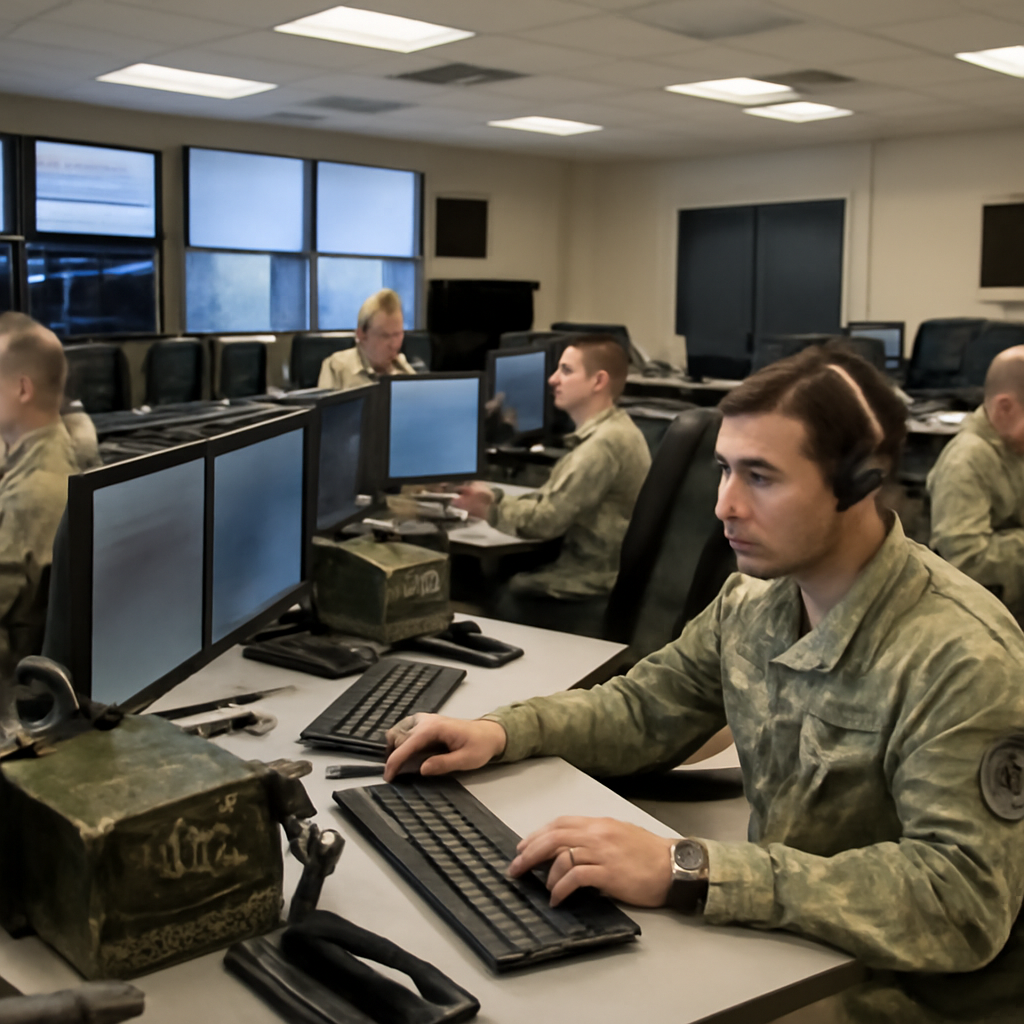
The TechNet Augusta conference in 2026 brought together Soldiers, Army leaders, acquisition teams, industry, and academia to discuss operational challenges and emerging technologies, according to attendees quoted from the event. Conference participants described face-to-face discussions as a means for Soldiers and Commanders to explain operational challenges directly to industry, bypassing the slower route of formal requirements documents. Those conversations, participants said, help industry develop capabilities that address real-world military needs more quickly.
Next Generation Command and Control (NGC2) modernization
The Army is moving toward a Next Generation Command and Control posture (NGC2) that, according to the conference participants, prioritizes an open, interoperable, and resilient architecture. Fernando Pereira, Business Development Director at Astraeus Operations, said NGC2 “addresses this challenge by moving toward a more open, interoperable, and resilient architecture.” The modernization effort is framed as necessary to maintain secure, reliable C2 under conditions of limited bandwidth and active cyber and electronic attack.

This site is the portfolio.
OSINTSights runs on Cloudflare Workers, D1, R2, and Vectorize, with an AI pipeline on Hetzner ARM. Nubivance designed, built, and operates it. We do the same for clients.
See what we buildElectromagnetic spectrum dominance, C2 and Counter‑C2 as operational prerequisites
Speakers at TechNet Augusta argued that electromagnetic spectrum dominance is now treated by the Army as a prerequisite for success in multi‑domain operations. Participants emphasized that digital communications, data links, GPS, sensors, unmanned aerial vehicles (UAV), and battlefield management systems must be “fully interoperable and secure” so commanders can understand the battlefield, coordinate forces, and execute rapidly. Brian Andrews, Sr. Program Administrator at Chenega Advanced Solutions and Intelligence Services, warned that “if these systems that enable commanders to understand the battlefield, coordinate forces, and execute rapidly are degraded or denied then combat power, and domain superiority are significantly reduced.”
Industry collaboration and the demand for continuous, battle‑tested innovation
Multiple industry representatives described TechNet Augusta as a place to identify commercial capabilities that can be rapidly integrated, tested, and fielded. Fernando Pereira noted the event’s role in helping industry understand mission requirements and the Army identify capabilities for quick adoption. Meghan Hilbruner, Director of Business Development at Chronos Operations, emphasized the necessity for continuous innovation: “Whether these new capabilities are in advance of, or in response to, new threats from our adversaries, it’s vital that industry is always innovating to support the Army and responding to battle-tested requirements.” The recurring theme was speed—delivering solutions at scale that also permit continuous integration of new capabilities.
What this means for Soldiers, Army acquisition teams, and industry partners
- Soldiers: The conference framing places front-line units as the direct beneficiaries of improved C2 and Counter‑C2 systems—receiving interoperable, resilient tools designed to preserve connectivity and decision speed when the electromagnetic spectrum is contested.
- Army acquisition teams: Attendees said acquisition teams must prioritize open architectures and fast pathways to integrate commercial solutions into NGC2, especially those that operate under limited bandwidth or hostile cyber/electronic conditions.
- Industry partners (Chenega, Astraeus Operations, Chronos Operations and others): Companies were urged to translate operational dialogue from TechNet Augusta into rapidly fieldable, continuously upgradable capabilities that align with battle‑tested requirements and the Army’s need for electromagnetic spectrum dominance.
Across the accounts from TechNet Augusta 2026 included in the source material, the central assertion is consistent: electronic warfare and Counter‑C2 activities can deliver immediate operational effects without relying solely on kinetic attrition, and the Army’s NGC2 effort must be supplied by industry innovations that are interoperable, resilient, and field‑ready. Whether the emphasis is on jamming networks, degrading navigation or sensor feeds, or ensuring C2 survives under attack, attendees argued mission success will hinge on rapid delivery of secure, integrated solutions that give Soldiers the information, connectivity, and confidence to act when the electromagnetic spectrum is under pressure.