Gen. Kenneth S. Wilsbach on flight‑line rescues
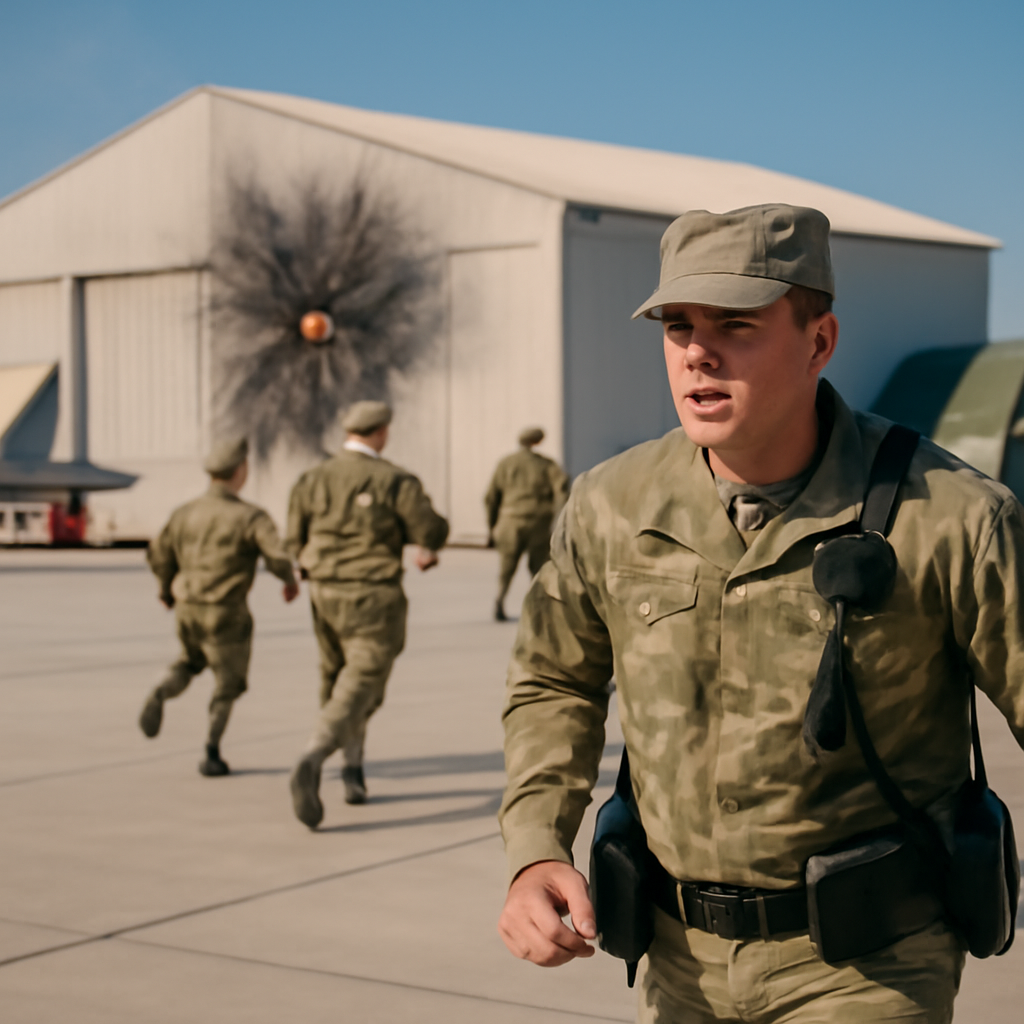
Wilsbach opened his keynote at the Air & Space Forces Air, Space and Cyber Symposium by describing close, chaotic moments on forward airfields. In one account he recounted a missile striking a hangar while airmen had already sprinted toward bunkers; the bunker “withstood the blast,” he said, but the door was so badly damaged it would not open and trapped personnel inside. A security forces noncommissioned officer pried the door open, calmly communicated with those inside, and seconds later the ejection seat on the burning aircraft ignited, sending “glass and metal fragments through the air.” The trapped airmen then escaped and ran for cover, Wilsbach said.
F-15E crews and the calculus of keeping jets airborne
Operation Epic Fury, Wilsbach said, unfolded across 38 days in which the Joint Force struck “more than 13,000 military objectives.” He supplied operational scale: 500 aircraft executing 10,000 sorties — an average of more than 250 sorties per day — and more than 30,000 airmen deployed to a dozen locations. Those numbers were grounded in individual decisions on the flight line.
Wilsbach told the story of Garrett, a staff sergeant F-15E crew chief from East Texas. On the second day of Epic Fury, Garrett was launching four Strike Eagles when alarm red sounded. While others ran for shelter, Garrett stayed to arm weapons and clear the jet until the last fighter had taxied out; only then did he take cover. “His answer was simple: his fellow airmen needed those airplanes in the air,” Wilsbach said.

This site is the portfolio.
OSINTSights runs on Cloudflare Workers, D1, R2, and Vectorize, with an AI pipeline on Hetzner ARM. Nubivance designed, built, and operates it. We do the same for clients.
See what we buildShanae and Nolan tracking swarms under fire
Defending bases from unmanned and cruise threats fell to sensor operators as well as maintainers. Wilsbach described two senior airmen, Shanae and Nolan, who “tracked a swarm of enemy drones headed toward their base.” Shanae is 27 and Nolan 21. While people around them sprinted for shelter during alarm red, they remained “locked on” the screens and “employ[ed] countermeasures.” Together, Wilsbach said, they “achieved more than 10 surface‑to‑air kills that night,” defeating multiple threats before they could reach nearby personnel.
MQ‑9 Reapers, Suit, and persistent ISR under attack
Remotely piloted aircraft were a central part of the force’s reach. Wilsbach noted that “more than 4,000 dynamic targets had to be found, identified, validated, and engaged,” and that MQ‑9s “provided real‑time intelligence, struck 860 targets, and gave our forces the edge.” He named “Suit,” a first lieutenant MQ‑9 pilot who scored a perfect 100 on his physical assessment, as an example of the airmen keeping those systems flying.
Suit planned and launched an MQ‑9 during an active attack, Wilsbach said: he taxied out, got his Reaper airborne, handed control to another crew, and switched to the ground control station to recover a different MQ‑9. His crew destroyed a priority target and then refocused sensors on their own airfield to inspect the runway and determine whether operations could continue. Wilsbach used the MQ‑9’s performance to argue for “a capable follow‑on aircraft that achieves the same effects with greater survivability, adaptability, and at a lower cost.”
Peaches, Dude 44, and a 50‑hour rescue
One of the most concentrated mobilizations Wilsbach described involved the rescue of two airmen isolated inside Iran. Peaches, an air battle manager from Texas, led 134 joint and coalition operators responsible for command and control across a battle space Wilsbach quantified: her team supported operations involving “more than 1,000 one‑way attack drones and 1,200 enemy ballistic missile threats.”
Over more than 50 hours, Peaches coordinated a combat search and rescue that integrated “176 aircraft, fighters, bombers, tankers, intelligence platforms, and Air Force Special Operations Command forces” to recover the isolated crew — the incident Wilsbach called the Dude 44 rescue. He said the mission’s success prompted 10 airmen to receive battlefield promotions, and that he had promoted six of those airmen, “ranging from staff sergeant to chief master sergeant,” during a recent trip.
What this means for airmen, commanders, and maintenance teams
- Airmen on the line: The accounts underline that small teams and individual decisions — from cockpit clearances to EOD “long lonely walks” — directly affect sortie generation and survivability while under attack.
- Commanders and planners: The scale metrics Wilsbach gave (10,000 sorties, 1,200 alarm reds, 48 airfield repairs, and more than 420 reportable explosive ordnance disposal events) frame sustainment and theater command and control as continuing priorities.
- Maintenance and logistics teams: Stories like Garrett’s and Suit’s emphasize the tradeoff crews faced between individual safety and mission continuity — a dynamic that shaped operational tempo and drove ad hoc repairs and inspections during attacks.
Wilsbach’s narrative threaded tactical details with institutional commitments. He invoked the Airman’s Creed explicitly: “I will never leave an airman behind. If you are isolated, injured, or trapped behind enemy lines, we are coming to get you.” Whether counted in sorties, kills, rescue hours, or promotions, that promise is the throughline of his account of Epic Fury.