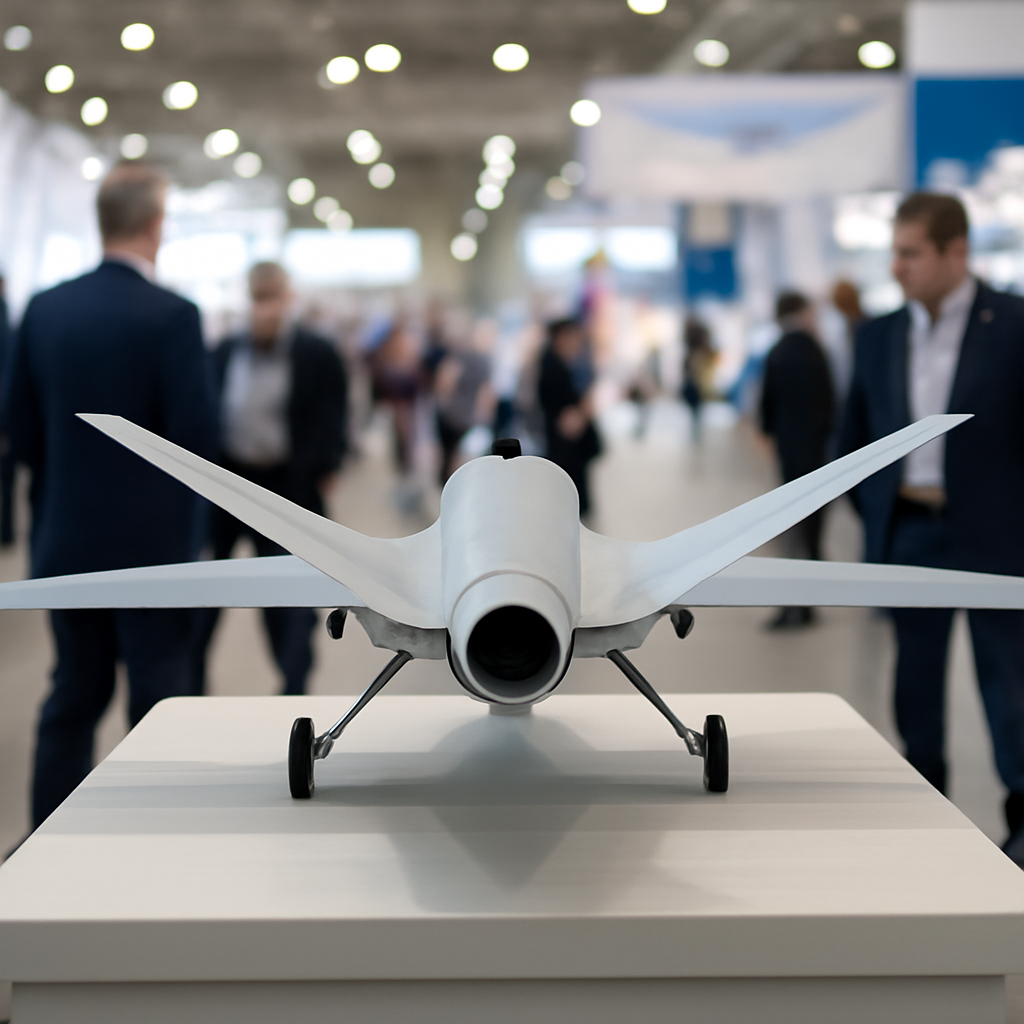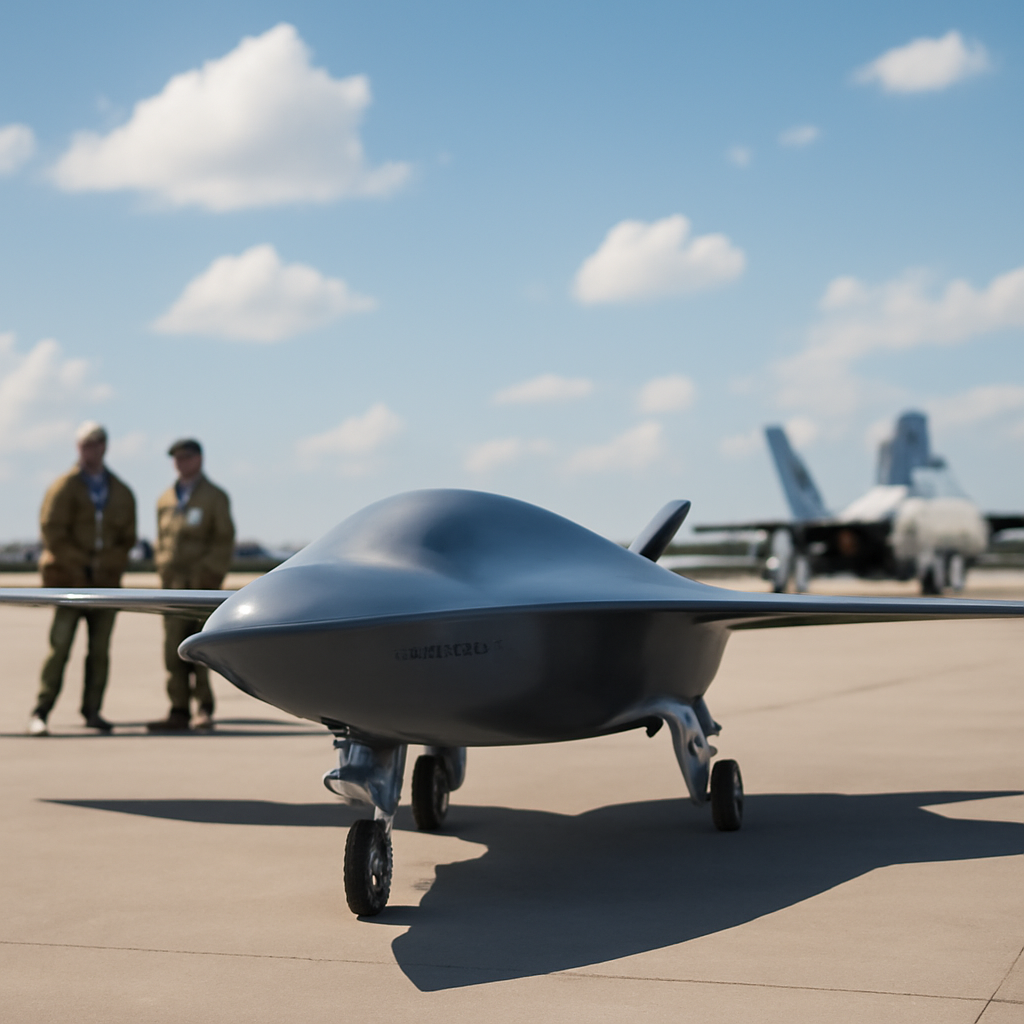
"Grateful that we were able to incorporate some of this in Valiant Shield or to be a part of it," Air Force Gen. Kevin Schneider said, describing how the MQ-28 Ghost Bat participated in Exercise Valiant Shield 2026 and was integrated with U.S. test units.
Gen. Kevin Schneider on the MQ-28 and Valiant Shield 2026
Gen. Schneider, commander of Pacific Air Forces (PACAF), told the Mitchell Institute that the MQ-28’s presence at Valiant Shield showed tight U.S.–Australian collaboration. He said the experimental squadron working U.S. Collaborative Combat Aircraft (CCA) concepts “was really threaded in tight with what the Australians were doing,” and described a “cross flow of information within the test and development effort.” The MQ-28 flew alongside an F-15EX Eagle II and other aircraft during the exercise; whether any U.S. platform issued direct commands to the Ghost Bat during Valiant Shield remains unclear in the material released.
Experimental Operations Unit, CCA Increment 1, and testing
The Experimental Operations Unit (EOU), headquartered at Nellis Air Force Base in Nevada, is the USAF formation Schneider identified as the primary U.S. interlocutor. The EOU was established in 2023 and expanded to a full squadron last year to develop concepts of operations, tactics, techniques and procedures for CCAs. The Air Force’s initial CCA force for Increment 1 is composed of General Atomics FQ-42 Dark Merlin and Anduril FQ-44 Fury platforms, both in development; Schneider said his “sight picture” for CCAs stretches roughly three to five years out and that Headquarters Air Force and A5/7 are shaping longer-term requirements.

Audit-ready is a season. It shouldn't be.
Evidence in spreadsheets, controls drifting between audits, frameworks multiplying on flat headcount. Nubivance runs continuous compliance on Rapid7 Cyber GRC - SOC 2, HIPAA, ISO 27001, PCI, CMMC.
End the scrambleMQ-28 status: RAAF deliveries, Block 2 work, and Block 3 design changes
Boeing has developed the MQ-28 Ghost Bat for the Royal Australian Air Force (RAAF) since the 2010s. The RAAF has received eight Ghost Bats, all in pre‑production Block 1 configuration, and Boeing is now producing the first batch of Block 2 aircraft. The article describes Block 3 as “substantially different” with a longer main wing and internal weapons bays; a Boeing summary cited in the piece lists improvements including a >25% larger wing, increased fuel and payload capacity, Beyond Line of Sight capability, and internal weapons stations for greater mission configurability.
Airborne control, interfly agreements, and cross‑service architectures
Boeing and the RAAF have demonstrated airborne control of the MQ-28 using an E-7A Wedgetail airborne early warning and control aircraft, a capability Gen. Schneider cited when discussing future operator-to-operator command and control architectures and authorities. The USAF already has a formal agreement with the U.S. Marine Corps and U.S. Navy to develop common control architectures to enable seamless transfer of CCA control between services, and Schneider suggested a similarly deep level of interoperability with the RAAF could be pursued. He also pointed to existing practical interchangeability: under an interfly agreement signed by Australia’s Chief of Air Force Air Marshal Stephen Chappell, U.S. F-35 pilots have flown Australian F-35s in exercises.
What this means for PACAF, the RAAF, and defense planners
- PACAF and the EOU: Expect continued integration of foreign platforms and test activity into U.S. CCA development as the Air Force refines Increment 2 requirements and operational concepts, particularly around Agile Combat Employment (ACE) concepts tied to contested logistics and dispersed operations. Schneider described ACE evolution as “revolutionary” and cited recent EOU testing at Creech Air Force Base.
- Royal Australian Air Force: The RAAF’s incremental upgrades — Block 1 deliveries, Block 2 production, and Block 3 design work — position the Ghost Bat as a platform Australia can use to shape allied command-and-control approaches and interoperability options with U.S. forces.
- Defense planners and policymakers: The shared architectures Schneider referenced will require explicit agreements on command authorities, maintenance and logistics interoperability, and mission‑level use cases; Schneider said those are conversations better posed in the Pentagon and Headquarters A5/7.
Gen. Schneider framed the debate as one of balance: retain “exquisite” organic sensing and effectors while fielding mass and lower‑cost options, and ensure resilient data paths in long‑range kill chains. On the MQ-28 specifically, the facts in the public record show deep technical and operational cooperation in testing, tangible progress in Australian fielding, and open questions about command authorities—questions that allies and U.S. headquarters will need to answer as CCA architectures evolve.
Source: TWZ — Australian MQ-28 Ghost Bat Fighter Drones Could Be Commanded By U.S. Pilots