“This is a huge effort valued at approximately $7 billion that would effectively create an entirely new fighter hub,” the government notice says — a succinct description of an Air Force-led rebuilding of Joint Base Elmendorf‑Richardson (JBER) that the U.S. Army Corps of Engineers has opened to industry input.
Fightertown Recapitalization: a “complete campus approach”
The Fightertown Recapitalization (FTR) Program is presented in the Army Corps notice as more than a series of isolated construction tasks. The government frames FTR as a “complete campus approach” intended to synchronize facility construction with aircraft procurement, personnel movements, and logistical requirements. Planned elements include aircraft hangars, squadron operations facilities, corrosion-control buildings, maintenance shops, and extensive aviation support infrastructure tied to a broader support ecosystem.
Airfield expansion, hardened shelters and wartime resilience
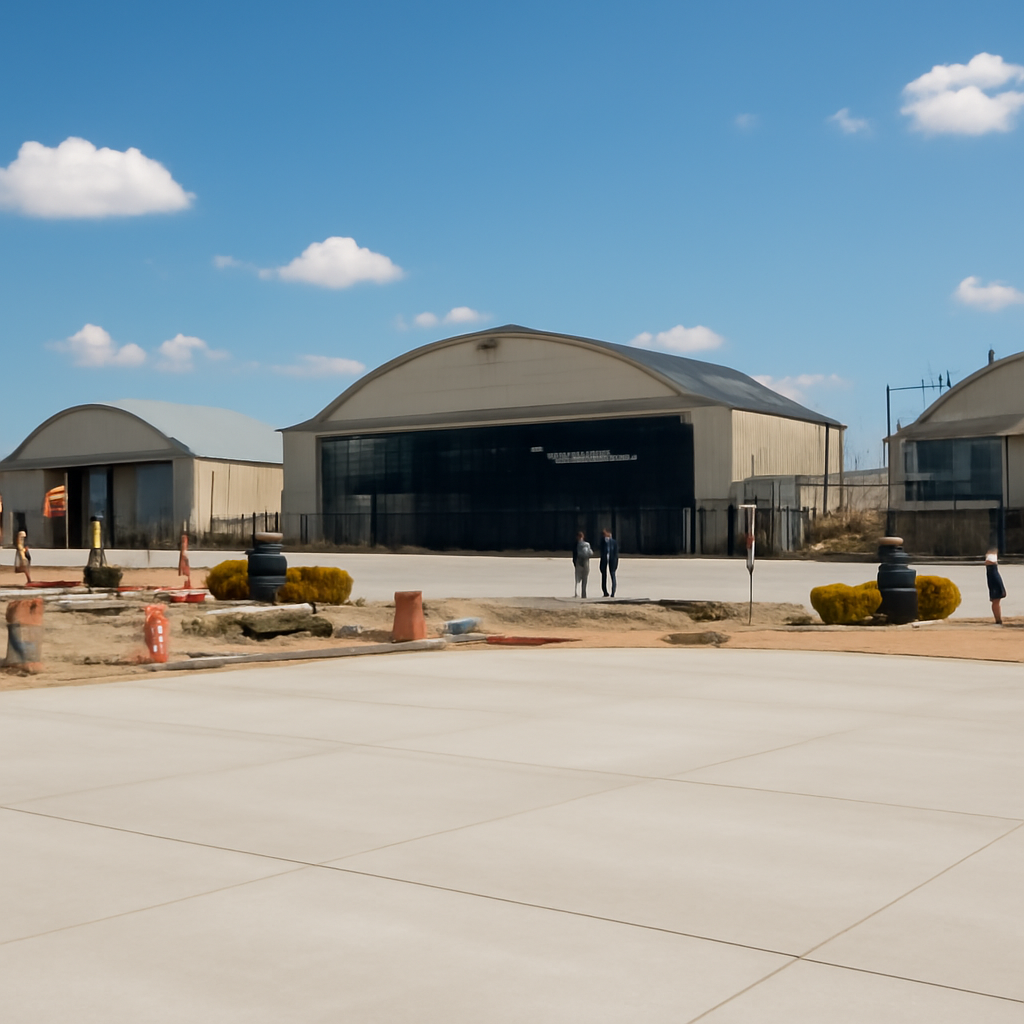
According to the notice, existing airfield facilities at JBER “cannot support the program’s requirements,” prompting selection of a new site to expand base airfield infrastructure. The plan references extensive airfield improvements — new taxiways, aprons, shoulders, and specialized aircraft operating surfaces — and describes measures “highly likely to be included” to reduce vulnerability so critical operations could continue in wartime. The notice and accompanying coverage point explicitly to renewed attention to aircraft shelters with varying degrees of hardening in response to growing drone and missile threats.

This site is the portfolio.
OSINTSights runs on Cloudflare Workers, D1, R2, and Vectorize, with an AI pipeline on Hetzner ARM. Nubivance designed, built, and operates it. We do the same for clients.
See what we buildAlternative contracting tools and an open industry day
Rather than relying solely on traditional military construction contracting, the Army Corps says the program intends to leverage authorities provided in the Fiscal Year 2026 National Defense Authorization Act. The notice singles out Other Transaction Authority (OTA) and Progressive Design‑Build (PDB) among possible alternative execution methods. The stated objective is to “capitalize on private‑sector innovation while avoiding costly and time‑consuming federal contracting burdens” and to encourage industry partners to propose novel technical and construction solutions.
To gather industry feedback before a formal procurement, government officials scheduled a virtual industry day for June 30 where they will brief contractors on scope, construction risks, industry capabilities, and acquisition strategies.
Joint Base Elmendorf‑Richardson’s force mix and training infrastructure
JBER already hosts a wide array of mission aircraft and units named in the notice. It is the headquarters of the 11th Air Force and home to the 3rd Wing, which operates F‑22 Raptor fighters, E‑3 Sentry AWACS radar aircraft, C‑17 Globemaster III airlifters, and C‑12 utility planes. The Alaska Air National Guard’s 176th Wing at JBER flies additional C‑17s, HC‑130 Combat King rescue aircraft, and HH‑60 rescue helicopters. The base also hosts a detachment created in 2023 — the 55th Operations Group, Detachment 1 — identified as a strategic launch and recovery point for RC‑135V/W Rivet Joint operations and exercises in the region.
Training and exercises anchored at JBER are central to the base’s operational value. Red Flag‑Alaska can occur up to four times per year and is explicitly compared to exercises flown at Nellis, while Northern Edge takes place every two years. From JBER and other regional bases, participants access the Joint Pacific Alaska Range Complex (JPARC), which the Air Force describes as covering more than 67,000 square miles and providing 77,000 square miles of airspace — “the largest instrumented air, ground and electronic combat training range in the world.”
What this means for Pacific Air Force, contractors, and the 176th Wing
- Pacific Air Force: The government framed investments as deliberate infrastructure upgrades for Pacific Air Force operations, including replacing and upgrading operations and maintenance facilities, repairs to existing buildings, and funding “mission‑ready materiel, storage, and sustainment necessary for homeland defense and Agile Combat Employment operations,” according to a U.S. Air Force official quoted in the update.
- Contractors and construction firms: Industry will be asked to design for scale and resilience and to propose novel technical and construction solutions under authorities such as OTA and PDB. The June 30 industry day is the formal opportunity to align private‑sector capabilities with government expectations and to flag construction risks before appropriation and procurement decisions are finalized.
- 176th Wing and base operational units: Units already based at JBER can expect changes to housing, munitions, petroleum operations, warehousing, dining, firefighting, training centers and simulators, and visitor control infrastructure as the campus design remains flexible and could modify or demolish existing facilities as plans progress.
The notice and subsequent Air Force comment also tie Fightertown to aircraft modernization. Coverage states the F‑47 sixth‑generation stealth fighter — “the first of which is expected to make its first flight sometime in 2028” — could become a centerpiece of the Alaskan Fightertown, and that at least some recapitalization work may be tailored to F‑47 requirements. The Air Force official added that planners are “in the design stage now” and are extending the runway and building a Joint Integrated Test and Training Center at JBER, with timelines contingent on receiving an appropriation.
FTR is positioned as one of the Air Force’s largest infrastructure undertakings at a fighter base in recent memory. The immediate next public step is the June 30 industry day; beyond that, execution will hinge on appropriation timing and the alternative contracting paths the government elects to use.