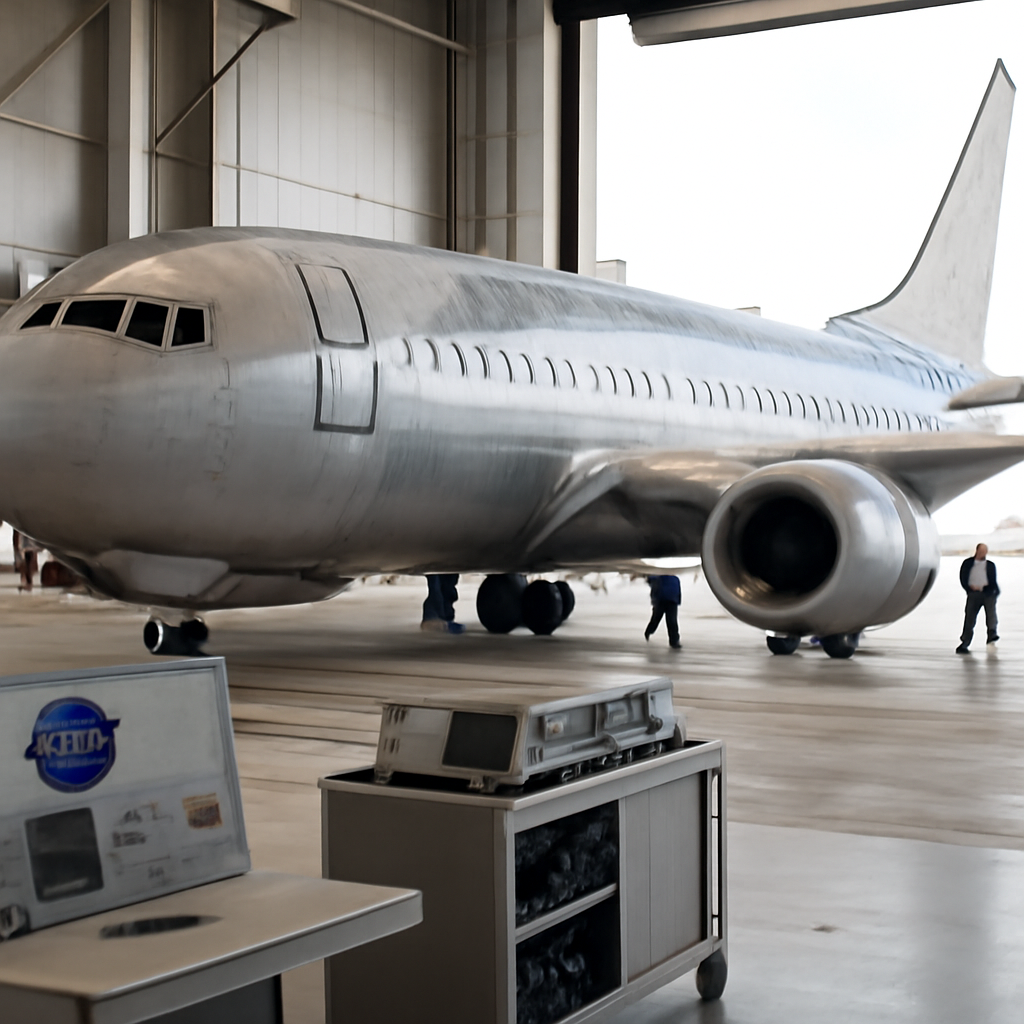
"NASA requires Denmar Technical Services, Inc. to conduct a feasibility assessment to determine the Boeing 737-73W’s suitability to perform the NASA reduced gravity mission; modify the aircraft cabin, if required, to support reduced gravity operations; perform overdue maintenance and inspections, perform airworthiness restoration tasks, and paint the aircraft exterior with NASA identifiers," the contracting notice NASA released states.
NASA Armstrong Flight Research Center’s stated need
The Armstrong Flight Research Center posted a sole‑source contracting notice seeking immediate work on a Boeing 737‑73W to create a reduced‑gravity testbed for the agency’s Reduced Gravity Test Bed Project. The notice ties the work directly to validation testing on space suits in support of the Artemis program and sets an aggressive deadline: any subsequent aircraft modifications must be complete no later than October 1, 2026. In January NASA separately solicited information about parabolic flight services and currently relies primarily on the Florida‑based Zero‑G corporation, which uses a retrofitted Boeing 727‑200 dubbed “G‑Force One.”
Denmar Technical Services, Inc.: the sole‑source contractor
The notice names Denmar Technical Services, Inc. as the contractor uniquely positioned to perform and close out this work. Denmar is a Reno, Nevada–headquartered aviation firm whose publicly described portfolio includes specialized design, modification, flight testing and “advanced customized mission system development,” along with infrared and radio‑frequency survivability and signature modeling. The contracting justification notes Denmar is currently contracted by the U.S. Air Force to modify the 737 under a classified military program and that NASA “does not have a ‘need to know’ regarding the details” of those existing modifications.

This site is the portfolio.
OSINTSights runs on Cloudflare Workers, D1, R2, and Vectorize, with an AI pipeline on Hetzner ARM. Nubivance designed, built, and operates it. We do the same for clients.
See what we buildN712JM: the 737‑73W under scrutiny
The 737‑73W that NASA has targeted is owned by the U.S. Air Force and, according to public aircraft‑registry traces, very likely corresponds to the airframe listed with U.S. civil registration N712JM. FAA records show Denmar acquired that airframe in 2019; Boeing delivered it in 2013 to East West Bank through a trusteeship with Wells Fargo Bank. The Air Force acquired the aircraft in 2020 and it drew attention that year after appearing in a green protective primer with visible instrumentation and sensor wiring routed into the cabin. In 2020 the plane flew numerous test sorties from Santa Maria Airport with the callsign STING 38.
FAA records list the aircraft as registered to an address at Bolling Air Force Base in Washington, D.C., an address linked to the Air Force Rapid Capabilities Office (RCO). Public sightings and flight‑tracking pings over the years have also associated the airframe with the Sierra Nevada Corporation’s Colorado Springs facility; there have been tracking pings there since at least February 2026, though confirmed flights from that site in the same timeframe were not recorded in the public feeds cited.
NT‑43A / RAT55: a related but separate story
Some public discussion has centered on the NT‑43A, commonly called RAT55, a 737 long described as an airborne signature measurement platform. The NT‑43A is based on an older 200‑series airframe and has been characterized in reporting as highly secretive; it supported Artemis II launch and recovery activity and in April the Air Force told TWZ the aircraft was “being transitioned to start the next phase of its career.” The NASA contracting notice, however, specifies a 737‑73W (a 700‑series model) and does not appear to reference the NT‑43A directly. Denmar is understood to have been the prime contractor for extensive modifications to RAT55 in the past.
What this means for NASA, the Air Force, and Denmar
- NASA: The agency has secured a sole‑source award — later disclosed in an additional notice as an $8.4 million contract awarded June 1 — to modify a Boeing 737‑700 for lunar‑gravity parabolic flights, with the aircraft to become property of NASA Armstrong and operate out of NASA Johnson for lunar suit validation ahead of Artemis missions.
- The Air Force: The notice signals a classified USAF program closeout that would permit transfer of a classified 737 to NASA. TWZ reporting raises questions about how the Air Force will fill any gaps left by highly specialized 737 platforms as they move on to other careers or agencies.
- Denmar: The company is positioned to complete concurrent USAF closeout tasks and NASA modifications within the constrained timeline, a role that draws on its prior classified modification work and public claims of expertise in mission system development and signature modeling.
The public record as presented ties an $8.4 million, sole‑source NASA award to Denmar and a USAF‑owned Boeing 737‑73W, with firm deadlines and explicit links to Artemis space‑suit validation. The aircraft under immediate suspicion is N712JM, an airframe with a patchwork public history of ownership, camouflage‑primer appearances, unusual instrumentation, specialized range flights and registry ties to the Rapid Capabilities Office. Whether N712JM becomes NASA’s next “Vomit Comet” depends on Denmar’s feasibility assessment and the classified closeout steps the Air Force must complete — both of which the contracting notices make central to the timeline that ends on October 1, 2026.
Source: The War Zone — Is This Secretive Air Force 737 About To Become NASA’s Next ‘Vomit Comet’?