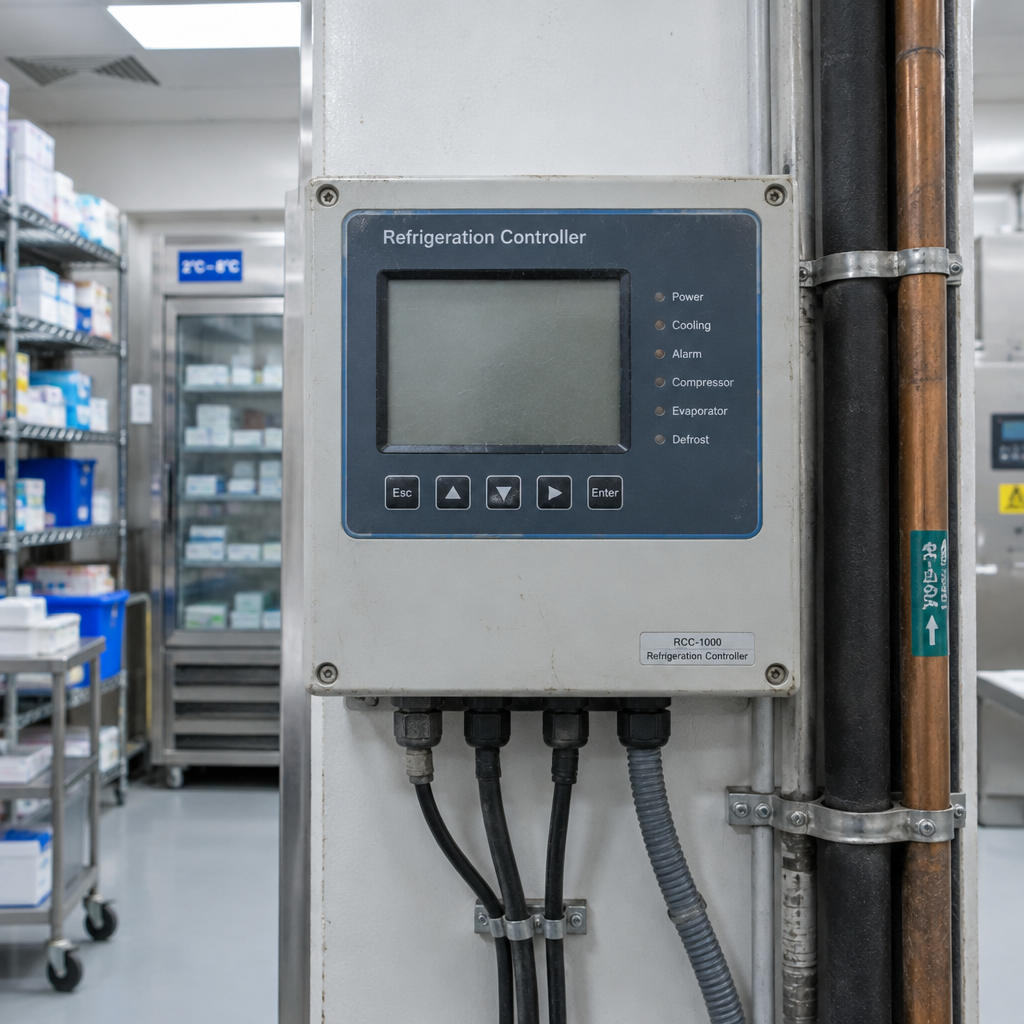
Threat actors have recently exploited internet-accessible refrigeration controllers to raise temperature settings as high as 50 degrees Celsius — a level that can spoil vaccines, blood products, and food while creating fire and equipment hazards.
Joint advisory from CISA, FBI, HHS, USDA, and DOT
A coalition of U.S. agencies — the Cybersecurity and Infrastructure Security Agency (CISA), Federal Bureau of Investigation (FBI), Health and Human Services (HHS), Department of Agriculture (USDA), and Department of Transportation (DOT) — issued a joint advisory warning that industrial refrigeration and cold‑chain monitoring systems are being targeted globally. The advisory says: "The actors may exploit vulnerabilities or weaknesses in unpatched or internet-accessible controllers to remotely alter settings and force units into continuous heating and defrost cycles, which can cause widespread inventory loss and equipment hazards."
The agencies list two principal operational impacts: a change of temperature that can shorten equipment life, create fire hazards, cause inventory loss, or harm consumers who buy products after unsafe storage; and loss of visibility into current temperatures caused by denial‑of‑service conditions.
Techniques threat actors are using
The advisory specifies likely exploitation paths: authentication bypasses, arbitrary code injection, and weak configurations. In practice, attackers gain access by abusing unpatched devices and controllers that are exposed to the internet or left with default credentials and remote access enabled. The agencies urged standard hardening measures: strong authentication, keeping systems updated, isolating operational technology (OT) devices, changing default passwords, retiring and replacing legacy devices, and removing unnecessary remote access while securing any remaining remote connections.

Nobody's watching your logs at 2 AM.
Full SOC coverage without building one. Nubivance deploys and manages Rapid7 InsightIDR and MDR for organizations that need detection and response, not another dashboard.
Get coverageRecent incidents: supermarkets and a blood‑storage provider
According to the advisory and reporting, in recent weeks hundreds of supermarkets across Europe were targeted. Attackers exploited weaknesses in internet‑accessible refrigeration controllers to raise temperatures — in some cases to roughly 50 degrees Celsius — or to force cooling units into defrost mode, spoiling food and producing financial losses. Targets ranged from major supermarket chains to small grocers and butchers in Belgium, Estonia, Finland, France, Germany, Ireland, Italy, Luxembourg, the Netherlands, Portugal, Sweden, and the U.K.
One notable victim named in the reporting was the French Blood Establishment, which confirmed that a cybersecurity incident affecting a refrigeration equipment provider had raised temperature and defrost settings to "extremely high levels" at three facilities used to store blood plasma. The advisory notes it is unclear who is behind the campaign.
FBI Cyber Branch Operations Director Brett Leatherman summarized the stakes: "Industrial refrigeration and cold‑chain monitoring systems protect food, medicine, and other temperature‑sensitive products, making them attractive targets for malicious cyber actors. We are seeing these systems targeted across critical infrastructure sectors globally, putting inventory and equipment at risk."
Censys data on exposed controllers and global exposure trends
The attack surface management firm Censys provided concrete counts of exposed instances. It reported hundreds of Danfoss StoreView instances still exposed globally, with most located in France; that exposure fell from 3,004 instances on October 9 to 708 on November 5, 2026. The Copeland/Dixell XWEB exposure also declined, from 3,708 to 2,420 over the same period. Despite the reductions, Censys warned that exposure remains high.
Censys also offered regional context: North America accounts for roughly 38% of global industrial control systems (ICS) exposure; Asia's share rose from 22% in 2024 to 25% in 2026; and Europe's share declined from 36.5% to 32% — shifts that "have not produced an overall decline." The firm framed ICS exposure as a persistent, well‑known problem that continues to pose critical risks to public safety and infrastructure.
How owners and operators, regulators, and consumers are affected
- Owners and operators: They face immediate operational and financial risk from spoiled inventory and equipment damage. The advisory's practical checklist — identify internet‑accessible systems, isolate OT, update devices, change default passwords, retire legacy equipment, and limit remote access — targets the actions operators can take now.
- Regulators and public‑health organizations: Agencies responsible for food safety, medical supplies, and blood products must contend with both direct patient‑safety implications and supply‑chain disruptions when refrigerated stores are compromised, as illustrated by the French Blood Establishment incident.
- Consumers and supply‑chain buyers: End users can be harmed by unsafe storage that may go undetected if attackers also deny visibility into temperature telemetry; this raises a downstream risk that perishable products reach customers despite having been stored at unsafe temperatures.
The advisory ties a specific class of operational technology to concrete harms: fires, equipment failure, inventory losses, and risks to public health. Agencies and industry have clear, repeatable mitigations at hand, yet Censys data shows significant numbers of controllers remain exposed even after recent declines. The unresolved question is how quickly owners, vendors, and regulators will consolidate the fixes and reduce the internet‑accessible attack surface before more refrigerated stores, medical supplies, or blood products are put at risk.
https://thehackernews.com/2026/11/us-agencies-warn-refrigeration.html