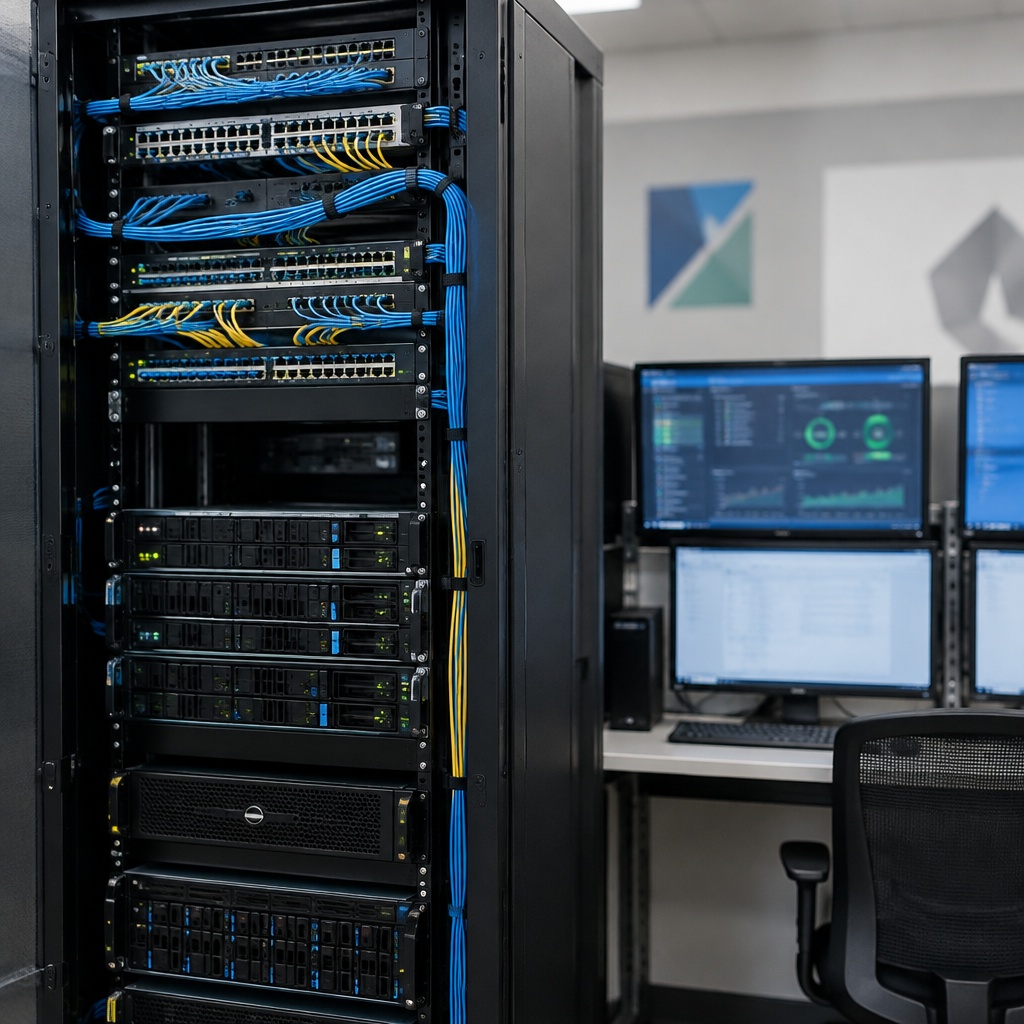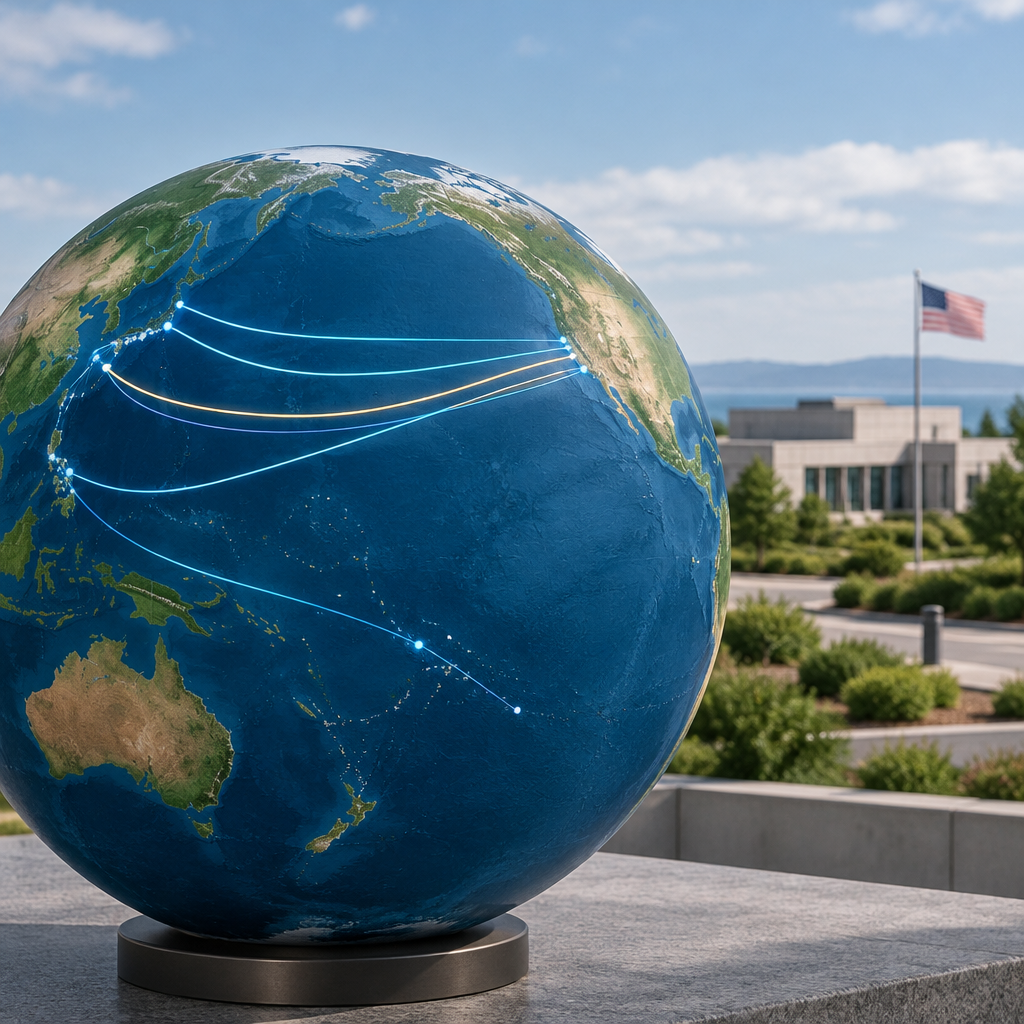
"If data needs to travel from Washington, D.C., to Perth, Australia, it must travel more than 11,000 miles."
The Department of State's global footprint and its technical consequences
Many U.S. government agencies and military organizations maintain massive, widely distributed footprints. The U.S. Department of State, the source notes, operates more than 270 embassies and consulates across more than 170 nations. Because not all host countries are allies or coalition partners, agencies often keep sensitive data in the United States, requiring remote offices to reference data stored thousands of miles away. That physical distance is not abstract: long-haul links introduce latency, complexity, and fragility into everyday mission workflows.
Chatty AI and cloud applications: latency as a mission risk
Modern applications — described in the source as "chatty" AI and cloud applications — make latency the enemy. These tools frequently request data from centralized databases and typically expect quick responses. When networks connecting foreign posts to essential mission data are slow, congested, or damaged, the speed and reliability of services suffer. The practical effect: agency operations can be delayed, constituents and foreign nationals may wait longer for services, and, in extreme cases, operations can grind to a halt.

Audit-ready is a season. It shouldn't be.
Evidence in spreadsheets, controls drifting between audits, frameworks multiplying on flat headcount. Nubivance runs continuous compliance on Rapid7 Cyber GRC - SOC 2, HIPAA, ISO 27001, PCI, CMMC.
End the scramblePatch releases, AI-enabled threat actors, and the race to update
The rise of AI has shifted the defensive calculus. According to the source, AI gives "hackers and other malicious actors" an efficient toolset that can quickly reverse engineer security patches, identify vulnerabilities, and "turn every new patch release into a zero-day vulnerability" — enabling attacks before administrators can apply fixes. That dynamic places a premium on immediate updates to network hardware, tools, and applications; any lag creates exposure across the distributed enterprise.
No time for downtime: Microsoft Azure outage, CABs, and maintenance strategies
Network and IT changes themselves can trigger outages. In January 2023, Microsoft Azure and Microsoft Cloud solution users were unable to access critical tools after a network update went wrong; the outage "wasn’t the result of a cyberattack or anything malicious," but it still left services inaccessible. More broadly, the Uptime Institute attributes "more than 20 percent" of service outages to network and IT issues.
Because updates can cause disruptions, many IT shops schedule them for local nights. That strategy breaks down for organizations operating across nearly every time zone: "someone is always awake and working." The source contrasts ideal but costly approaches — "While Blue-Green deployments are ideal, they cost double" — with the more realistic choice for global operations, "rolling maintenance windows that follow the moon." At the same time, internal governance can slow change: many agencies use Change Accountability Boards (CABs) that can introduce "convoluted processes and piles of paperwork," and end users often resist "change for change’s sake."
What this means for technologists, policymakers, and end users
- Technologists and security teams: face a compressed window to apply patches and update network hardware because AI-enabled actors can turn patch releases into near-immediate attack opportunities. They must balance the need for speed against the operational risk of causing outages across time zones.
- Policymakers and procurement leaders: must weigh the cost of higher-availability deployment models such as Blue-Green against budget realities and the logistical complexity of rolling maintenance across hundreds of foreign posts. Governance mechanisms like CABs will shape how quickly updates move from approval to production.
- End users and agency staff abroad: will continue to press for uninterrupted access to mission systems. Resistance to visible change, especially when users perceive updates as unnecessary, will remain an obstacle to rapid modernization.
The picture the author paints is straightforward and stubborn: geographically distributed missions require networks that are fast, resilient, and patched almost immediately — but the mix of physical distance, continuous operations, governance overhead, cost trade-offs, and human resistance makes that hard. The author, Christian Nassif, is explicit that modernization is essential and urgent. His piece closes by promising a follow-up: in the next article, his associate Rob Adams will examine "how new technologies and approaches to network and IT management can eliminate these roadblocks and enable IT departments to update networks at the speed of the mission."
Original story: https://governmenttechnologyinsider.com/the-challenges-facing-network-and-it-modernization-across-large-geographically-distributed-agencies/