CVE-2026-129713, a stack-based buffer overflow in Danfoss refrigeration controllers, carries a 9.8 severity rating and — according to the U.S. Cybersecurity and Infrastructure Security Agency (CISA) — can be triggered without authentication, restarting the device and potentially allowing remote code execution with the web server's privileges.
CVE-2026-129713: the technical summary CISA issued
CISA has classified CVE-2026-129713 as a critical, unauthenticated stack-based buffer overflow in the server component of Danfoss controllers. The agency warns an attacker can trigger the flaw remotely, cause the server to restart, and in some cases obtain remote code execution operating with the web server’s privileges. The vulnerability carries a 9.8 severity score.
Danfoss AK-SM 8xxA / AK-SM 800A Series: where the flaw lives
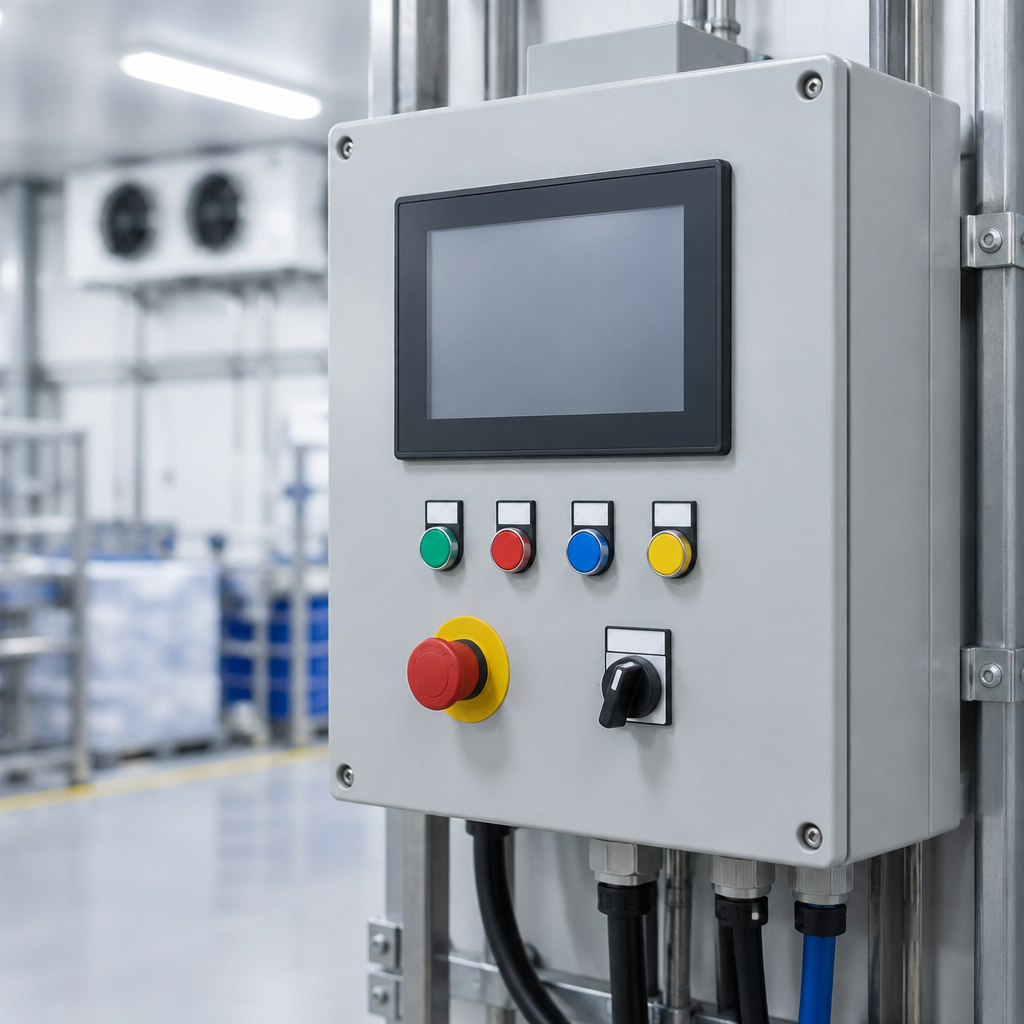
The affected product line is identified in advisories as the Danfoss AK-SM 8xxA Series and is also referred to by Danfoss as the AK-SM 800A Series. Models in the family include the 820A, 850A, and 880A. These controllers are central control units for supermarket and convenience-store refrigeration: they manage refrigerated display cases and compressor racks, log temperatures, and generate alerts when temperatures or settings change. Depending on model, the systems can also control store lighting and HVAC.

Audit-ready is a season. It shouldn't be.
Evidence in spreadsheets, controls drifting between audits, frameworks multiplying on flat headcount. Nubivance runs continuous compliance on Rapid7 Cyber GRC - SOC 2, HIPAA, ISO 27001, PCI, CMMC.
End the scrambleCISA guidance and Danfoss response
CISA says the controllers are deployed worldwide, although the agency did not provide an exact count. As of the agency’s advisory, no patch was available for CVE-2026-129713. Danfoss published its own security advisory on November 20 stating the vulnerability will be addressed in an upcoming software release, version 5.5.x. Danfoss also said the update will remove the option that allowed customers to turn off a setting the company calls ‘Strict mode.’
Until the update is released and applied, CISA advises potentially impacted system administrators to take steps to reduce exposure. The agency’s recommended mitigations include:
- Keep controllers off of the public internet and minimize network exposure where possible.
- Segregate control systems from business networks and place them behind firewalls.
- Use up-to-date Virtual Private Networks (VPNs) when remote access is required.
Recent attacks that involved Danfoss systems across Europe
CISA’s warning follows a string of high-impact incidents throughout Europe in which Danfoss controllers were compromised. Between October 11 and 12, several French supermarkets and food retailers suffered significant losses after attacks that have been attributed in reporting to Iran’s IRGC-linked Shahid Kaveh unit; those incidents reportedly compromised Danfoss AK-SM/AK-SC and Copeland/Dixell XWEB refrigeration controllers and altered defrost settings.
On November 2, at least 115 supermarket stores across Belgium, the Netherlands, Sweden, Luxembourg, Ireland, Romania, and Estonia had refrigeration equipment shut down or settings changed remotely. Supplier Sabcobel said the attackers used the same vulnerability observed in the October attacks in France, indicating Danfoss systems were involved again. That same day, attackers suspected to be linked to the same campaign targeted a refrigeration supplier for the French national blood service and altered cold-storage settings at three facilities.
What this means for food retailers, system administrators, and suppliers
Food retailers: Stores that rely on Danfoss AK-SM 8xxA / 800A Series controllers face a direct operational risk — the record shows attackers have previously changed defrost and cold-storage settings and in many cases shut refrigeration down, causing measurable losses. Retailers should confirm whether affected models are present in their estate and restrict network exposure immediately, per CISA’s advice.
System administrators: With no patch yet available, administrators must treat the devices as high-risk. CISA’s triplet of mitigations — removing controllers from the public internet, segregating control networks, and using up-to-date VPNs for remote access — is the immediate defensive posture until Danfoss releases version 5.5.x and operators can apply it.
Suppliers and service providers: Organizations that service refrigeration systems, including those that supply cold storage to healthcare customers, should assume they are a potential target for follow-on attacks. The incidents reported on October 11–12 and November 2 show attackers have moved beyond single retail targets and have engaged suppliers whose systems support other critical customers.
There are clear technical and operational threads tying the advisory, the pending Danfoss update, and the European incidents together: a high-severity unauthenticated flaw in a widely deployed controller family, an announced firmware update due in version 5.5.x that purportedly addresses the issue and hardens mode settings, and documented compromises that have already disrupted refrigeration and cold-storage operations. The next concrete steps are the release and deployment of Danfoss 5.5.x and whether CISA or other authorities will provide follow-on incident details or deployment counts to clarify the scope of exposure.