"Imagine the scenario; one of our Havoc hypersonic missiles loaded on an F-15EX Eagle with a mission profile locked-in and ready to go. This new missile is designed for low-cost and high-effect – it’s very difficult for an adversary to track in flight," Chris Spagnoletti, chief executive officer of Ursa Major, told TWZ as he described the company's expanding hypersonics work.
Ursa Major's manufacturing pivot and the Lynx additive approach
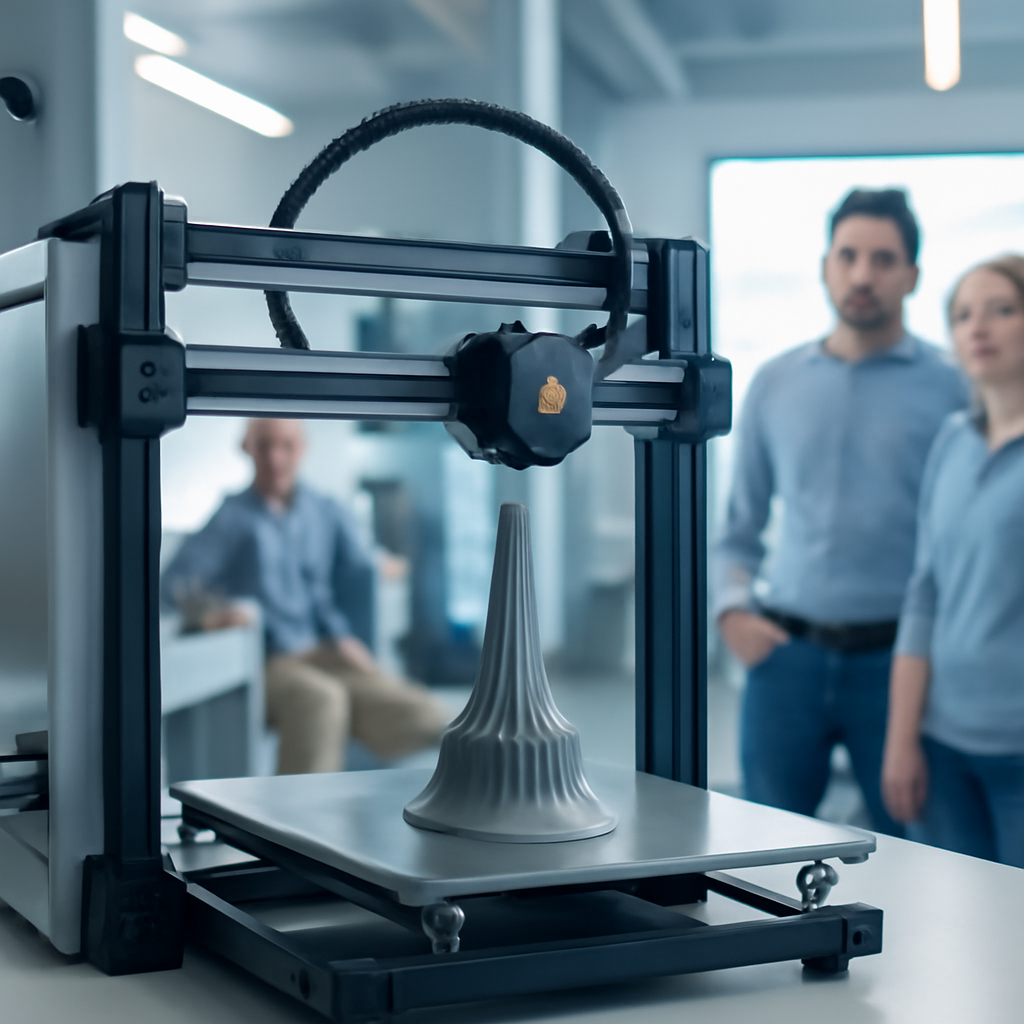
Ursa Major has moved from being primarily a propulsion supplier into a prime contractor and integrator focused on hypersonics and high-rate munitions. The company says it has produced hundreds of engines and motors and logged more than 135,000 seconds of hotfire test time in under a decade. Central to that scale-up is an additive manufacturing and AI-enabled metal 3D-printing capability the firm calls Lynx, along with modular tooling and software-backed production cells designed to avoid fixed tooling and enable rapid changeover between variants.
Draper and Hadley: liquid propulsion reconceived for the battlefield
Ursa Major describes two liquid rocket engines at the center of its hypersonic strategy. Hadley, an oxygen-fueled engine, has powered the Stratolaunch Talon A testbed and "has flown 10 times." Draper is a 4,000-pound-thrust engine that uses hydrogen peroxide and rocket fuel to provide storable, non-cryogenic propellants that the company says enable long-duration storage and rapid deployment. According to company executives, Draper can be throttled from 10% to 100% and can be turned on and off during flight — capabilities Ursa Major highlights as differentiators compared with conventional solid motors and other hypersonic approaches.

This site is the portfolio.
OSINTSights runs on Cloudflare Workers, D1, R2, and Vectorize, with an AI pipeline on Hetzner ARM. Nubivance designed, built, and operates it. We do the same for clients.
See what we buildHavoc: a liquid-powered hypersonic weapon designed for flexibility
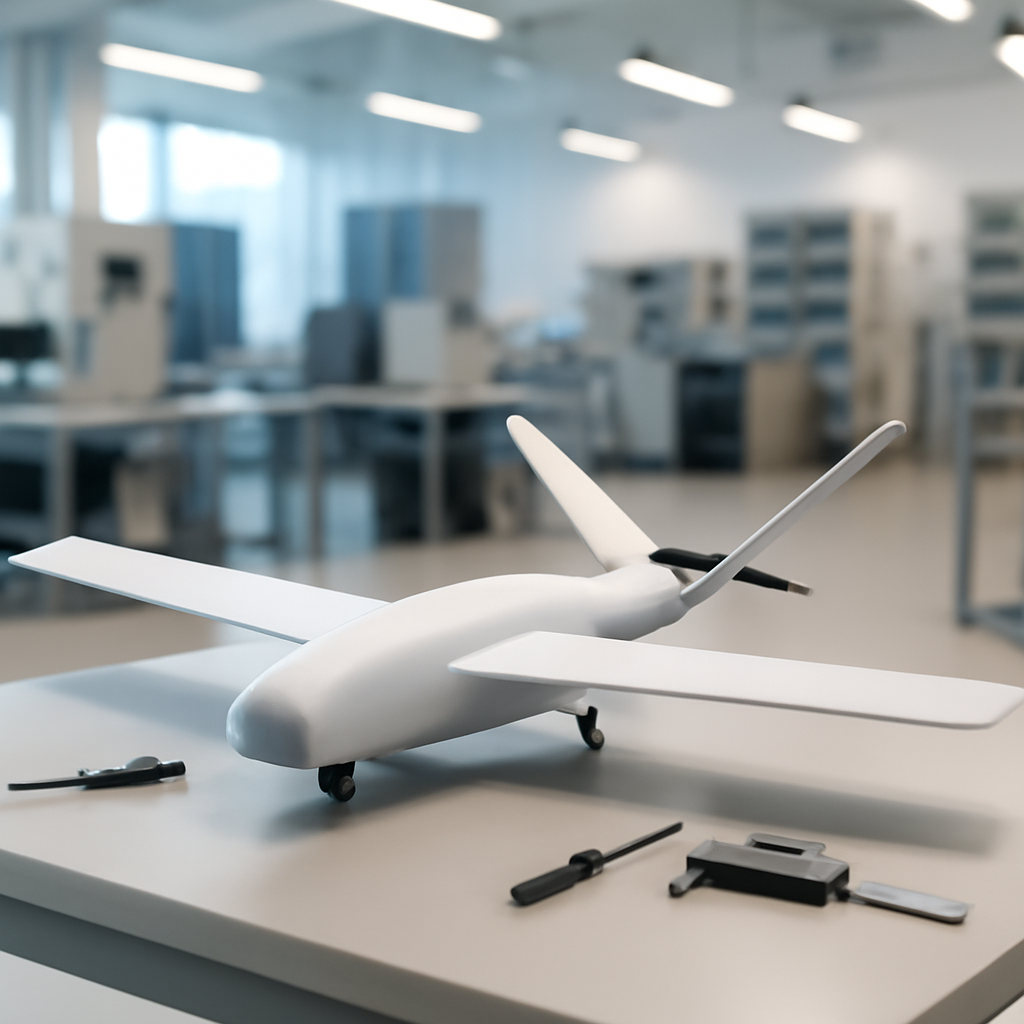
Ursa Major developed an air vehicle in-house, dubbed Havoc, to leverage Draper’s attributes. The company says Havoc is designed to fly in excess of Mach 5, operate in or above the atmosphere, be launched by aircraft or ground-launched with added boosters, and to cost roughly $3-million apiece. Under the Affordable Rapid Missile Demonstrator (ARMD) program with the Air Force Research Laboratory (AFRL), Ursa Major says it twice ground-launched what it calls “Havoc Block 0” from a rail in multi-domain tests and went from concept to flight-ready in about six months during an AFRL partnership.
Modular solid rocket motors: 2-inch to 22-inch common production line
Alongside liquid engines, Ursa Major has expanded into solid rocket motors (SRMs) using the same modular, additive approach. The company reports production capability across motors from two inches to 22 inches in diameter on a single production line, avoiding the 36-plus months the firm says is typical to fabricate metallic tube structures under legacy methods. Ursa Major has already produced several hundred 2.75-inch motors for an extended-range variant of the Advanced Precision Kill Weapon System (APKWS) in collaboration with BAE Systems and the U.S. Air Force, and in 2024 won a contract under the Naval Energetics Systems and Technologies (NEST) program to apply its SRM processes to the Mk104 dual-thrust motor used in the SM-2 and SM-6 family.
Facilities, capacity and near-term milestones
Ursa Major’s primary corporate campus is a 93-acre headquarters in Berthoud, Colorado, where the company conducts liquid engine testing and low-rate SRM production. It has expanded with more than 400 acres for SRM production in Galeton, Colorado, and operates a 3D-printing center of excellence in Youngstown, Ohio, that ships parts to Berthoud for final assembly and test. The firm says it grinds, mixes, casts and cures thousands of pounds of energetics per year at its Colorado site and is targeting the manufacture of hundreds of thousands of pounds of energetics by mid-2027. The company is pushing for a boosted, full hypersonic flight demonstration of Havoc in 2027.
What this means for the Air Force Research Laboratory, the U.S. Navy (NEST), and BAE Systems
- Air Force Research Laboratory (AFRL): AFRL partnered with Ursa Major on ARMD and the company reports a rapid campaign that delivered a flight-ready vehicle in roughly six months and two ground-launched tests of Havoc Block 0.
- U.S. Navy (NEST): In 2024 Ursa Major won a NEST contract to apply its SRM manufacturing processes to the Mk104 motor family used in SM-2 and SM-6 missiles, a sign the Navy engaged the firm’s modular production approach to address supply constraints.
- BAE Systems and APKWS users: Ursa Major says it has worked extensively with BAE Systems and the U.S. Air Force to develop a higher-performance 2.75-inch motor for APKWS, producing several hundred motors for testing and development.
Ursa Major frames its work as addressing a pressing munitions problem. The company cites recent operations in which the U.S. fired more than 850 Tomahawks and "hundreds of high-end interceptors," stressing replenishment timelines. By combining additive manufacturing, modular tooling and storable liquid propulsion, Ursa Major aims to offer a faster production cadence, configurability across motor sizes, and a liquid hypersonic weapon that the company says can maneuver and throttle in ways solid boosters cannot. The next concrete step the firm identifies is a boosted, full hypersonic flight for Havoc targeted in 2027 — a milestone that will test whether the manufacturing methods and propulsion concepts translate from demonstrator to operational scale.