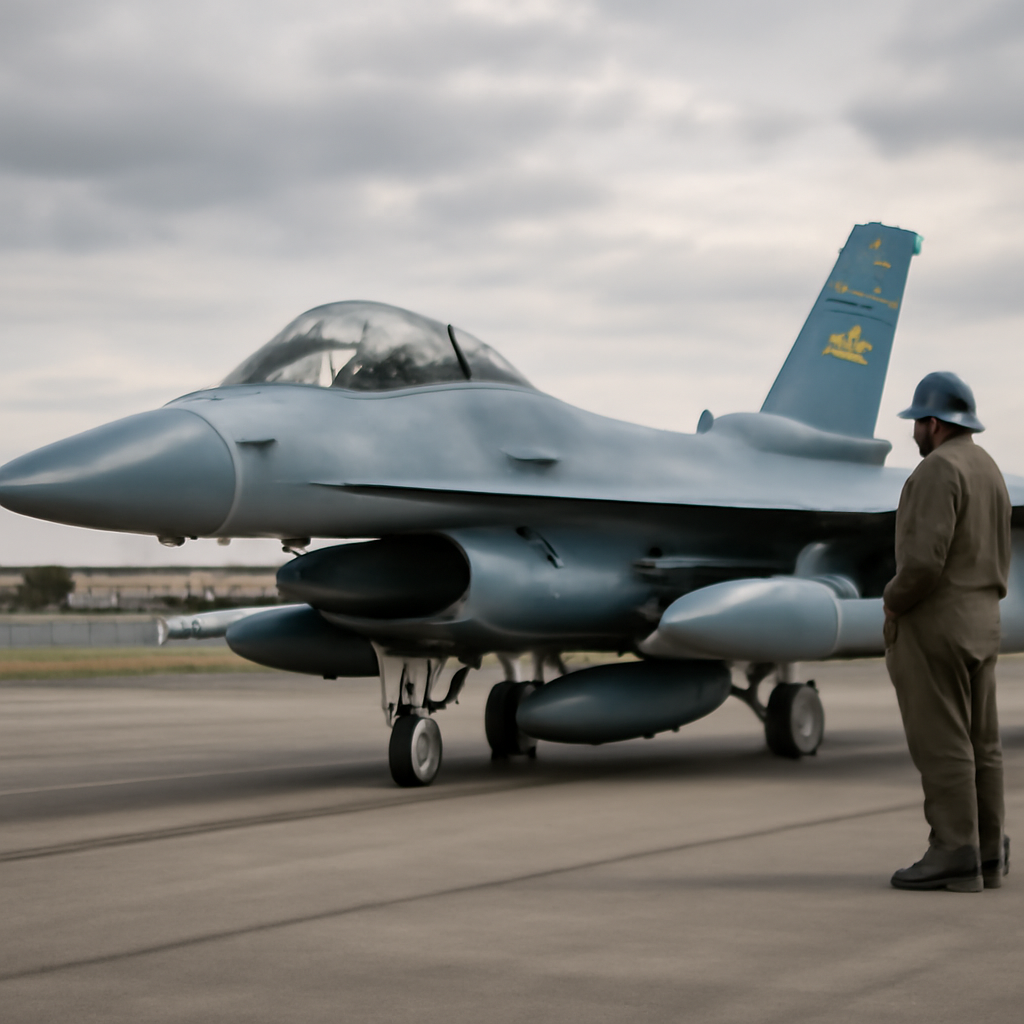
"Any aircraft without weapons is … useless," said the commander who identified himself by the callsign "Phantom" and as commander of Ukraine's 107th Wing, summarizing a shortfall that is reshaping how Ukrainian F-16s fly combat missions.
F-16s in active air-defense roles — but short of air-to-air missiles
Ukrainian F-16 pilots have at times flown daytime sorties armed only with the jets' internal M61A1 20mm Vulcan cannon because air-to-air missiles are scarce, according to Newsmax journalist Shelby Wilder, who relayed comments from Phantom. The F-16 fleet in Ukraine, operational since the summer of 2024, is being used to hunt Russian drones and cruise missiles, protect infrastructure, and counter Russian combat aircraft. The primary air-to-air weapons for those missions are the AIM-120 Advanced Medium-Range Air-to-Air Missile (AMRAAM) and the shorter-range AIM-9 Sidewinder; without them, Phantom said, an aircraft is effectively useless.
Using the gun against aerial targets is a different tactic with its own hazards: the source notes that gun employment is especially dangerous against small, slow targets and becomes more dangerous at night. Ukrainian pilots have used their guns in combat before — in May 2025 the Ukrainian Air Force reported an F-16 pilot destroyed three aerial targets and was engaging a fourth with the aircraft cannon before an emergency forced ejection — but missiles remain the preferred tool for intercepting cruise missiles and drones at standoff ranges.
Missile stocks are rationed; shipments watched by the minute
The shortage has moved beyond occasional scarcity to deliberate rationing. Wilder reports that missile stocks are being meted out and that Ukrainian personnel monitor missile shipments as they cross the border, "counting not just the hours but the minutes" until weapons reach aircraft. Phantom described the urgency around those arrivals, stressing the concern whether shipments will arrive in time for the next major Russian aerial attack.
The finite nature of missile inventories forces trade-offs: each missile fired at an incoming cruise missile or drone is one fewer available for the next engagement, and stocks must cover routine air-defense missions while preserving capacity for larger strikes. That dynamic is compounded by the use of the AIM-9 and AIM-120 in ground-based systems as well — the AMRAAM is an effector for NASAMS batteries protecting Kyiv and other objectives, meaning jets and ground defenses draw on the same limited stocks.

The cyber insurance questionnaire just landed. Now what?
SOC 2, HIPAA, insurance renewals - someone has to own security strategy. Nubivance provides fractional CISO leadership without the full-time salary.
Get a security leadPatriot interceptors, global demand, and production constraints
The missile shortage extends through Ukraine's layered air-defense network. Patriot interceptors have been heavily consumed and only a trickle of replacement missiles has arrived, leaving limited ability to defend against ballistic missiles in particular. The source links that strain to two forces: Ukraine's continued consumption of interceptors and a surge in global demand for advanced air-defense weapons, including wars in the Middle East, which is stretching production capacity.
With production struggling to keep pace, scarce interceptors are being rationed across an increasingly crowded global battlefield — a pressure that is spilling downward into the inventories available for F-16s and other platforms.
Phantom’s asks: more missiles, interceptors, localized production, and sanctions
Phantom urged Ukraine's Western partners to supply more air-to-air missiles — specifically naming AIM-9s and AIM-120s — and additional interceptors for Patriot batteries. He argued that simply delivering more aircraft is insufficient without a sustainable weapons pipeline to keep them combat-effective. He also proposed increasing production or allowing Ukraine or other European countries to localize production of missiles and related components.
Separately, Phantom called for measures to prevent Russia from acquiring components used in its missile production through third countries. "We need to make as much as we can to stop providing the parts, most technological parts to Russians, bypassing the direct sales, of course, through the third party," he said, adding a colorful example: "It would not be a surprise that Russians [are] using the washing machine that they’re buying from the third party to use those smart details for building missiles." His prescription: tighter sanctions and enforcement to cut off Russian access to those components.
What this means for the Ukrainian Air Force, the United States and European partners, and Russian forces
- Ukrainian Air Force: Must ration missiles across fighters and ground-based systems, increasingly rely on guns and lower-cost options such as the laser-guided 70mm APKWS II rockets, and track the timing of deliveries closely to preserve readiness for large-scale attacks.
- United States and European partners: Face pressure to supply more AIM-9s, AIM-120s and Patriot interceptors, consider options to boost production or to authorize localization of manufacturing in Ukraine or other European states, and weigh enhanced sanctions and export controls aimed at third-party supply chains to Russia.
- Russian forces: Benefit indirectly from any gaps in Ukraine's missile inventory; Phantom warned that Russian access to components through intermediaries continues to be a concern, and that disruption of those flows is part of the Ukrainian request to partners.
Delivering F-16 airframes and pilots is only half the equation; Phantom's account makes plain that without a predictable, sustained flow of missiles and interceptors those aircraft can be reduced to little more than fast reconnaissance platforms with a gun. Ukraine's ability to defend its skies during future, potentially larger aerial campaigns — and during seasonal spikes in attacks on infrastructure — will hinge on whether partners can close the gap between fighter availability and munition supply.