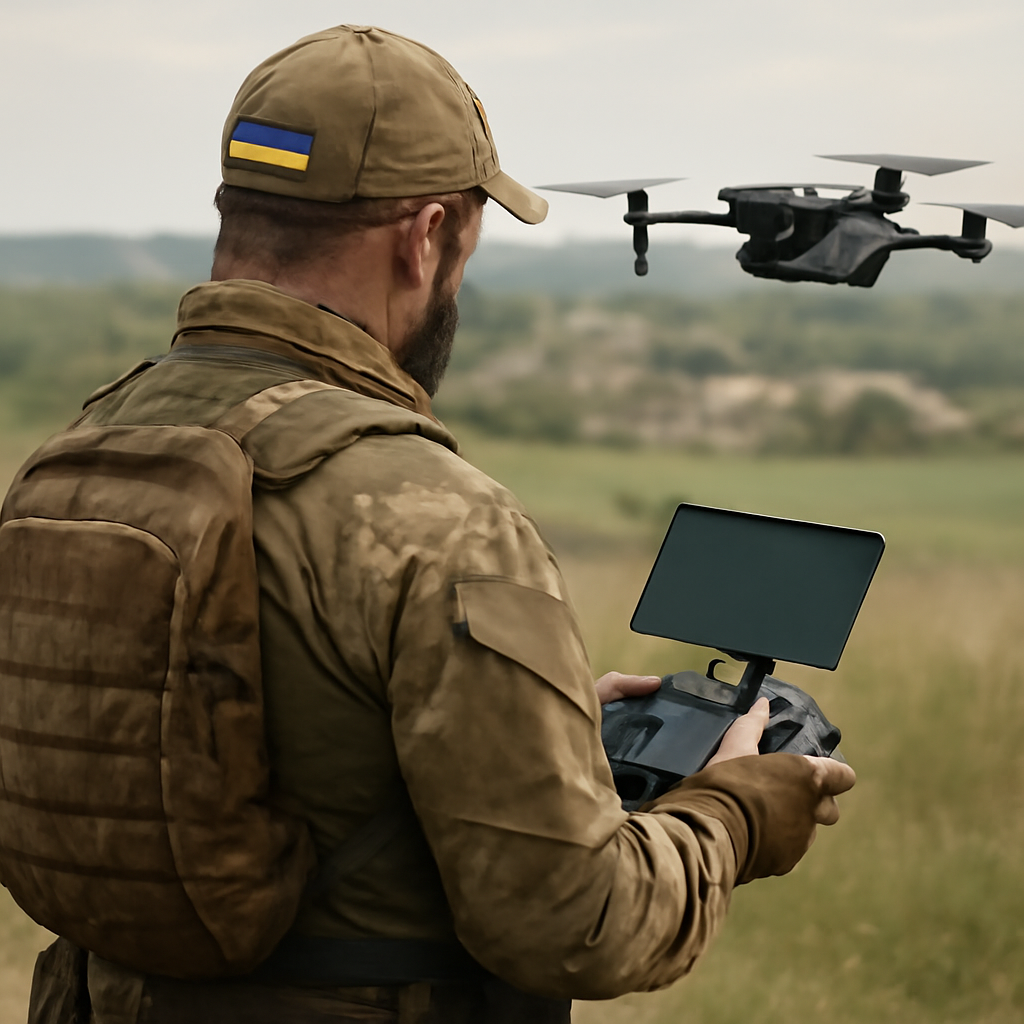
"Every single SOF sniper I trained is now a drone pilot of one type or another," said Xen, a former US special forces operator who has worked with a Ukrainian special forces regiment.
Drones as the new snipers
Across the Russia–Ukraine war, the role that long-range, low-profile shooters once played has shifted dramatically. The source reports that constant drone surveillance makes an active sniper’s position far easier to identify, allowing drones or artillery to target them quickly. As a result, many special operations forces (SOF) who served as snipers have transitioned to operating unmanned systems, exchanging concealment for remote reach. Xen described a tactical leap: teams that once hunted from 1–2 km now engage from ranges of 30–300 km.
Ukraine’s 'drone wall' by 2025
By 2025 Kyiv had established what the source calls a "drone wall," with virtually every part of the front monitored by uncrewed aircraft. That pervasive aerial picture has reshaped manoeuvre warfare: movement windows are narrower, snipers and SOF face greater exposure, and frontline units must coordinate constantly with aerial assets. The source also notes that drone usage was limited in 2022 but grew rapidly, especially for situational awareness, and that by early 2024 Ukrainians had become "world leaders in drone warfare," according to Xen.

Audit-ready is a season. It shouldn't be.
Evidence in spreadsheets, controls drifting between audits, frameworks multiplying on flat headcount. Nubivance runs continuous compliance on Rapid7 Cyber GRC - SOC 2, HIPAA, ISO 27001, PCI, CMMC.
End the scramblePokrovsk, the 3rd Separate Special Purpose Regiment, and unconventional warfare
The battle for Pokrovsk illustrates how SOF adapted doctrine to multiply conventional force effectiveness. Bryan Pickens, a former US Green Beret who fought in Ukraine, attributes Pokrovsk's prolonged defense to SOF operating "as a way to multiply military power on the front line." Pickens described how Ukraine’s 3rd Separate Special Purpose Regiment would deploy three teams to threatened sectors: one embedding and training frontline infantry while building drone capabilities, one held in reserve, and one conducting drone operations against opposing positions. That model mirrors techniques associated with unconventional warfare teaching—training and equipping partner forces to fight alongside SOF—which Pickens credits with extending Pokrovsk’s resistance for two years longer than expected.
Training, institutional knowledge, and meta-competencies
Several contributors to the source trace a sharp evolution in how Ukrainian SOF train and learn. Xen recalled early training in 2020 with US SOF as largely one-directional and said heavy casualties early in the war "erased a significant amount of institutional knowledge," so some earlier lessons did not persist. When Xen returned in early 2024 he found "major gaps" in what he called meta-competencies: mission planning, discipline, SOP adherence, after-action reporting, and institutional learning loops. Yet despite those gaps, Ukrainians had rapidly adapted to employ drones and to integrate their use into battlefield practice.
Bomber drones, resupply, and close support
Drones have not only curtailed traditional SOF roles; they have also enabled new forms of sustainment and strike. The source gives an example: small teams advancing behind enemy lines and running low on ammunition can be resupplied by heavy bomber-drones. Rob Lee, senior fellow at the Foreign Policy Research Institute, said some Ukrainian assault regiments and SSO battalions now use heavy bomber drones in direct support of small infantry or SOF teams. Tactical doctrine has adjusted: assaulting trenches now typically requires a drone overhead at all times to verify the area is clear before movement, and enemy infiltrators who scavenge for supplies and rely on drone resupply still create threats that occasionally require SOF to clear positions—even at risk from opposing aerial surveillance.
What this means for SOF units, conventional infantry, and trainers
- SOF units: Operators are reconfiguring skill sets toward remote effects and integration with unmanned systems. Units that once prioritized long-range marksmanship are now frequently operating or coordinating drones for reconnaissance, strike, and resupply.
- Conventional infantry: Frontline formations increasingly rely on embedded SOF teams to provide training, drone capacity, and tactical coordination—turning SOF into a force-multiplying trainer and enabler as much as a direct-combat element.
- Trainers and doctrine developers: Early one-directional training models have proven insufficient; the source highlights gaps in mission planning and institutional learning that require two-way adaptation and durable after-action reporting to preserve lessons under high attrition.
The account is plain in its lesson: the tools of war have changed the ways elite soldiers operate, but not necessarily their purpose. As Pickens put it, "The ability to adapt and innovate not just the technology but also the military doctrine in place to employ that technology is how SOF elements stand to be effective in this war and in the foreseeable future of war anywhere in the world." Whether units can close institutional gaps—mission planning, SOPs, and learning loops—will determine if today’s adaptations endure beyond the current conflict.