"A commander must be responsible for the entire cycle, from training a soldier to the result on the battlefield," Rodion Kudryashov wrote in Ukrainian Pravda, describing the doctrine behind Ukraine's Operation Vivaldi.
Third Army Corps: command overhaul as the opening move
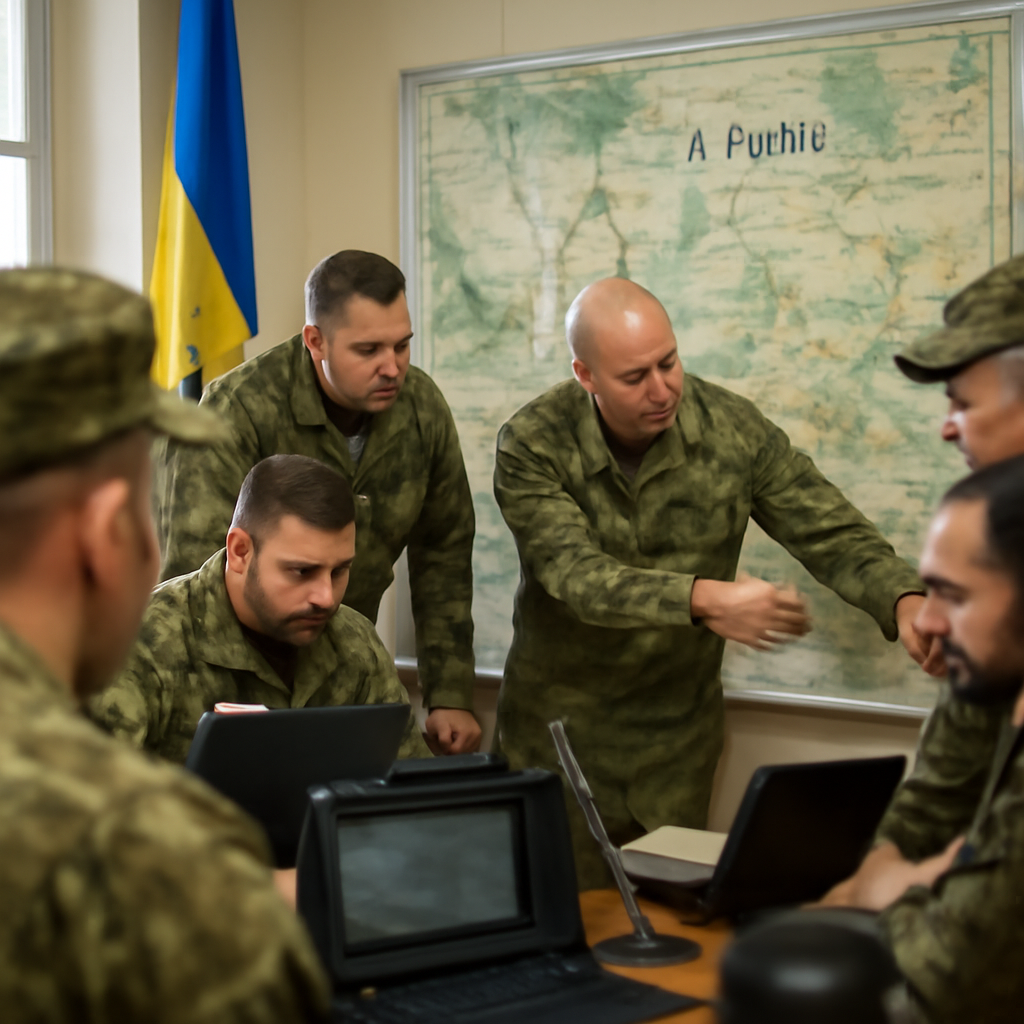
Ukraine’s reported gains near Lyman follow a deliberate internal campaign to change how the Third Army Corps fights. Rodion Kudryashov, deputy commander of the corps, said brigades arrived with “losses, manning problems and, most importantly, eroded trust in their leadership.” Brig. Gen. Andriy Biletsky responded by altering command arrangements: replacing some commanders, restructuring staffs, and strengthening the noncommissioned officer chain. Kudryashov framed this as a culture shift away from a “more rigid Soviet‑era model” toward a faster, decentralized system in which commanders can make rapid tactical decisions informed by unmanned systems, logistics, and reconnaissance.
Stabilizing the forward edge: the quiet phase before the advance
According to the deputy commander, Vivaldi began not with an assault but with defense and consolidation. Ukrainian units first had to halt Russian pressure, stop small-unit infiltration that threatened logistics and cohesion, and “stabilize the forward edge.” By June, Kudryashov said, the corps had secured the front “in the sector from Borova to Lyman and eliminate[d] the enemy’s infiltration zones.” He emphasized that this phase — securing logistics, stockpiling ammunition and drones, and rebuilding decision‑making — was essential to creating the conditions for any later offensive.

This site is the portfolio.
OSINTSights runs on Cloudflare Workers, D1, R2, and Vectorize, with an AI pipeline on Hetzner ARM. Nubivance designed, built, and operates it. We do the same for clients.
See what we buildUnmanned systems and logistics strikes: shaping the battlefield
Once the front was secured, the corps’ unmanned systems targeted Russian logistics. The operation struck a pipeline and depots, forcing the adversary to reroute fuel and lubricants, Kudryashov said. The 60th Mechanized Brigade’s FATUM FPV drone unit released footage allegedly showing strikes on Russian armored vehicles, a Grad multiple‑rocket launcher and personnel. The corps also claimed a novel combination of tactics: a flanking maneuver, airlifting unmanned ground vehicles behind enemy lines, and coordinated search‑and‑strike operations with reconnaissance and strike drones.
Joint headquarters and interagency coordination: SSO, GUR and DPSU
To counter infiltration and synchronize effects, the Third Army Corps set up a joint headquarters to coordinate Special Operations Forces (SSO), Defense Intelligence (GUR) and the State Border Guard Service (DPSU) at the tactical level. Kudryashov framed the change as modern warfare’s hallmark: “It is not 10 strong units that each fight well on their own. It is 10 different elements that start working as one system at the right moment.” The corps said reconnaissance, unmanned units and attached forces all operated under this single concept during Vivaldi.
What this means for Finland, Ukraine, and the United States
- Finland: The Finnish Defense Ministry announced an Agreement on Enhanced Defense and Security Cooperation under the “Drone Deal” format with Ukraine. The deal is intended to enable transfers of technology, joint R&D, and simplified export authorizations for defense materiel and drone development.
- Ukraine: Kyiv is simultaneously pressing battlefield gains and negotiating strategic support. President Volodymyr Zelensky said Ukraine is ready to agree to an energy truce provided Russia refrains from attacking Ukraine’s energy and water infrastructure, and he cited heavy Russian losses and wide use of missiles and drones in recent months.
- United States: President Donald Trump and Zelensky discussed potential licensing to build Patriot interceptors in Ukraine and other de‑escalation steps at the U.N. General Assembly. Trump offered no commitment, saying only that “we’re talking about that,” leaving the proposal unresolved in the near term.
Operational context: gains, counterattacks, and the toll on infrastructure
The Third Army Corps claims about 125 square kilometers retaken near Lyman; the Kremlin‑connected Rybar channel acknowledged fighting and positional moves in that sector, noting Russian advances earlier in summer and counterattacks in August. The Institute for the Study of War reported Ukrainian counterattacks in the Lyman direction and said Russian offensive efforts in several directions made no advances on Sept. 21–22.
Beyond the front lines, both sides continue strategic pressure on infrastructure. The Ukrainian Defense Ministry said strikes hit two Russian refineries in Bashkortostan and the Samara region and operations in the Black Sea. The International Energy Agency reported Russian refinery throughput had fallen to 3.8 mb/d — its lowest in more than 20 years — with gasoline output down 20% and diesel production nearly 30% below 2025 levels. President Zelensky quantified the human and materiel intensity in a U.N. speech, saying Russia had lost “248,964 people on the battlefield in Ukraine in eight months” and that Russia launched “more than 2,100 missiles” and “63,000 attack drones” this year, including “more than 7,700” jet‑powered Shaheds.
Rodion Kudryashov offered a caution that frames the next phase plainly: “Winning one battle is not yet winning the war. The enemy is learning too.” Operation Vivaldi, by his account, is a sequence — command reform, stabilization, logistics strikes, and synchronized unmanned operations — designed to translate localized tactical gains near Lyman into an enduring advantage. Whether those gains prove durable as both sides adapt remains the central question on this front.
Source: TWZ — Inside Ukraine’s Operation Vivaldi That Sees Its Troops Gaining Ground In The East