"A fully controlled maneuvering flight," Fire Point chief technology officer Iryna Terekh wrote, describing a test launch of the FP-7.X "just the other day." The short video, published by the manufacturer, is the clearest public sign yet that Ukraine's private defense firm Fire Point is testing a family of weapons intended to close a critical hole in the country's air defenses.
Fire Point’s FP-7.X test and its pedigree
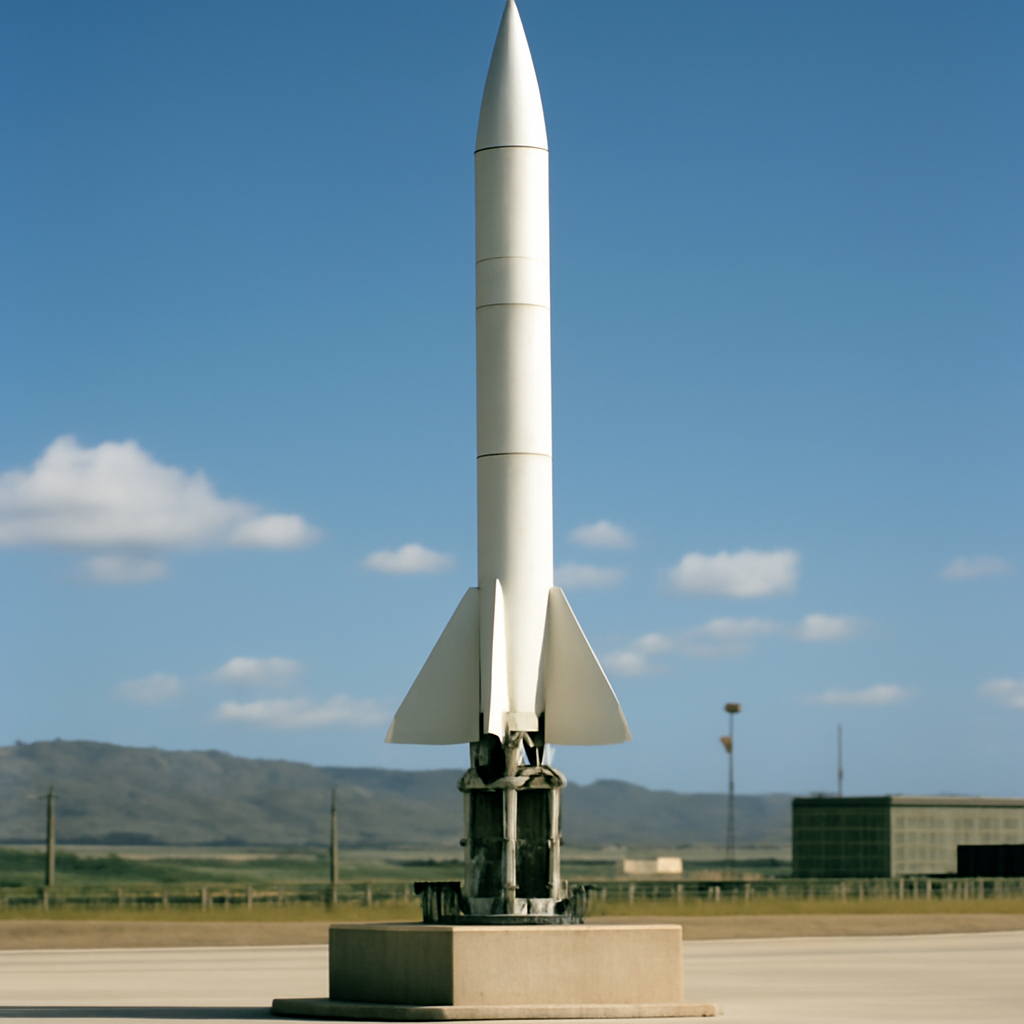
Fire Point posted a video of the FP-7.X missile launch that, according to company statements, showed a "fully controlled maneuvering flight." The missile bears the pink paint that recalls earlier Flamingo designs; Fire Point also produces the FP-5 Flamingo cruise missile and a series of long‑range one‑way attack drones. The FP-7.X is being developed from the FP-7 surface‑to‑surface ballistic missile, which the company says has a range of around 124 miles and a warhead of approximately 331 pounds.
Deriving an interceptor from a ballistic missile is an unusual design choice, the company acknowledges, but Fire Point hopes the commonality with the FP-7 will accelerate development. The FP-7.X currently appears to be an early-stage technology demonstrator, intended as the stepping-stone to a productionized interceptor called Freyja.
The Freyja program and the sub-$1 million goal
Fire Point co‑founder and chief designer Denys Shtilierman told Reuters in April that the firm is aiming to develop an anti‑ballistic missile with a unit cost of less than $1 million. "If we can decrease it to less than $1 million, it will be … a game changer in air defense solutions," Shtilierman said, adding that the company plans "to intercept the first ballistic missile at the end of 2027," an apparent reference to the planned operational date for Freyja.
Fire Point has described Freyja as primarily an anti‑ballistic capability but one equally able to defend against crewed aircraft, drones, and cruise missiles. The company has said the interceptor would use an infrared imaging seeker for the terminal phase and a semi‑active radar homing seeker supplied by Diehl Defence of Germany. Reports note the launcher is expected to be a lightweight, mobile, domestically produced system.

The cyber insurance questionnaire just landed. Now what?
SOC 2, HIPAA, insurance renewals - someone has to own security strategy. Nubivance provides fractional CISO leadership without the full-time salary.
Get a security leadPatriot shortfalls, shifting supplies, and comparative costs
Ukraine's present anti‑ballistic capability is limited and relies heavily on Patriot batteries and components supplied by Germany, the Netherlands, and the United States. The Patriot brought an anti‑ballistic capability that most Ukrainian S‑300 systems do not provide; S‑300 inventories are described in the source as depleting. The S‑300V1 and the Franco‑Italian SAMP/T also offer some anti‑ballistic function but are available in small numbers.
Shtilierman told Reuters that Patriots often require two or three air‑defence missiles—each costing several million dollars—to defeat a single ballistic projectile. That price contrast underpins Fire Point's push for a lower‑cost interceptor: the U.S. Army's proposed 2027 budget lists a unit price of approximately $5.3 million for each PAC‑3 MSE, up from a historical average near $4 million. The U.S. Army is also actively soliciting proposals for a Patriot interceptor with a unit cost under $1 million.
The source reports that the United States has reportedly suspended further Patriot deliveries to Ukraine because of concerns about the state of its own stockpile, and that Ukrainian President Volodymyr Zelensky has repeatedly urged U.S. President Donald Trump and members of Congress for more missiles. Zelensky said Ukrainian officials have one week to finalize legal, financial, and technical issues related to the purchase of additional Patriot systems; Ukraine's ambassador to the United States, Olha Stefanishyna, said Kyiv is prepared to finance additional Patriots and interceptor missiles if Washington agrees to deliver them. Ukrainian Air Force Commander‑in‑Chief Oleksandr Syrsky has also pointed to insufficient modern air‑defense systems and interceptors.
Foreign investment, supplier talks, and production scale
Fire Point has confirmed talks to get European and Middle Eastern companies onboard the Freyja program. Shtilierman said he was awaiting government approval for an investment by a Middle Eastern conglomerate that would support Freyja and other programs. He named Hensoldt, Saab, and Thales as potential European partners for radar, missile target‑seeking, and communications systems—areas where Fire Point says it lacks expertise.
Production scale is a central constraint. Fire Point has previously said it aims to build seven Flamingo cruise missiles per day, or 2,555 annually; the company may require foreign partnerships to expand capacity. By comparison, the source notes, Lockheed Martin produced more than 500 PAC‑3 MSEs in 2024 with a plan to increase to 600 in 2025—illustrating the industrial challenge of matching existing interceptor production rates.
What this means for Ukraine’s armed forces, the U.S. Army, and European suppliers
- Ukraine’s armed forces: A domestically produced interceptor like Freyja would aim to relieve pressure on limited Patriot stocks and offer a locally sustainable means of air defense—if the program can meet technical, production, and funding milestones.
- The U.S. Army: Washington's push for a sub‑$1 million Patriot interceptor and the inclusion of an FP‑7.X rendering by Maj. Gen. Frank Lozano on LinkedIn indicate U.S. interest in lower‑cost options; the FP‑7.X test may serve as an informal illustration of that concept.
- European suppliers: Firms named by Fire Point—Hensoldt, Saab, and Thales—are cited as potential radar and seeker partners; their involvement would be decisive for Freyja’s sensor and guidance capability and for scaling production.
Technically ambitious and logistically demanding, the FP‑7.X test signals a determined Ukrainian effort to field an indigenous anti‑ballistic capability at low cost. The program’s success will hinge on whether Fire Point can translate demonstrator flights, foreign investment talks, and supplier agreements into mass production—and whether Kyiv can bridge its immediate Patriot shortfall while that work proceeds.