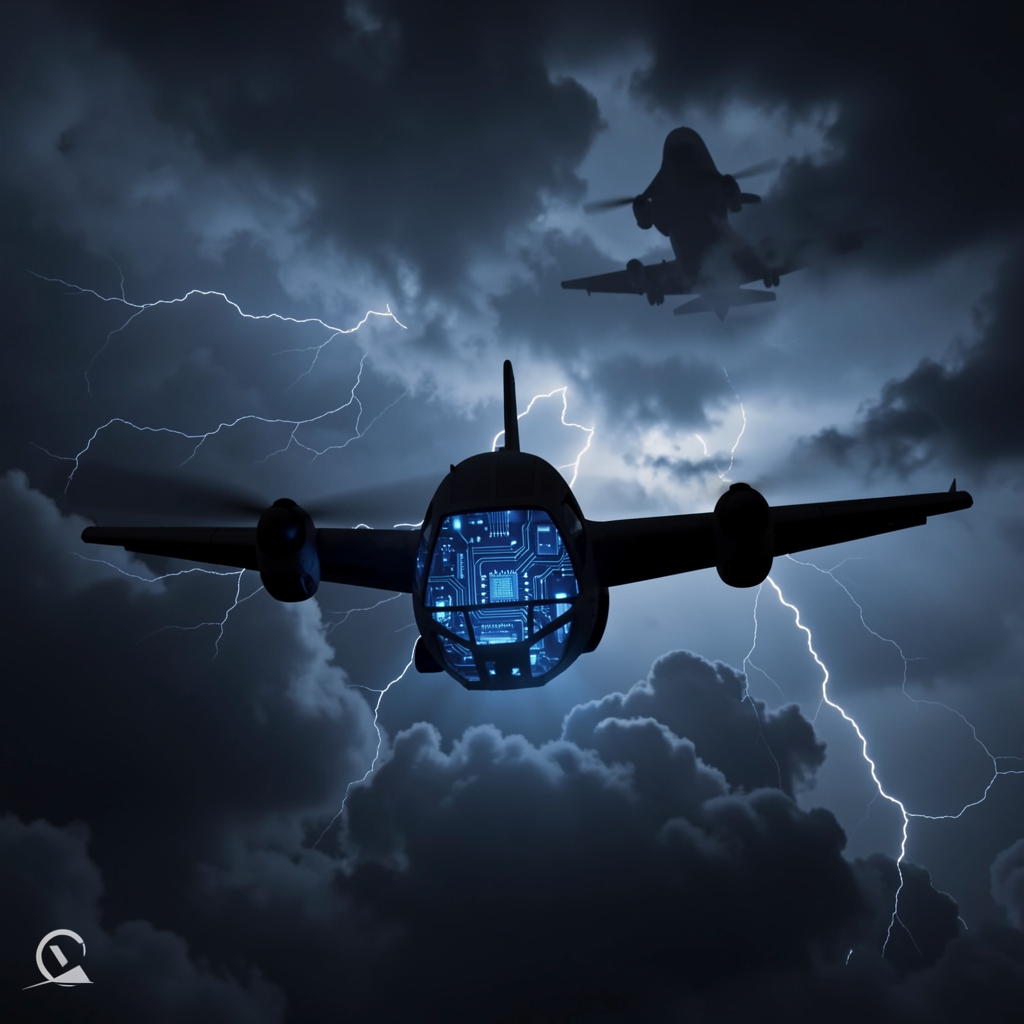
Ukraine’s AI-Enhanced Drone Strike Signals a New Era in Modern Warfare
In a landmark development that promises to reshape the modern battlefield, Ukraine’s Security Service (SBU) has released details and photographs of an unprecedented drone strike operation against Russian strategic bombers. Among the targets were the aging yet formidable Tu-95MS and Tu-22M3 aircraft—a move that underscores Ukraine’s strategic innovation in leveraging domestically developed unmanned systems powered by artificial intelligence. The operation, drawing international attention, offers a glimpse into how emerging technologies are transforming traditional conflict paradigms.
The SBU’s announcement, initially reported by Defence Blog, provides sobering evidence that long-range drone platforms, augmented by AI algorithms, can autonomously identify enemy airfields and exploit critical vulnerabilities. This development, rooted in years of military and technological investment, represents a significant shift from conventional airstrike tactics to a more agile, precision-focused form of engagement. As the conflict in Ukraine continues to evolve, such intelligence-led operations challenge both the status quo of aerial combat and longstanding notions of deterrence.
Historically, the reliance on manned aircraft for strategic operations has been a cornerstone of military power. Yet over the past decade, rapid advancements in robotics, machine learning, and sensor integration have opened the door to autonomous systems capable of decisive action. In conflicts from Afghanistan to the current Eastern European theater, unmanned aerial vehicles have gradually shifted from reconnaissance roles to active combat positions. The incorporation of artificial intelligence now promises to reduce the response time and operational risk, heralding an era where algorithms can rapidly identify and engage targets with minimal human intervention.
The current operation, as detailed by the SBU, showcases Ukraine’s dual focus on innovation and self-reliance. By integrating AI into its drone technology, Ukrainian forces have positioned themselves to exploit gaps in enemy operations that traditional countermeasures might overlook. The choice to target strategic bombers such as the Tu-95MS—a symbol of Russia’s long-range nuclear capability—and the versatile Tu-22M3 underlines a tactical ambition: to impose constraints on an adversary’s ability to project power over vast distances.
This development is not merely a demonstration of technological prowess; it is emblematic of a broader strategic recalibration in the theater of modern warfare. The effectiveness of autonomous systems in identifying vulnerabilities in hardened military assets poses significant questions for conventional military doctrines. For instance, if sophisticated, AI-driven drones can reliably strike key assets, then adversaries might increasingly be forced to reconsider the deployment and protection of strategic bombers and other high-value assets.
Experts in military strategy have long warned of the disruptive potential of integrating artificial intelligence into unmanned combat systems. A recent analysis by the Atlantic Council noted that such innovations could lower the threshold for operational risk by decreasing the need for pilots in harm’s way and by enabling rapid, data-driven decision making in the field. While the SBU’s operation represents a tactical success, it also signals a longer-term shift in defense planning—one that weighs technological agility as highly as traditional firepower.
Beyond the immediate tactical implications, Ukraine’s use of AI-powered drones carries significant strategic and psychological weight. The operation demonstrates that even in a prolonged and arduous conflict, adversaries with limited resources can deploy advanced, game-changing technologies. This has immediate ramifications for public trust, national morale, and international perceptions of Ukraine’s military capabilities. At a time when global powers are closely monitoring the conflict, such technological advancements reaffirm Ukraine’s commitment to modernizing its defense posture amid pressure from a numerically superior opponent.
Several factors contribute to the operation’s significance:
- AI Integration: The autonomous identification of targets using artificial intelligence represents a reliable and scalable method of precision engagement, potentially setting new operational standards.
- Strategic Deterrence: By targeting high-value assets like the Tu-95MS and Tu-22M3, Ukraine sends a clear message that traditional symbols of military might are no longer invulnerable to innovative tactical approaches.
- Domestic Technological Prowess: The reliance on domestically developed systems illustrates Ukraine’s capacity to innovate under pressure, countering perceptions of technological inferiority despite facing a well-equipped adversary.
It is important to note that while the operation has been lauded by military analysts for its ingenuity, it is also a stark reminder of the relentless evolution in warfare. Conventional platforms, once seen as the guarantee of strategic superiority, now face challenges from systems that blend machine learning with real-time reconnaissance. As Russia reassesses its own tactical doctrines, questions abound regarding how long-standing military assets will fare against a new breed of autonomous killers.
Looking ahead, experts advise that both proponents and adversaries of unmanned systems invest in countermeasures and defensive technologies that can mitigate the threat posed by AI-powered drones. The future of aerial combat may well depend on the ability to develop electronic countermeasures, advanced decoy systems, or even counter-AI operations that neutralize automated targeting capabilities. For policymakers and military planners worldwide, the lessons from Ukraine’s recent operation extend beyond immediate tactical victories; they call for a reexamination of how modern technology can and should be integrated into national defense strategies.
Moreover, the ripple effects of such innovation are expected to influence international arms control discussions. As nations across the globe contend with the dual challenges of technological advancement and military accountability, ensuring that deployments of autonomous weapon systems comply with international humanitarian law remains a priority. While experts from organizations such as Human Rights Watch have voiced concerns about potential misapplications of AI in combat, Ukrainian officials insist that these systems are programmed to operate within strict legal frameworks and under human oversight—a stance that will undoubtedly be scrutinized as more nations adopt similar technologies.
In conclusion, Ukraine’s deployment of AI-powered drones against Russian bombers is a watershed moment in modern military history—a manifestation of how technology can redefine the balance of power on the battlefield. It compels us to ask whether future conflicts will be decided not solely by the quantity of traditional firepower, but by the nimbleness of an innovative algorithm. As adversaries watch closely and military strategists recalibrate their doctrines, one thing is clear: the age of artificial intelligence in warfare has arrived, and its impact will be felt across the spectrum of global security.