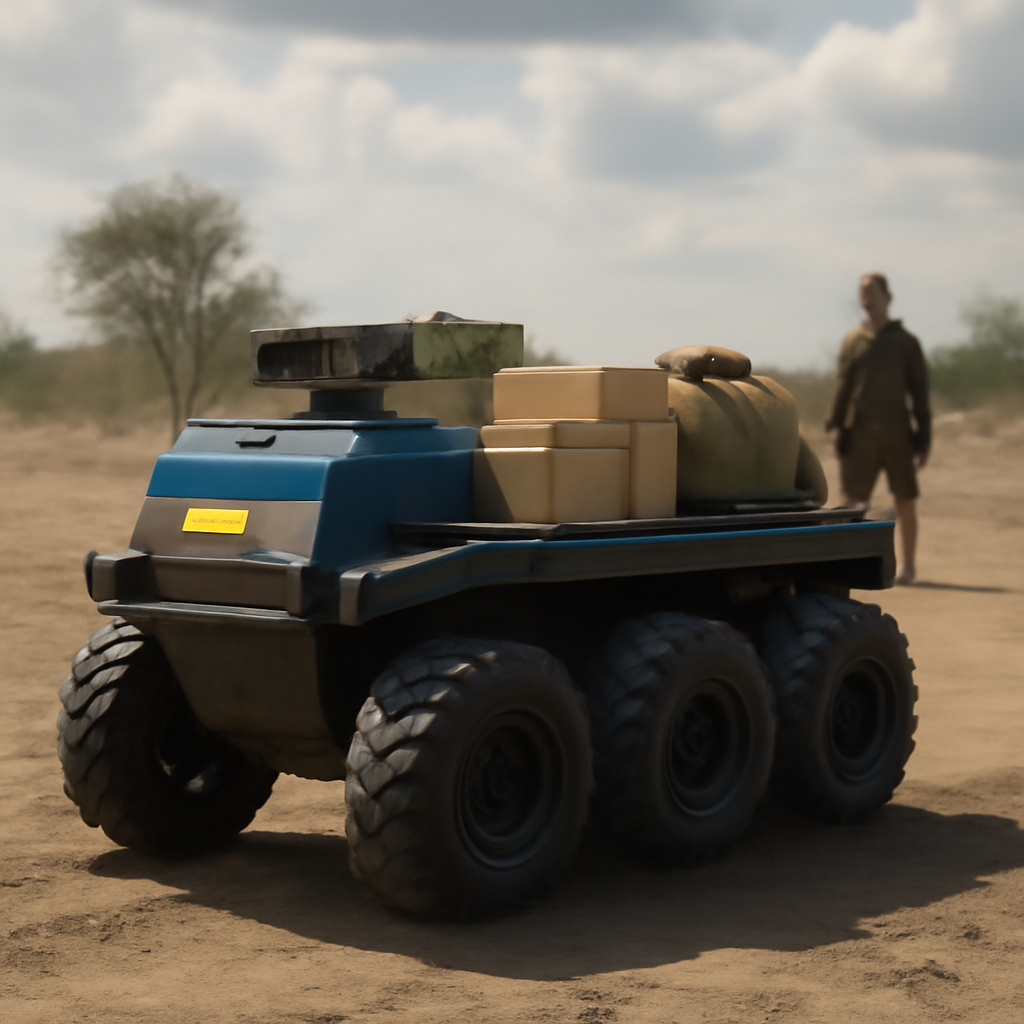
"In April, UGVs performed over 10,000 missions. Most of these are logistic operations: delivering supplies to the front line and back," said Ihor Shmyryov, head of the UGV department at procurement organisation Brave1.
Ihor Shmyryov on scale and a presidential target
Brave1's Shmyryov frames the current drive for uncrewed ground vehicles (UGVs) as a numbers problem. He reported that UGVs flew more than 10,000 missions in April alone and said he believes Ukraine can meet "President Volodymyr Zelensky’s target of supplying 50,000 UGVs to the armed forces this year with ease." That ambition underpins efforts to move beyond pilot projects and embed robots into routine battlefield logistics and combat support.
From logistics to "small tanks": how UGVs are being used
UGVs are already operating across multiple roles. The sources describe deployments in logistics, casualty evacuation, engineering tasks and growing combat tasks. Ivan Halenko, a Ukrainian officer, estimated that "UGVs can cover around 90 percent of logistics if everything is set up properly." Ukrainian manufacturers are fitting machine guns and automatic grenade launchers to ground robots, producing platforms that "one developer described as small tanks able to hunt Russian infiltration teams without exposing Ukrainian soldiers to enemy fire." The operational ethic is explicit: as NUMO Robotics’ Yuliia Trybushna put it, "The military increasingly views these systems as expendable" — "The goal is to lose robots instead of people." As one Ukrainian commander summed up the trade-off succinctly: "Metal goes first."

Audit-ready is a season. It shouldn't be.
Evidence in spreadsheets, controls drifting between audits, frameworks multiplying on flat headcount. Nubivance runs continuous compliance on Rapid7 Cyber GRC - SOC 2, HIPAA, ISO 27001, PCI, CMMC.
End the scrambleTraining, personnel limits and the operator bottleneck
Scaling robots is as much a human problem as an engineering one. Multiple interviewees flagged operator training as a key constraint. Dignitas Ukraine, a technology-focused NGO, provides training to help fill the gap, but not all brigades can spare soldiers for the "few months that may be needed." Halenko warned that "units also often lack enough people" and that it is "not enough to simply grab someone and bring them in." In practice many of the soldiers working on robotics started with an interest in electronics and learned on the job, rather than entering service as professionally trained operators.
A decentralised industrial ecosystem, with 270 manufacturers and hundreds of models
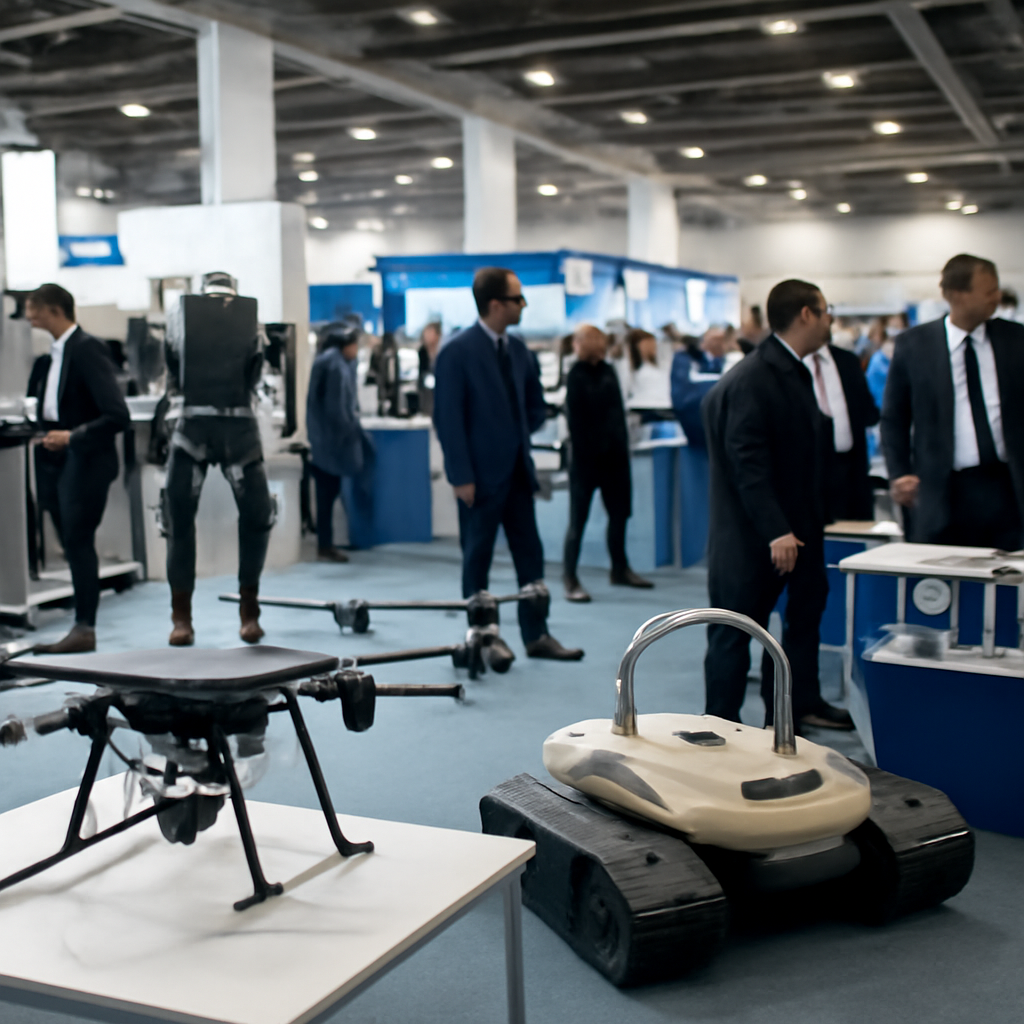
Ukraine’s UGV push is driven from the bottom up. The account describes a sprawling industrial ecology: "around 270 domestic manufacturers and 550 different models," with "only around 20 to 25 companies producing systems at scale," according to Trybushna. That diversity produces rapid iteration — manufacturers maintain near-real-time feedback loops with front-line units, with Trybushna noting "we maintain a 24/7 service department that supports units in real time" so front-line problems can be diagnosed and fast-tracked into new iterations.
But the proliferation of designs creates operational frictions. Halenko described a lack of standardisation: "There is no single unified model, no standard set of 10 UGV variants... They are not standardised. They have different parts, different nuts and bolts, different motors, different power connectors. Everything is different." Shmyryov contrasted that with Russia’s approach: "They rely on a highly centralised, top-down approach – selecting just one or two solutions and funnelling state resources into them," though he added that this centralisation reduces agility.
How Ukrainian manufacturers, brigades, and AI developers are responding
- Manufacturers (NUMO Robotics and others): focusing on rapid field support and scaling production. NUMO’s Yuliia Trybushna highlighted 24/7 servicing and iterative improvement to respond to terrain- and combat-driven issues.
- Front-line brigades (3rd Separate Assault Brigade and others): adopting many different models while coping with personnel limits. A soldier identified as Dmytro described the market-driven surge in competing platforms as a wartime reality, with manufacturers "trying to capture market share."
- AI developers (A19Lab and similar teams): confronting hard technical limits. Vitaliy Goncharuk said the "terrain is full of obstacles, and the technical requirements are very different, which makes developing effective AI systems for UGVs an even harder problem."
Ukraine’s experiment with UGVs has moved beyond proving the concept to a hard logistical and doctrinal question: how to scale robots across a fragmented supply base while training enough operators and creating common standards. The decentralised, market-driven innovation model has sped field adaptation and produced many novel designs, but it also creates a "zoo of solutions" that complicates sustainment and interoperability. Success, by the account given here, will come from consolidating what works — the battlefield acting as a Darwinian selector — while shoring up training pipelines and platform commonality so the stated ambition of trading machines for manpower can be realised at scale.