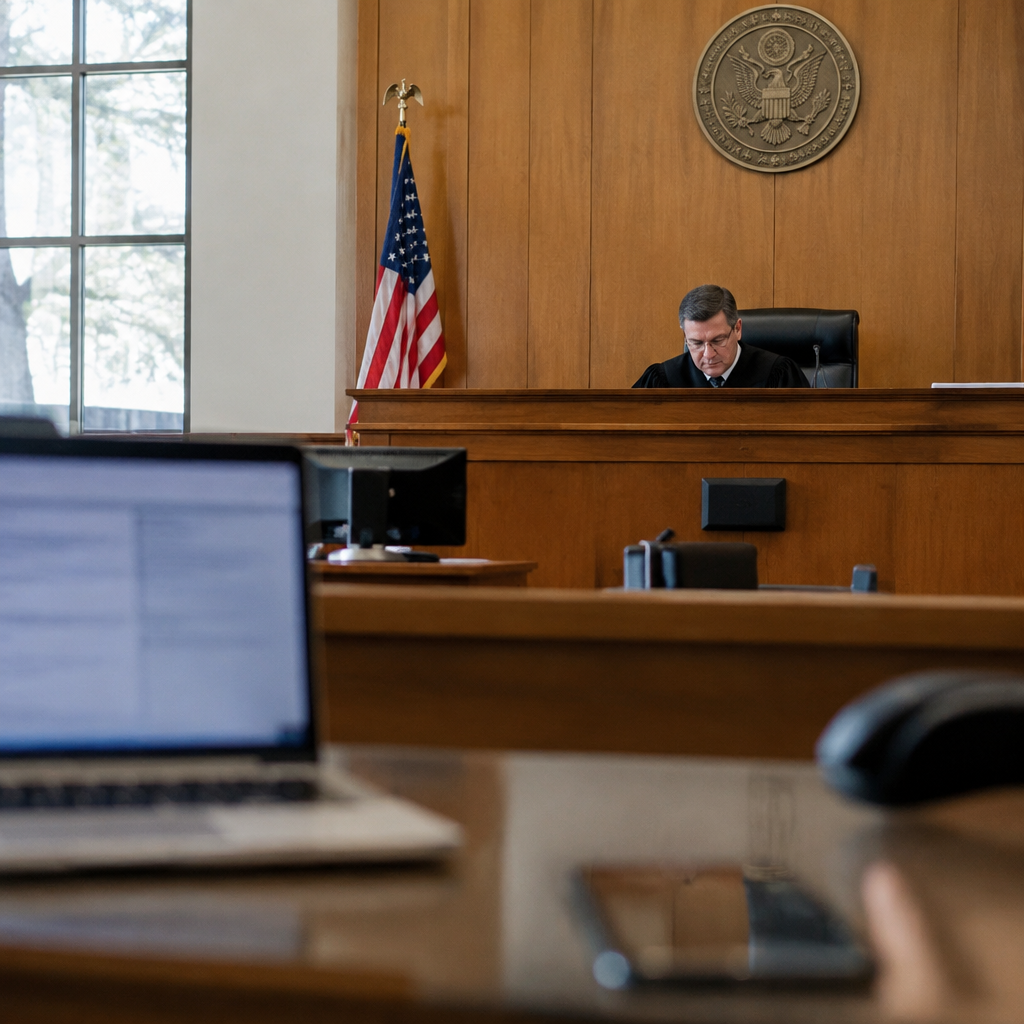
"Terrorists, child abusers and organized crime groups cannot be allowed to operate beyond the reach of the law," a government spokesperson told the court — a defense of a secret order the Investigatory Powers Tribunal has now said cannot be kept secret in name.
Investigatory Powers Tribunal: Home Office served Apple with a TCN
The Investigatory Powers Tribunal (IPT) has confirmed that the Home Office served Apple with a Technical Capability Notice (TCN), rejecting the department's argument that merely acknowledging the notice would damage national security. The tribunal's three judges pointed to "extensive media reporting, statements by US officials, and media briefings" that they concluded had been authorized by the UK government, and used that public record to judge that the existence of the notice could no longer be treated as secret.
What a Technical Capability Notice requires and why Apple faced a dilemma
A TCN is issued under the Investigatory Powers Act 2016 and "compels recipients, such as tech companies, to implement technical changes that facilitate the UK government's legal surveillance powers." For Apple, widely known for placing privacy at the center of its marketing, being served with a TCN presented a stark choice as the tribunal summarized: either somehow defy a legal order issued by the UK, or undermine the encryption technology that customers expected.

Audit-ready is a season. It shouldn't be.
Evidence in spreadsheets, controls drifting between audits, frameworks multiplying on flat headcount. Nubivance runs continuous compliance on Rapid7 Cyber GRC - SOC 2, HIPAA, ISO 27001, PCI, CMMC.
End the scrambleHow Advanced Data Protection (ADP) and iCloud encryption factor in
The order has been widely reported as demanding access to end-to-end encrypted iCloud data. Apple's Advanced Data Protection (ADP) extends end-to-end encryption to additional categories of iCloud data — including backups, photos, and notes — by keeping the relevant encryption keys only on trusted devices and leaving Apple unable to decrypt that protected content for investigators. Without ADP, those additional categories revert to "standard protection": data remains encrypted, but Apple holds the keys and can disclose content in response to valid legal demands. The judgment notes some categories remain end-to-end encrypted regardless, and that Apple maintains an explainer on which data types remain protected even when ADP is not enabled.
Timeline of key public events and legal steps
- February 2025: The Washington Post reported that the Home Office had demanded an iCloud backdoor the previous month. Apple revoked ADP for UK users in February 2025, an action widely interpreted at the time as indirect confirmation of the demand.
- August 2025: US policymakers urged then-director of national intelligence Tulsi Gabbard to oppose the UK's demands under the assumption they would affect US citizens; in August 2025 Gabbard announced that the UK had agreed to drop its demand for access to Americans' encrypted data.
- October 2025: The Financial Times reported that the UK had replaced its original notice with a new order focused on British users.
- July 2026: Apple filed a second legal claim challenging the TCN after its first challenge was dismissed following a "change in circumstances."
- First half of 2027: The parties are working toward a substantive hearing in this window, but the tribunal has yet to decide what precise details of the technical capability evidence can be publicly disclosed.
How Apple, the Home Office, and civil-rights groups are positioned
- Apple: The company faced the immediate technical-policy problem of whether to maintain ADP for UK users or to comply with a TCN that would require technical changes. Apple did not immediately respond to a request for comment about the tribunal ruling.
- Home Office: The department adopted its standard "neither confirm nor deny" (NCND) posture when national security is invoked, and defended the use of TCNs in a statement emphasizing that such powers are "subject to strict safeguards" and that decisions must be made by elected governments and independent judges rather than company boardrooms.
- Civil-rights litigants: Proceedings include a separate challenge to the TCN regime brought by Liberty, Privacy International, and two individuals, keeping a parallel legal push focused on the lawfulness and limits of TCNs.
The IPT's judgment draws a narrow line: it confirms the existence of a TCN served on Apple but preserves the possibility that specific technical details must remain secret to protect national security. The judges concluded "it would be damaging to national security if all of the material ... were publicly disclosed," while also saying "that does not mean every detail must be kept secret" and that defining those boundaries is not practical now. The substantive hearing planned for the first half of 2027 will be the next formal opportunity to test how much of the TCN's content will enter the public record.