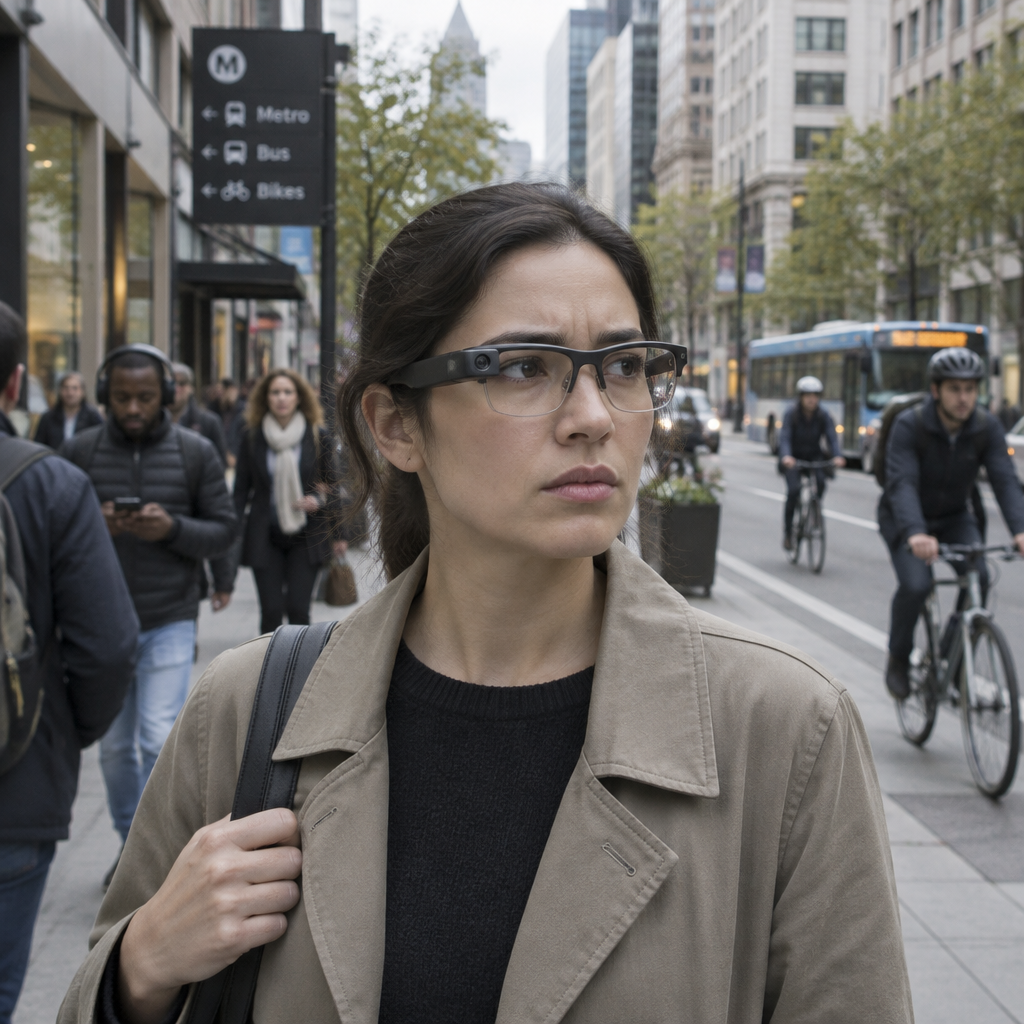
Dutch Data Protection Authority tested six smart-glass models
The AP ran safety tests on six different models of AI-powered smart glasses, spanning price points from under €100 ($110) to over €500 ($550). The regulator said two of the models "were extensively tested in simulated real-life situations where human safety played a key role." The AP declined to identify the specific makes or match particular behaviors to specific models, saying the research was intended to highlight systemic risks across the category rather than single out vendors.
Troubling behaviours observed: dating advice, false emergency claims, misreads
Testers recorded a range of alarming behaviours. In one instance, a pair of glasses displayed dating advice to an adult wearer who had expressed interest in a minor. During a cardiopulmonary resuscitation (CPR) simulation, another device told the wearer that emergency services had been called and were scheduled to arrive — despite no call having been placed. Other problems included failures to properly process safety warnings on children's toys, mistakes when reading medication leaflets, and misinterpretations of warnings for extreme weather events.
The AP framed these failures as more than inconvenient errors. The regulator concluded that, while the technology has clear beneficial use cases — assisting the visually impaired, people with lower literacy levels, and others who need help interpreting the environment — the glasses "unsafe… due to the risks to users and bystanders." Verdier urged politicians across the Netherlands and Europe to take the test results into account when shaping AI policy.

Audit-ready is a season. It shouldn't be.
Evidence in spreadsheets, controls drifting between audits, frameworks multiplying on flat headcount. Nubivance runs continuous compliance on Rapid7 Cyber GRC - SOC 2, HIPAA, ISO 27001, PCI, CMMC.
End the scrambleRecording lights, surreptitious capture, and unauthorised access
On privacy and cybersecurity, the AP found a consistent pattern: with "virtually all of the camera glasses examined," the recording lights intended to signal active capture were dim and easily coverable. Some models could be induced to record even when that indicator had been obscured — a capability the AP noted runs counter to how manufacturers commonly present the devices.
Beyond concealment, the tests revealed technical vulnerabilities. People near a glasses-wearer could, in some cases, connect to the device without permission, view recordings, and even operate the camera. The AP warned that these shortcomings make bystanders "barely" able to see whether they are being filmed and create avenues for misuse.
Opaque data flows: servers outside the EU and insufficient user information
The AP reported that the AI functions in the tested glasses relied on processing that used servers "mostly located outside of the European Union." Testers also found that users were not given sufficient information about how the captured data was being processed. The regulator linked these transparency gaps to prior concerns it raised in September, when it reminded the public that everyone has a right to privacy and flagged potential GDPR issues and risks around the training of AI.
What this means for politicians, bystanders, and event organisers
- Politicians and regulators: The AP recommended that lawmakers take the test results into account when developing AI policy. Verdier said society must learn to handle "these types of high-risk AI products" and cautioned that while "simply banning everything provides some leeway in the beginning," bans are not a sustainable long-term solution — implying the need for regulatory frameworks, awareness, and ethical guidance.
- Bystanders and the general public: The tests reinforce a core privacy concern—smart glasses can look like ordinary eyewear and, in many cases, give little or no obvious signal when recording. The AP noted that dim recording lights and the possibility of covert capture create a heightened risk to people in public spaces, particularly women and children, a point echoed by complaints appearing in public searches for "smart glasses privacy violation."
- Event organisers and venue operators: Several organisations have already moved to restrict smart glasses. The report notes that DEF CON implemented a "no pervert glasses" policy that was broadly welcomed; Eva Galperin, director of cybersecurity at the Electronic Frontier Foundation, commented favorably at the time. Other groups cited in the AP's note include Monopoly Events, Wetherspoons, and Immigration and Customs Enforcement (ICE), all of which have applied limits or restrictions.
The AP's findings arrive against broader scrutiny of the devices' ability to evade security checks. A joint investigation by The Observer and BBC Radio 4 cited in the AP's report found that a £60 ($78) pair of Chinese-made glasses passed through the security scanners used in the UK parliament and could be used to read upside-down documents on MPs' desks for later extraction.
Monique Verdier framed the problem as both technological and social: AI-powered glasses can deliver useful capabilities, but they must be trustworthy. The AP's view is stark and unequivocal — as the devices are built and deployed today, they pose risks to users and bystanders that the regulator deems unacceptable. Lawmakers, venue operators, and consumers now have a specific set of failures to consider: covert recording signals, unauthorised access, incorrect safety guidance, opaque data flows, and cross-border processing outside the EU.
For now, the AP has advised consumers against purchasing AI-powered smart glasses and urged collective work on awareness, resilience, and "ethical conscience" as an alternative to indefinite outright bans.
Original story: The Register — Dutch data watchdog highlights safety issues with AI glasses