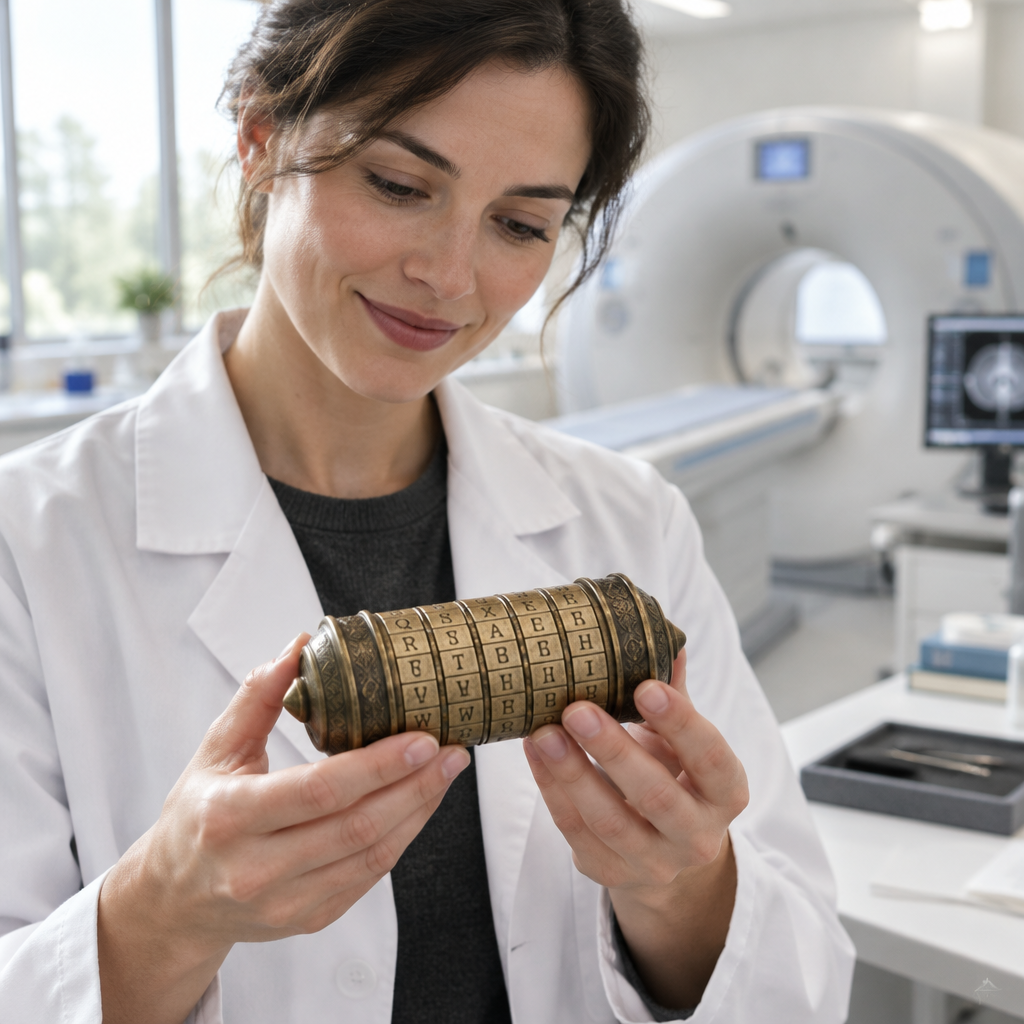
A 400-year-old cryptex padlock was opened after researchers used CT scanning technology to recover the code.
CT scanning technology as the key
The single line of reporting available states that researchers employed CT scanning technology to recover the code from an antique mechanical lock and thereby open it. That fact ties a non‑destructive imaging technique — CT scanning technology — directly to the successful access of a centuries‑old device. The report does not name the research team, the institution, the scanner model, or the precise imaging parameters; it limits the claim to the use of CT scanning technology and the outcome: recovery of the code and opening of the cryptex.
The 400-year-old cryptex padlock
The object at the center of this episode is described simply as a "400-year-old cryptex padlock." The report does not expand on the artifact's provenance, maker, material construction, or current ownership. What is recorded is the device's age — four centuries — and its characterization as a cryptex padlock, a mechanical object with an internal code that, once known, permits opening.

Audit-ready is a season. It shouldn't be.
Evidence in spreadsheets, controls drifting between audits, frameworks multiplying on flat headcount. Nubivance runs continuous compliance on Rapid7 Cyber GRC - SOC 2, HIPAA, ISO 27001, PCI, CMMC.
End the scrambleRecovering the code and opening the device
The factual chain is concise: CT scanning technology was used to recover the code, and using that recovered code the researchers opened the cryptex padlock. Beyond that sequence, the report contains no technical play‑by‑play: it does not describe how the code was encoded in the mechanism, how the imaging data were interpreted, whether image processing or reconstruction software was required, or whether physical intervention beyond reading the code was necessary. The only documented outcome is successful code recovery followed by opening.
Commercial echoes: a USB‑drive cryptex is available
The same brief report also notes a present‑day commercial product: "You can buy a USB‑drive cryptex." That fact places a modern consumer item — a cryptex configured to hold a USB drive — in the same sentence as the centuries‑old object. The juxtaposition is factual in the report: an antique cryptex has been opened using modern imaging, and modern variations of the cryptex form factor are on the market as everyday devices.
How conservators, security researchers, and collectors may respond
- Conservators and museum professionals: The documented use of CT scanning technology to recover a code suggests a non‑destructive route to access locked mechanical objects when provenance or access is required without damaging the artifact. Institutions responsible for historic pieces may take note that imaging can, in at least one reported case, yield the internal information needed to open a device.
- Security researchers and physical‑security practitioners: The report links an imaging modality to successful bypass of a mechanical code. For researchers focused on physical locks and historical security mechanisms, the case offers a concrete example that modern imaging tools can recover concealed mechanical information.
- Collectors and owners of novelty cryptex products: With consumer items such as a USB‑drive cryptex available for purchase, owners of modern cryptexes might reassess assumptions about the confidentiality provided by mechanical codes in light of the reported imaging outcome on an antique device.
A concise takeaway
The simple facts reported are clear and limited: researchers used CT scanning technology to recover the code and open a 400‑year‑old cryptex padlock, and a USB‑drive cryptex is commercially available. The episode, as stated, demonstrates a single successful instance in which modern imaging enabled access to the internal secret of an old mechanical device. It also places that outcome beside the existence of contemporary cryptex products, suggesting an intersection between historical artifacts and modern consumer variations of the same concept.