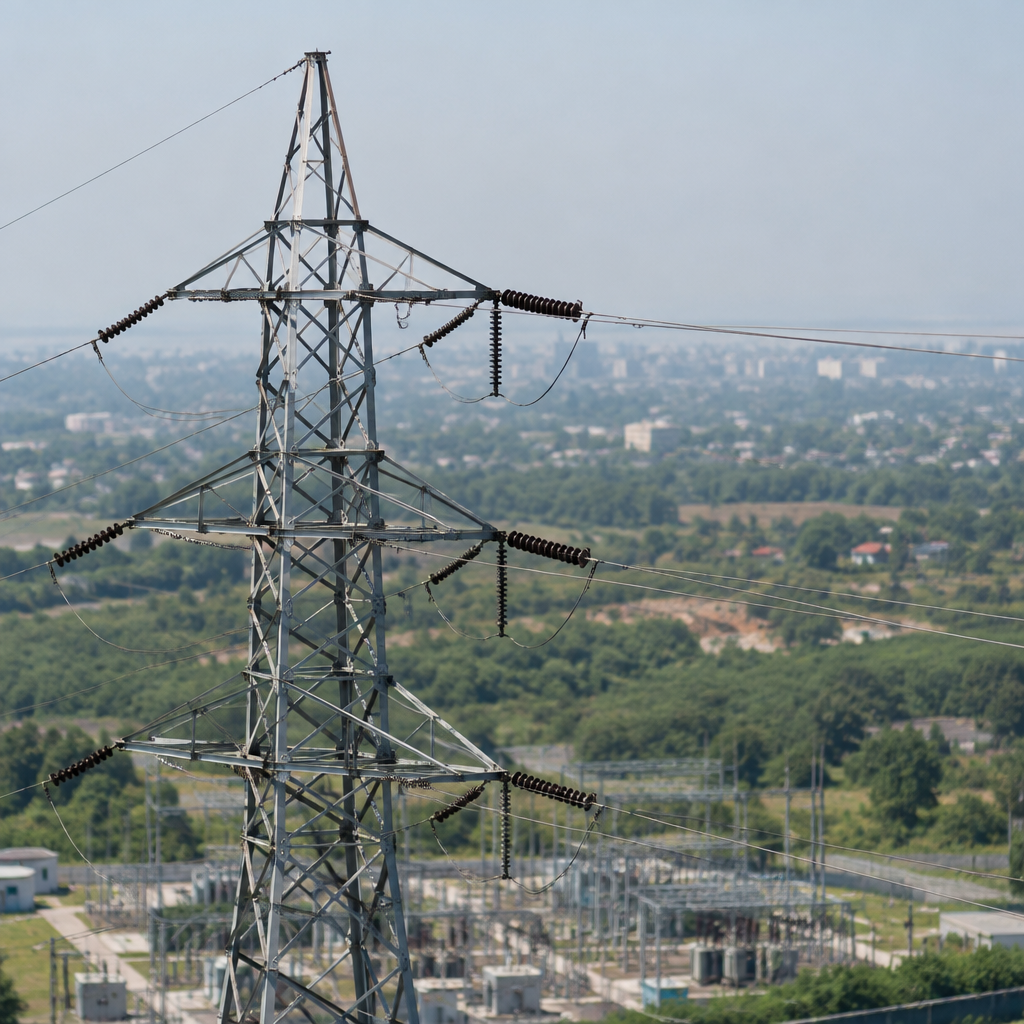
"AI-powered malware is "highly likely" to be a part of a future ransomware attack on Britain's critical national infrastructure between now and 2028," the UK's National Cyber Security Centre (NCSC) says in its annual review and a companion assessment of how artificial intelligence could change cyber threats over the next two years.
NCSC assessment: a nearer-term change in the threat picture
The NCSC frames a near-term timeline for capability shifts: in its "pessimistic scenario for 2028" the centre envisages "a significant increase in the frequency and sophistication of cyberattacks worldwide," driven by wider adoption of AI tools that also make attribution harder. The report explicitly links those shifts to the supply and reuse of open-source AI security tools, noting attackers are already repurposing such tooling.
ARTEX and the repurposing of open-source AI tools
The review points to concrete evidence of repurposing. Researchers have documented "widespread abuse of ARTEX, an open source, Chinese-made AI red‑teaming platform," in attacks since ARTEX's launch in July. The report links that abuse to incidents against the UK registrar 123 Reg, Microsoft 365, and "others." The NCSC cautions that tools originally designed to help security researchers can be turned toward nefarious activity.

Audit-ready is a season. It shouldn't be.
Evidence in spreadsheets, controls drifting between audits, frameworks multiplying on flat headcount. Nubivance runs continuous compliance on Rapid7 Cyber GRC - SOC 2, HIPAA, ISO 27001, PCI, CMMC.
End the scrambleAutonomous attackers, attribution, and geopolitical friction
The NCSC raises a further, more unsettling technical possibility: an autonomous attacker that operates beyond the control of its human operator. The centre warns it "is a realistic possibility such an entity could self‑replicate and conduct cyberattacks at will, with no apparent motivation or restraint." Such agentic behaviour would, the review says, complicate geopolitics because wider availability of AI tools could enable states or operators to "hide their activities within the noise" — the report suggests China "has likely played a role" in supplying those tools, a factor that would make denial and attribution easier for states seeking to distance themselves from operations.
Defensive programmes: Project DROMOS, Cyber Shield and NERV
The NCSC and government are not waiting passively. Project DROMOS began earlier this year with a four‑week pilot that analysed government code repositories, then expanded into selected operational environments. The Government Cyber Coordination Centre (GC3) launched the project with the AI Security Institute and "other departments." According to the NCSC, the pilot uncovered hundreds of potential security issues, including critical vulnerabilities.
The review also reaffirms plans for Cyber Shield, described as an "agentic cyber defence system" first teased in July and expected to be delivered in stages over the next five years. Cyber Shield will involve the NCSC providing defensive agents to participating organisations, with the intent that those agents — fed by national data — will strengthen resilience to ongoing threats. The NCSC acknowledged that automated defensive activity "currently sits outside many organisations' risk tolerances," and that the agency must build trust before such systems are adopted widely.
Funding, new units, and public guidance
As reported last week, the government has set aside £60 million to fund Cyber Shield and an additional £70 million to support a new National Exposure and Real‑Time Vulnerability (NERV) Centre, whose role will be to identify and maintain an ongoing understanding of vulnerabilities across critical national infrastructure organisations and the wider economy. Per the budget cited in the review, £40 million will fund a National Agentic Security Unit to respond to uncontrolled bots and other agentic mishaps, and £24 million was assigned to strengthen public sector defences. An undisclosed sum will help establish a new NCSC‑managed AI Cyber Security Centre in Manchester to develop AI security expertise across government.
NCSC CEO Dr Richard Horne used the report's release to press organisations to act: "For decades, we have collectively got away with doing tech on the cheap," he said, calling on leaders to "invest with urgency." The NCSC advises organisations to treat the agency's Cyber Essentials certification as the starting point and to scale resilience consistent with size, complexity, and risk. The government also announced a 75 percent discount on Cyber Essentials certification for micro, small, and medium‑sized businesses applying for their first certificate.
What this means for micro, small and medium-sized businesses, government, and security teams
- Micro, small and medium-sized businesses: the government has offered a 75 percent discount on Cyber Essentials for first-time applicants — a direct, short‑term incentive to raise baseline security.
- Government and national cyber coordination: the NERV Centre, the National Agentic Security Unit, and the planned AI Cyber Security Centre in Manchester represent concrete investments intended to centralise vulnerability awareness and incident response as AI changes the threat landscape.
- Security teams and defenders: pilots such as Project DROMOS and the staged delivery of Cyber Shield show the NCSC is experimenting with agentic defensive agents, but the centre acknowledges organisational risk tolerances mean adoption will require trust-building and phased rollouts.
The NCSC’s report locks a clear timeframe and a set of policy responses into public view: AI‑assisted attacks are assessed as a near‑term probability, concrete abuse (ARTEX) is already documented, and the UK has allocated sums and units to respond. The review ends where it began — with an urgent call: invest in security now, because the agency’s "pessimistic scenario for 2028" envisages a world where AI increases attack frequency and obscures who is responsible. Whether the new programmes, funding lines and discounted certification will blunt that scenario is now the practical test of the government's strategy.