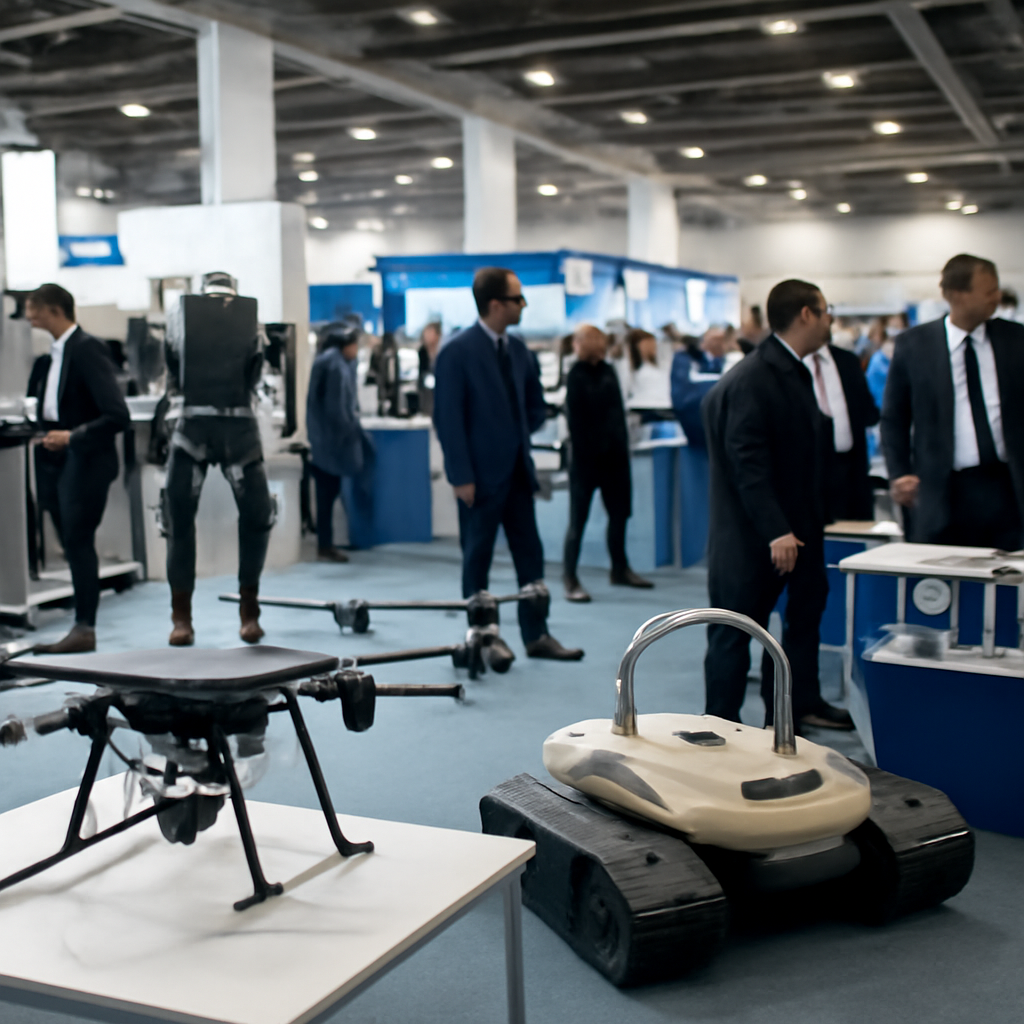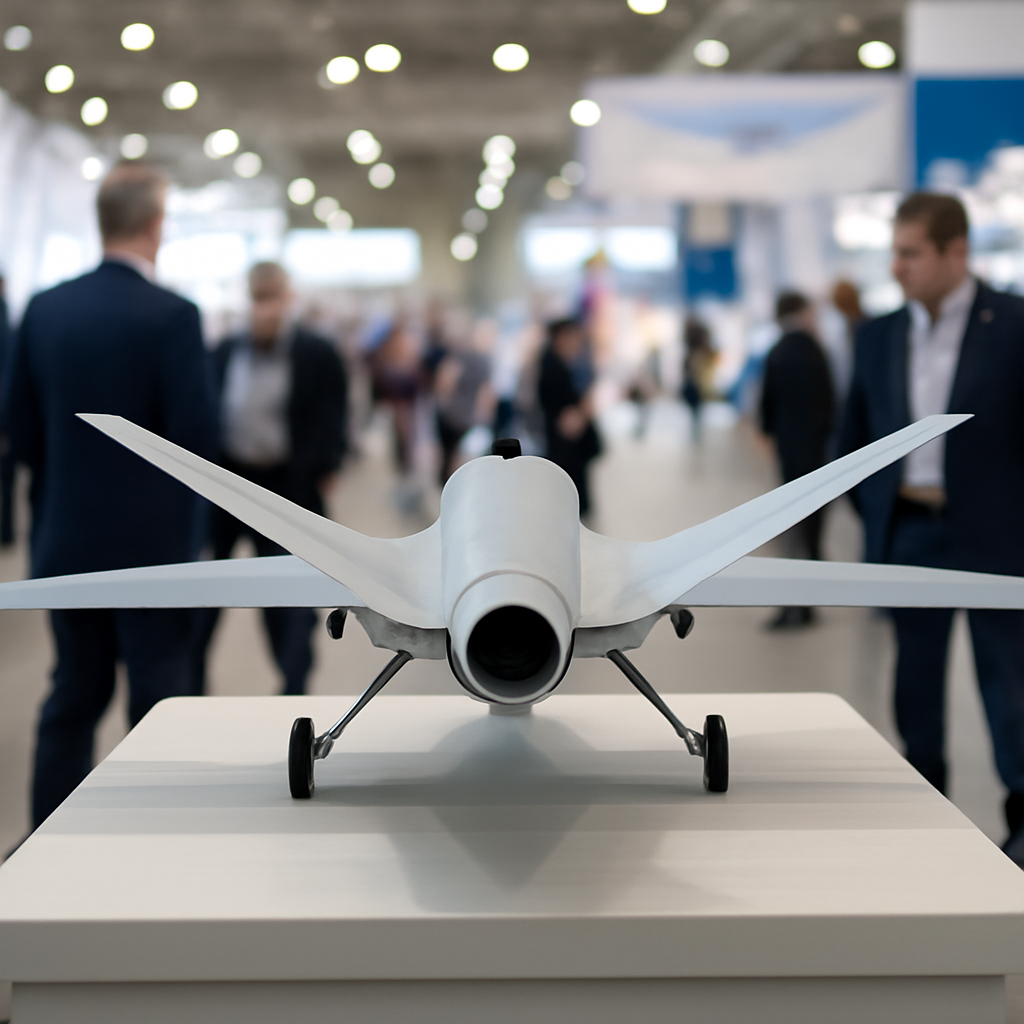
"the best of homegrown British innovation, and proven on the frontline," British Prime Minister Andy Burnham said of Stone Cloak on Monday, as he and Ukrainian President Volodymyr Zelenskyy met at a naval base in Portsmouth.
Stone Cloak: a tablet-sized radar jammer in Ukrainian service
The system known as Stone Cloak is a British-designed digital radar jammer roughly the size of a computer tablet. According to the announcement made by the U.K. government, Ukrainian forces have been using British-built versions of Stone Cloak on long-range strike drones already this year. Jeffrey Fischer, a retired U.S. Air Force officer, told Defense One that while full technical details are not yet public, “the system will likely increase mission effectiveness against some of the Russian air defenses.”
The U.K.-Ukraine tech-sharing agreement and mass production
For the first time the U.K. has agreed to share the intellectual property for Stone Cloak, allowing Ukraine to mass-produce the jammer domestically. The agreement was disclosed as part of events around the annual Sea Breeze joint exercise, where Ukrainian, U.S. and British sailors paid “special attention” to countering Russian air defenses, according to Ukraine’s national news agency. The explicit transfer of design rights is notable because most earlier Western support emphasized hardware delivery rather than design handoffs.

This site is the portfolio.
OSINTSights runs on Cloudflare Workers, D1, R2, and Vectorize, with an AI pipeline on Hetzner ARM. Nubivance designed, built, and operates it. We do the same for clients.
See what we buildBreakstop (2024): a faster path from concept to deployment
The Stone Cloak transfer is one element in a broader acceleration of U.K.-Ukraine cooperative projects. In 2024 the two countries launched Breakstop, a joint effort to develop a new long-range strike drone with streamlined, simplified requirements. British officials say Breakstop will deliver missiles for frontline use later this year. The project’s timeline—less than 24 months from concept to full deployment—contrasts sharply with earlier, longer programs and is cited in the announcement as evidence of more rapid collaboration.
Storm Shadow, cost, and why design transfer was difficult
The contrast with Storm Shadow is presented bluntly in the announcement. The U.K. spent six years developing and deploying the Storm Shadow missile, relying on specialized European supply chains and involvement from French and Italian partners—factors that made any transfer of its design technology bureaucratically difficult. The U.K. provided Storm Shadow missiles to Ukraine as hardware rather than blueprints; the missiles averaged $2 million apiece. The announcement frames those realities—time, multinational supply chains, and high unit cost—as drivers pushing London and Kyiv toward faster, cheaper cooperative models for strike capabilities.
Flamingo (FP-5) and Ukraine’s own pace of innovation
Ukraine has been developing its own long-range strike options in parallel. The country announced a domestic long-range strike missile called the Flamingo, or FP-5, which the announcement says is capable of striking Russia and costs much less than the Storm Shadow. The broader point stressed by British and Ukrainian officials in the reporting is that Ukrainian manufacturing and weapons development have moved quickly enough to outpace some donors’ traditional procurement rhythms.
What this means for technologists, policymakers, and Ukrainian forces
- Technologists and security teams: domestic production of Stone Cloak will allow Ukrainian operators and developers to iterate the jammer more rapidly in fielded systems—an advantage noted in joint exercises where allied and Ukrainian participants can emulate electronic-warfare environments. The Hedgehog 2025 exercise in Estonia is cited as an instance where a participating Ukrainian team exposed large gaps in NATO drone warfare concepts, underscoring the practical value of operational testing with allied partners.
- Policymakers and regulators: the Stone Cloak transfer illustrates how export controls and partner supply chains shaped earlier programs like Storm Shadow; those constraints influenced the decision to pursue streamlined, joint development paths such as Breakstop. The agreement signals a deliberate shift toward sharing designs where bureaucratic and multinational supply-chain hurdles can be avoided.
- Ukrainian forces and end users: obtaining the rights to mass-produce Stone Cloak domestically promises faster scaling of jamming capability across drone fleets and—by British and outside experts’ account—improved mission effectiveness against some Russian air defenses. That capability, coupled with lower-cost indigenous missiles like the FP-5 and faster joint projects, is presented as changing the operational calculus on the battlefield.
Jeffrey Fischer summed up the strategic logic in stark terms: Ukraine’s “extremely rapid adaptation cycle” lets battlefield lessons be implemented far faster than conventional development timelines, sometimes in less than 10 days. For the U.K., the announcement frames tech sharing not as one-way assistance but as mutually beneficial partnership informed by that speed of adaptation.