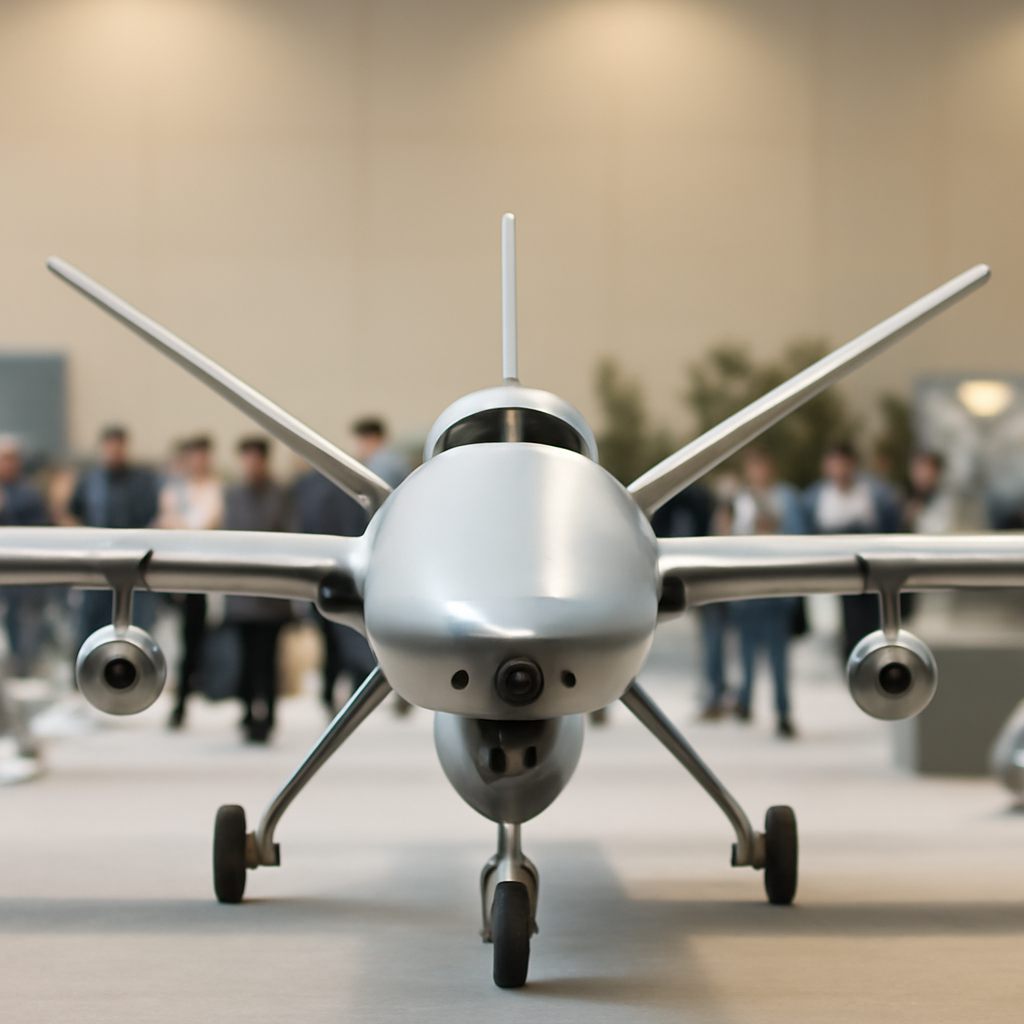
“Using it [in] a swarm is also already in the agenda,” STM General Manager Ozgur Guleryuz told Breaking Defense, summing up the company’s intent as it introduced four new unmanned aerial vehicles and an unmanned underwater system at the SAHA defense exposition in Istanbul.
Kuzgun: a long‑range loitering munition with testing underway
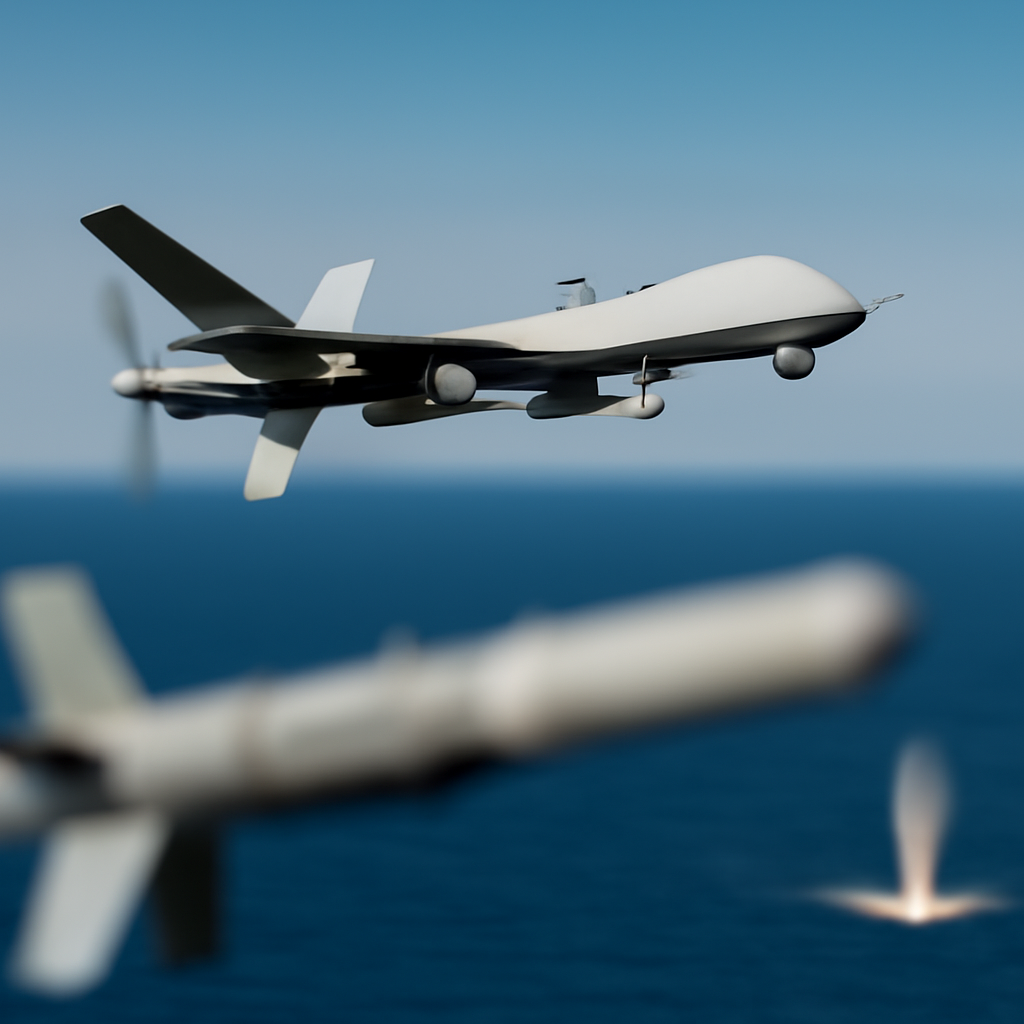
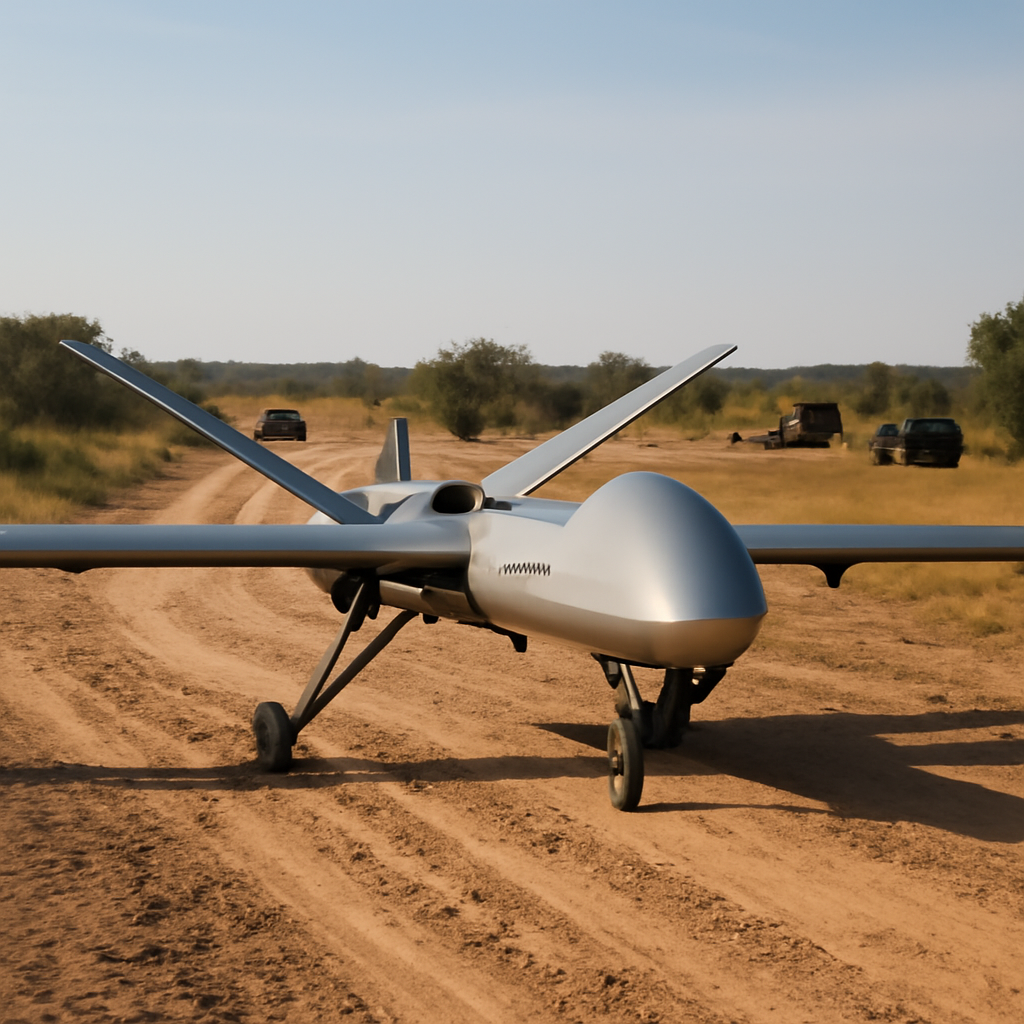
STM unveiled Kuzgun as a one‑way, fixed‑wing loitering munition with a stated range of more than 1,000 km (621.4 miles) and a top speed of 180 km per hour. The company described the platform as carrying a high explosive fragmentation warhead and said its design bears similar features to Iran’s Shahed 136. STM is conducting tests on the system; according to Guleryuz it currently has “no contract at the moment, but there’s huge interest in it.” He explicitly noted swarm employment is already on the agenda for the platform.
TOGAN‑M and smaller ISR platforms
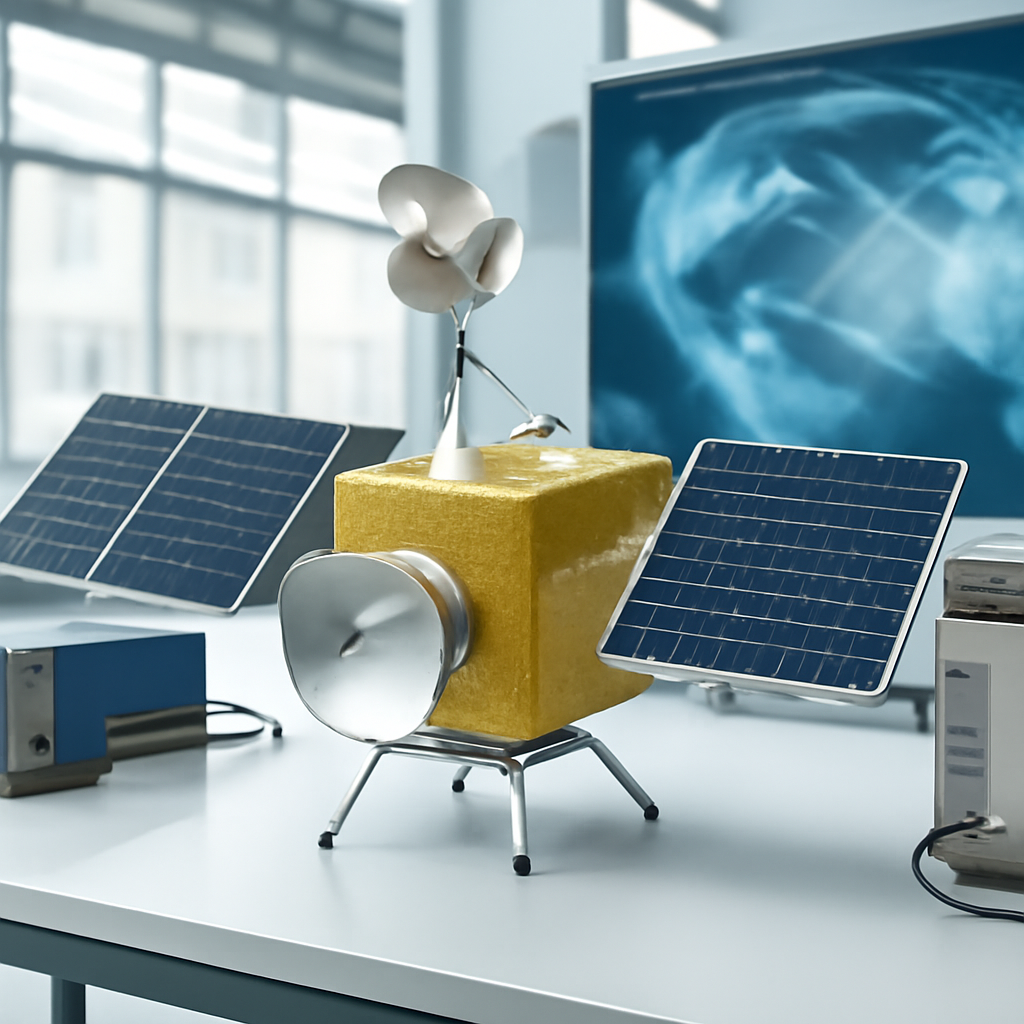
Alongside Kuzgun, STM displayed the TOGAN‑M Mini Reconnaissance and Surveillance UAV System. The company listed the TOGAN‑M’s weight at 2.5 kg (5.5 pounds) and highlighted a foldable design tailored for intelligence, surveillance and reconnaissance (ISR) missions. STM characterized these light systems as dedicated to ISR, underscoring the company’s portfolio spanning both one‑way attack munitions and persistent reconnaissance assets.

This site is the portfolio.
OSINTSights runs on Cloudflare Workers, D1, R2, and Vectorize, with an AI pipeline on Hetzner ARM. Nubivance designed, built, and operates it. We do the same for clients.
See what we buildTengiz: an 11.2‑metre unmanned underwater family with offensive options
STM also introduced Tengiz, described as the company’s largest family of autonomous unmanned underwater systems. The system is 11.2 metres long (36.7 feet) and is able to operate at depths of up to 400 metres, with a transit speed cited as 8 knots. STM stated that Tengiz can perform both ISR and combat missions, including anti‑submarine warfare and electronic warfare, and that it is equipped with heavy torpedo launch capability and can carry smart loitering munitions. Guleryuz said STM is continuously updating the platforms and technologies that underpin systems like Tengiz.
STM’s industrial model and technology posture
Guleryuz described STM as “an engineering company” and said it is the biggest shipbuilder company of Turkey but “we don’t have a shipyard of our own.” On manufacturing he emphasized that STM’s production facilities are small and that the firm relies on subcontractors to build the business, with STM itself focusing on integration and shipment to customers. He confirmed the company uses artificial intelligence, image processing and machine learning today and said STM is “going more deep and deep in those areas.”
How Gulf militaries, procurement officials, and regional navies are likely to react
- Gulf militaries: STM said it has already signed some memoranda of understanding in the region and offered several cooperation models — producing items locally, developing indigenous systems using Gulf‑country technology with STM support, or manufacturing STM‑designed drones in those countries. Those options directly speak to Gulf governments’ stated interest in localization and technology transfer.
- Procurement officials and industrial planners in Gulf states: STM’s reliance on subcontractors, its willingness to undertake local production, and its explicit openness to technology transfer create clear paths for localization. The company framed part of its mission as increasing local contribution in products, which could appeal to procurement officials seeking industrial offsets.
- Regional navies and maritime security planners: The Tengiz family’s anti‑submarine and electronic‑warfare claims, combined with heavy torpedo launch capability and the ability to carry loitering munitions, present new options for undersea ISR and combat roles that maritime forces will need to evaluate for doctrine, basing and countermeasures.
STM’s presentation at SAHA tied cutting‑edge claims about autonomy, machine learning and deepening AI integration to an industrial pitch focused on localization and technology transfer. The immediate facts are straightforward: Kuzgun is in testing and drawing interest, TOGAN‑M is a 2.5 kg ISR platform, Tengiz is an 11.2‑metre unmanned underwater system rated to 400 m depth with offensive payload options, and STM says it is open to producing or co‑developing systems in Gulf states. What remains is whether the stated interest and memoranda of understanding translate into formal contracts and local production lines — a next step STM itself flagged as part of its engagement strategy.